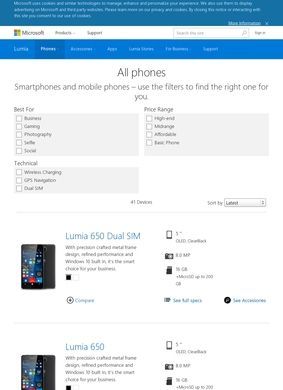
Holding an aging handset and watching it fall behind on security patches tends to focus the mind. Nokia: Smartphones exists precisely for that shopper, and the site answers the question clearly: here are the current models, here is what each one costs to make work, and here is the software promise behind each one. It is a consumer-facing catalogue built around stock Android, regular security updates, and hardware durable enough to survive ordinary misuse. The site does not dress that pitch up or bury it.
Device categories by budget
The lineup on Nokia: Smartphones divides into series that map to budgets and daily use patterns. The G series covers the budget and mid-range band. The C series is for buyers who want a working Android phone and nothing extra. The XR series goes after people who drop phones on concrete or carry them through rain and do not want to treat the device like a museum piece. Browsing across the three groups is straightforward because the categories mirror how a buyer already thinks: how much to spend and how rough the daily handling will be.
Specifications and comparison tools
A useful feature of the Nokia: Smartphones product pages is that differences between tiers are stated rather than implied. Model listings in the smartphones section carry technical specifications, so a shopper can read screen size, chipset details, battery capacity, and the rest without hunting through marketing copy for the numbers. There is a comparison tool too, which is the feature people open when they are stuck between two similar models and want the specs side by side without toggling between tabs.
The recurring themes across Nokia: Smartphones are consistent from the cheapest C-series entry to the ruggedised XR line: a clean Android build, security updates that arrive on a schedule, and durability. The XR series leans hardest on that last point, aimed at buyers who treat a phone as a tool that lives in a pocket full of grit. The G and C series carry the same software philosophy down into cheaper hardware, which is the genuinely useful part of the proposition. A person buying at the low end usually gets the worst software support, and the range runs against that pattern explicitly.
Accessories sit alongside the handsets on Nokia: Smartphones, so a buyer pricing out a new phone can check chargers and cases in the same visit. The presentation stays focused on the consumer side and does not drag the reader into the network infrastructure business that operates under the same name. That separation is deliberate, because confusion between the handset brand and the telecom-equipment company is easy to fall into. Nokia: Smartphones keeps its lane.
From licensing to market reach
One point the portal is upfront about shapes the whole experience. Nokia-branded phones are manufactured under licence by HMD Global, the company that holds the Nokia brand for mobile devices. For a shopper this is not a footnote. It explains why the software and update commitments are presented the way they are on Nokia: Smartphones, and it is context a careful buyer will want before settling on a device they plan to use for three or four years. The site does not hide the arrangement.
Purchasing works differently than a typical retail site. In most markets Nokia: Smartphones does not run a direct storefront. Online purchase links push the reader out to regional retailers and carrier partners. On one hand, that means the portal works as a catalogue and specification reference more than a checkout, so a visitor expecting to add a phone to a cart and pay on the spot will need to take an extra step. On the other hand, routing to carriers is how most phones get sold anyway, often bundled with a plan, so the additional step is smaller than it first looks.
Regional availability and updates
Regional coverage is handled properly. The site supports multiple markets and languages, keeping specifications, availability, and pricing relevant to wherever the reader is opening it. A device sold in one country is not always sold in another, and a global catalogue that ignores that ends up frustrating people. Nokia: Smartphones does not make that mistake. A blog and news section tracks product launches and company announcements, which is worth reading for someone deciding whether to buy now or wait for the next model, since a launch just over the horizon can change the calculation entirely.
Outside the official pages, Nokia: Smartphones has a visible footprint on review platforms. Aggregated ratings on sites such as Trustpilot and consumer tech forums show a range of opinions, with users praising the software cleanliness and update cadence while flagging camera performance at the entry-level end as a common trade-off. The volume of reviews is substantial enough to draw patterns rather than outliers. No rating or count is attached here because counts shift, but the reputation picture is readable and consistent with what the product pages claim.
Put together, Nokia: Smartphones is a clear, well-organised reference for a specific kind of buyer. The catalogue is honest about its tiers, candid about the HMD Global licensing behind the brand, and realistic about how the phones reach the market. The stock-Android-plus-updates emphasis is the through-line tying the cheap C series to the rugged XR series, and the comparison tool turns browsing into something closer to a decision. The site will not sell the device directly in most places, but it will get a buyer to the right model with the facts needed to choose well, and that is the harder half of the job.