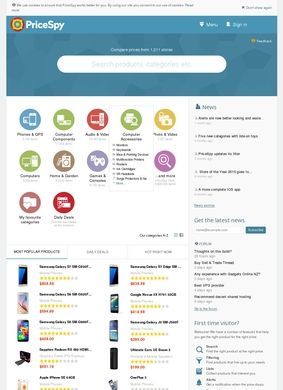
Punch in a model number for a phone, a coffee machine, or a cordless drill, and PriceSpy lines up what every tracked New Zealand retailer is charging for it, sorted cheapest first. That single function, comparing the same product across shops side by side, is the whole reason to bookmark the site, and it works across far more than the electronics aisle. The category list runs from phones, GPS units, computers, audio and video gear, and cameras through to whiteware appliances, beauty and health, kids and family, fashion and shoes, vehicles, sports and outdoors, DIY tools, and garden supplies. A shopper who arrives looking for the lowest price on a TV will find the same machinery pointed at a lawnmower or a pair of running shoes.
Product categories and price comparison
What lifts PriceSpy above a plain price feed is the layer of extras stacked on top. PriceSpy runs a Daily Deals section for people who want discounts surfaced without hunting, and a used-products marketplace sitting alongside the new listings. A Gamer Zone carves out space for that audience, and PriceSpy publishes news articles and runs themed campaigns through the year. Product reviews come from users, so the opinions attached to an item are at least nominally from buyers, not sourced from the manufacturer.
Daily deals and user reviews
The shop ratings system is the piece worth dwelling on. Retailers are scored by the people who bought from them, and PriceSpy has run a Shop of the Year competition since 2020 off the back of those scores. Knowing a product is two dollars cheaper at one store is only useful if you also have some sense of whether that store ships on time and answers its email. Folding seller reputation into the same place you check the price is sensible design, and many price-comparison tools omit it entirely.
Shop ratings system explained
The New Zealand site is one arm of a wider PriceSpy operation that runs across several countries, the UK and Australia among them. That lineage cuts both ways. On the upside, the platform behind pricespy.co.nz is not a weekend project; it is a mature codebase that has been comparing prices in multiple markets for years, with mobile apps on both iOS and Android and a newsletter for people who want deals pushed to them. The Apple App Store carries the PriceSpy app, confirming the mobile route is live.
From UK platform to New Zealand market
The catch is that the reputation trail mostly leads back to the British domain. The third-party reviews that surface in a search belong to pricespy.co.uk: a Trustpilot page with around thirty-three reviews, a small reviews.io entry of three reviews averaging roughly 2.33 out of five, and a single five-star Sitejabber review. None of that volume is large, and more to the point none of it is specifically about the New Zealand experience. A Kiwi shopper reading those scores is reading about a sibling site in another market, and the count is small enough that it would be unwise to lean hard on it either way. PriceSpy NZ has not accumulated a visible public verdict of its own yet, and that is the honest position.
Limited local reputation data
With so few ratings tied to the actual country domain, the strongest evidence of quality is the site itself: the breadth of categories, the working apps, and the internal shop-ratings mechanism that lets users see how other buyers fared. Those are things a visitor can check directly, which is more reassuring than a handful of scores from a different territory.
Contact options and support channels
On reaching the company, a contact link sits in the navigation. What the page does not put on display is a phone number, an email address, or a postal address; the visible direct channels are social, with Instagram, Facebook, and Twitter accounts linked. For a price-comparison service that mainly points buyers toward retailers, limited contact detail is not surprising, since most transactions and support questions land with the shop rather than the comparison site. Still, a shopper who wants to query PriceSpy directly is working from a contact form and social profiles, with no phone line or direct email on display, and that is fair to flag.
The supporting pages round things out without being a selling point. There is an FAQ, accessibility resources, and the newsletter sign-up already mentioned. The presence of an accessibility section is a small positive: it suggests a team that has thought past the bare minimum. PriceSpy reads as a service run with genuine attention to the user experience. If you found it listed in a business directory and are wondering whether the click is worth it, the answer is generally yes.
Set against PriceMe, the other long-running New Zealand price-comparison site, PriceSpy edges ahead on the seller-rating and community-review side, giving shopping decisions a second axis beyond the dollar figure. The soft spot is the absence of a substantial, NZ-specific reputation outside the platform, which leaves a buyer judging the tool on its mechanics. Those mechanics are sound. Broad catalogue, retailer ratings baked into the price view, a used marketplace, daily deals, and apps that genuinely work are enough to make PriceSpy a credible first stop before placing an order.