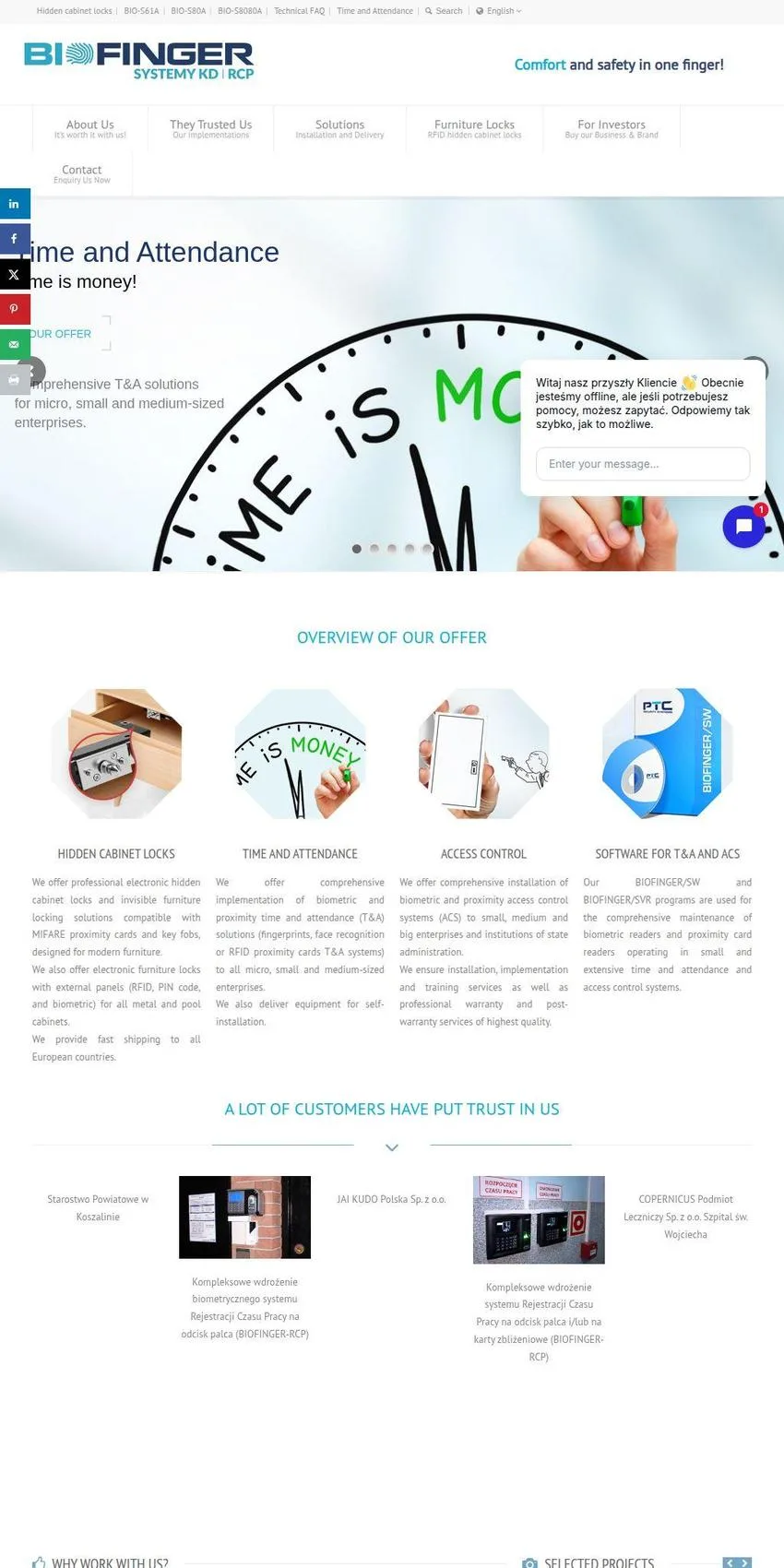
BIOFINGER sits in a niche most people never think about until they need it: electronic security for furniture and workplaces. The brand operates in two related lanes at once. On one side, it sells hidden RFID locks that turn ordinary drawers and cabinets into small electronic safes. On the other, it installs biometric time and attendance systems and access control setups for companies of all sizes.
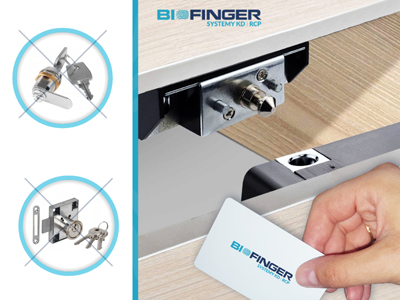
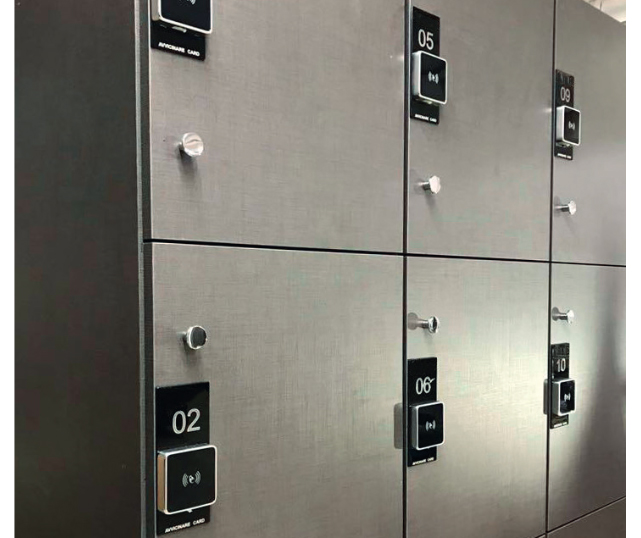
Let's start with the furniture locks, since they're the part of the offer most visitors will land on first. These are invisible devices mounted inside a drawer or cabinet, with nothing showing on the outside. You tap a MIFARE proximity card or a key fob against the front, and the latch releases. No keyhole, no visible hardware, no clue that the piece of furniture is locked at all. It's a bit like having a safe disguised as a nightstand.
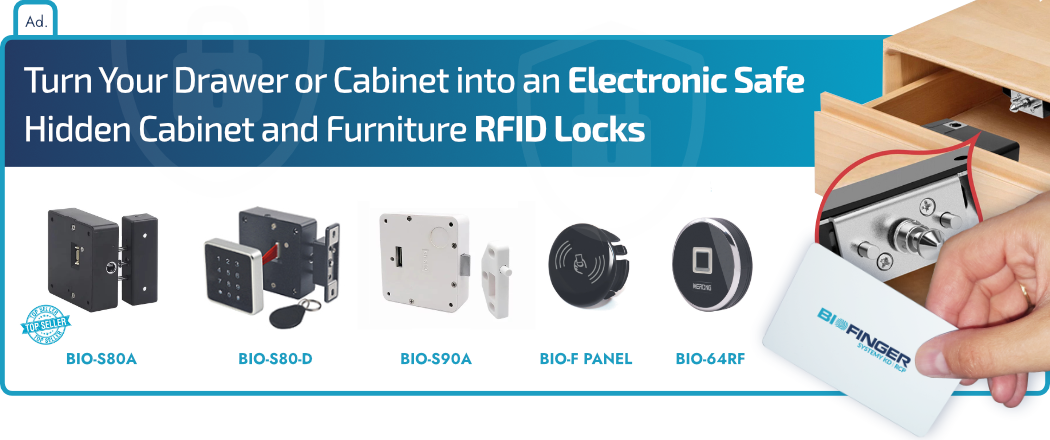
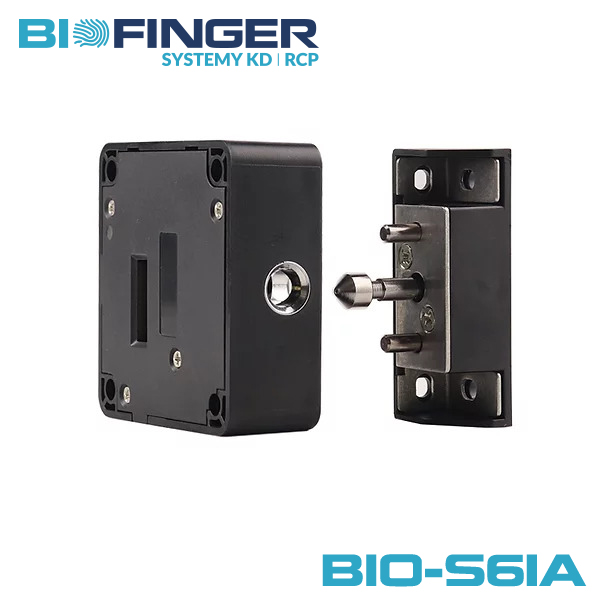
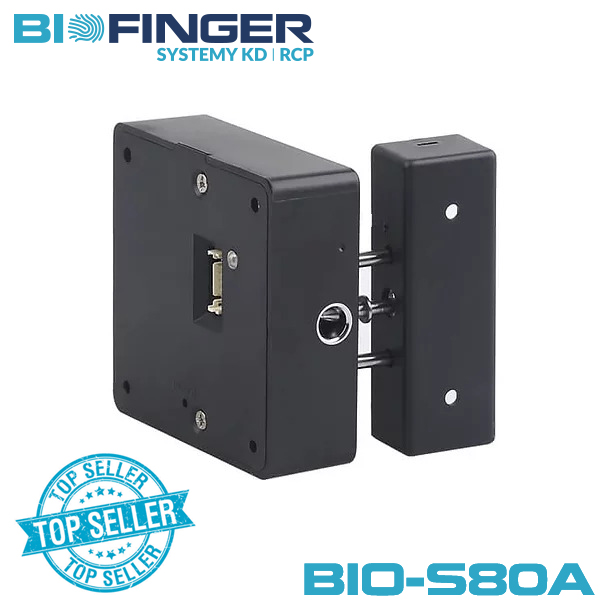
The BIO-S range covers five main models, and the differences between them actually matter. The BIO-S61A is the compact one, built for drawers where installation space is tight. The BIO-S80A is the brand's flagship, described as suitable for nearly any purpose, while the BIO-S8080A is the budget pick with a shorter lifespan rating and a twelve-month warranty instead of twenty-four. The BIO-S90A uses a latch rather than a bolt, and the BIO-S123A rounds out the lineup with a slimmer housing.
What ties them together is the underlying engineering. Each lock supports up to 30 registered user cards, reacts in under half a second, and holds against forces up to 150 kilograms. The housings combine ABS with polycarbonate and zinc alloy corner castings, and the detection switch inside comes from Omron, the Japanese component maker, rated for half a million cycles. The site is refreshingly open about why these details matter, drawing direct comparisons with lookalike products shipped from marketplaces like AliExpress.
That transparency extends to battery behavior, which honestly is the question anyone would ask about an electronic lock. What happens when the battery dies? The locks give a series of warning beeps well before that point, and each model has a documented voltage threshold at which it either opens or stays shut. Users can also run the locks continuously from a small USB power supply, so battery anxiety isn't a dealbreaker.
The locks work in three modes: private, public, and restricted public. Private mode suits a home drawer where one person keeps documents or valuables. The two public modes are built for shared use, gyms, changing rooms, offices, where different people lock and unlock the same cabinet throughout the day. Think of it as the difference between a house key and a hotel locker.
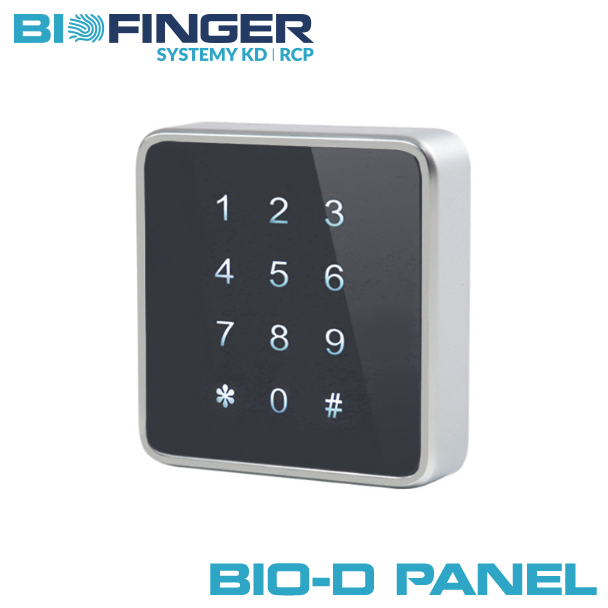
Buyers who want visible deterrence rather than pure stealth can add an external front panel. These panels bring fingerprint recognition and PIN code entry into the picture, mounting on wooden or metal fronts. The company notes the panels also serve a psychological purpose; a solid-looking lock on the front tends to discourage anyone tempted to pry.
Installation is pitched as a job for a handy person with a drill and a screwdriver, no milling required. An experienced carpenter can reportedly fit one in under half an hour. Glass display cases get their own dedicated product line with PIN code and RFID variants for single, double, and sliding doors, which broadens the use cases into retail counters and museum showcases.
Now for the other half of the business, which predates the furniture locks by years. The company behind BIOFINGER has been installing time and attendance systems since 2003, using fingerprint readers, facial recognition, and RFID proximity cards. These systems track when employees clock in and out, and the client list is long and varied: hospitals, tax offices, breweries, universities, construction firms, and regional government bodies across Poland, with implementations reaching Lithuania and Greece as well.
Access control is the companion service. Where time and attendance answers "who was here and when," access control answers "who is allowed through this door." The company handles full installations for small firms up through large enterprises and state institutions, covering equipment delivery, implementation, training, and warranty service. Comprehensive installations carry a two-year warranty period.
What's less common in this niche is that BIOFINGER develops its own software. The BIOFINGER/SW and BIOFINGER/SVR programs manage the readers and process the attendance data, and there's a mobile portal that lets employees check their own records. The company also offers custom programming services, which suggests a team comfortable adapting the platform to whatever a client's HR department needs. Over 450 implementations have been completed since the early 2000s, including full security installations with CCTV, fire alarms, and structured cabling.
The credentials section is worth a mention. The firm holds a state concession for technical property protection, security licensing, and clearance for handling confidential information. It has picked up regional innovation awards and manufacturer certificates from names like Siemens and Satel. As a reviewer, I find the sheer length of the documented client portfolio more persuasive than any award, since photographs of actual installations at named hospitals and government offices are hard to fake.
The site itself runs in four languages (Polish, English, German, and Estonian) and ships the furniture locks across the whole European Union, serving both individual buyers and business clients. Detailed comparison tables, downloadable PDF manuals for every model, and a full FAQ section make the product side genuinely self-serve, which isn't something you can say about every hardware vendor's website.
Who's this for, then? Homeowners hiding valuables from burglars or curious kids, medical facilities securing medication cabinets, gyms replacing key-based lockers, and any business that wants to know who opened which drawer and who walked through which door. In my opinion, the combination of a niche hardware product with two decades of systems integration experience gives the whole operation an unusually grounded feel. It reads less like a reseller and more like an engineering shop that happens to sell online.
Important pages
Business address
Novo Capital Investment Sp. z o.o.
Szuberta Street 100,
Gdansk,
Pomorskie
80-172
Poland
Contact details
Phone: +48 735 800 333