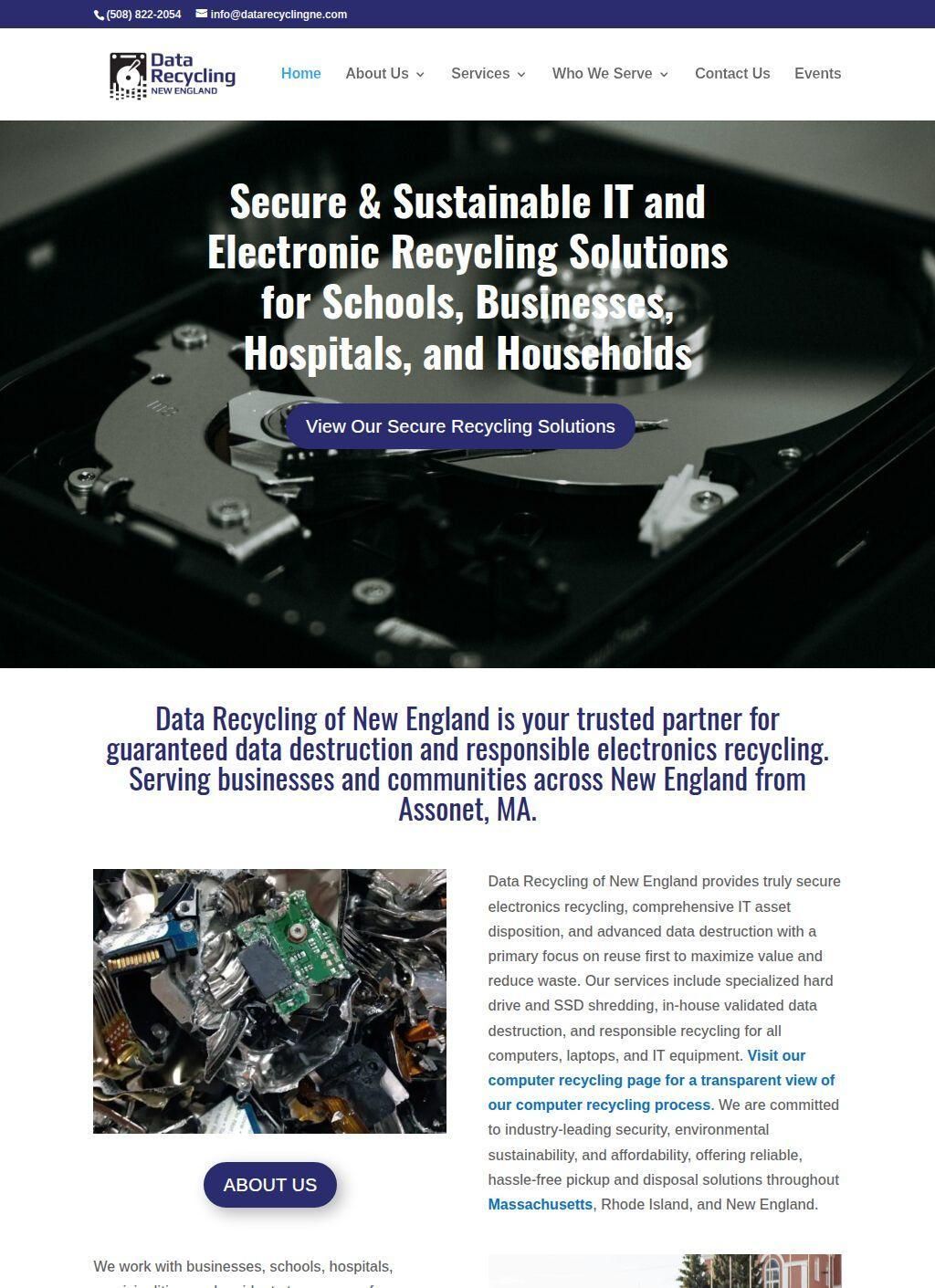
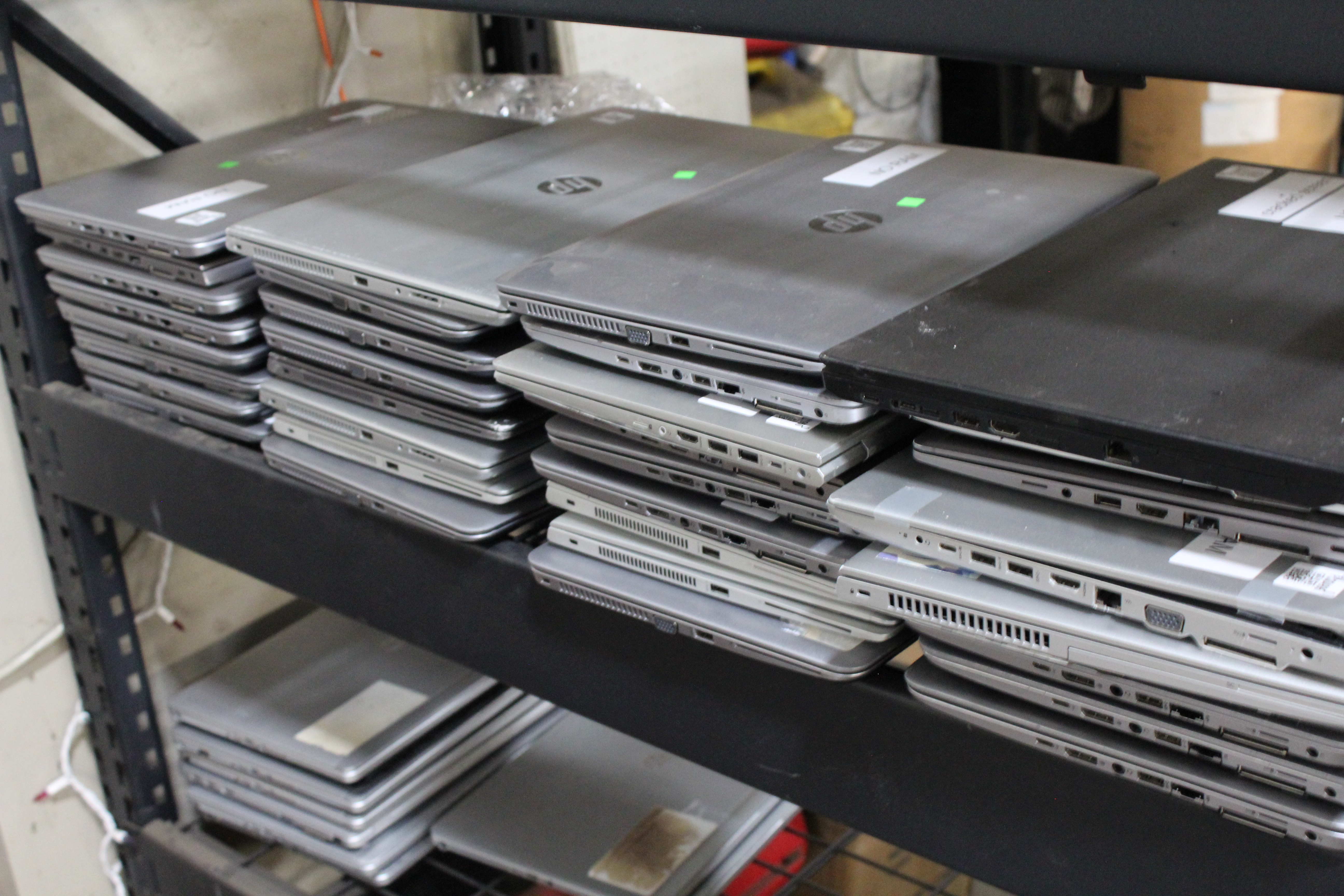
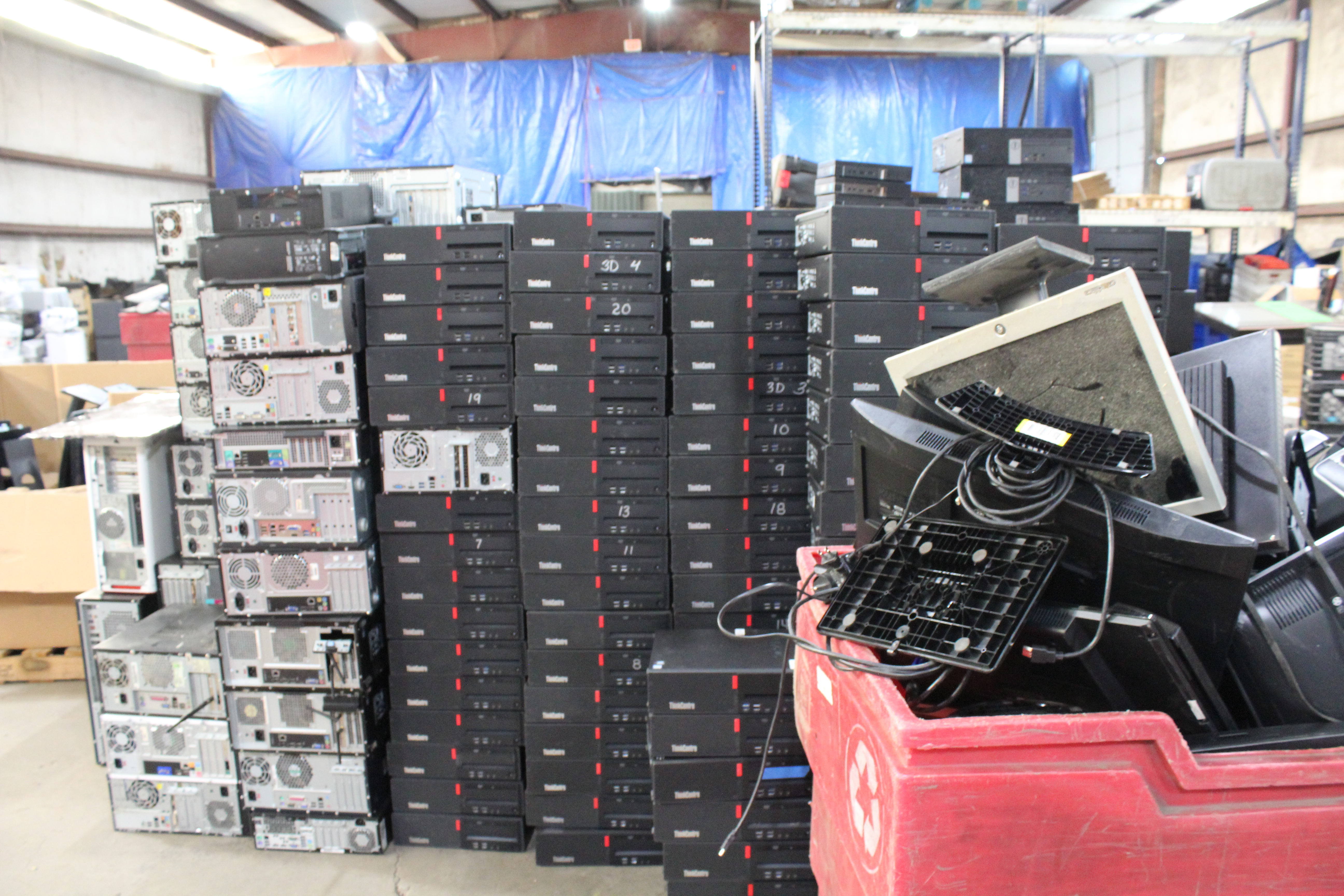
Data Recycling of New England tries to keep equipment alive before it gets shredded or scrapped. The company tests and evaluates incoming gear for reuse first, and only routes hardware to recycling once it fails that check. That ordering is easy to state and harder to run in practice, since someone has to assess machines instead of feeding everything into a shredder. For a New England recycler that also handles secure data destruction, it is a more interesting starting point than the usual pitch, and it colors how the rest of the operation reads.
Services offered by Data Recycling of New England
The service list backs that up with real breadth. Hard drive and media shredding sit next to paper shredding, which tells you Data Recycling of New England is set up for the physical end of data destruction, beyond just wiping drives. There are collection events, de-manufacturing and dismantling for equipment that has reached the end of the line, transportation and logistics to move material, and secure pickup so a client does not have to haul anything themselves. Buy-back programs cover the case where old gear still has value worth recovering. Certificates of destruction and compliance reporting close the loop on paper, which is exactly what an organization needs when it has to prove a drive was destroyed and not simply misplaced.
Certificates and compliance documentation
That paperwork angle is where Data Recycling of New England is clearly aiming at a specific kind of customer. A school wiping a lab of retired laptops, a hospital clearing imaging workstations, or a town office rotating out old desktops all share the same problem: they need a defensible record that the data is gone. A certificate of destruction is the artifact an auditor asks for, and offering it as standard separates a serious IT asset disposition provider from someone who just carts electronics away. The company also frames its work around chain of custody through secure pickup and transportation, the other half of that same assurance.
Customer types served across New England
The customer base named on the site is wide, and it reads as a real spread rather than a marketing list. Schools and universities, businesses, healthcare facilities, municipalities, non-profit organizations, and individual residents all get a mention. That last group is worth pausing on, since plenty of ITAD firms will only deal with fleets and volume. Data Recycling of New England leaving the door open to a single household with a broken PC and an old hard drive suggests the collection-event side of the business is genuine, not decorative. It also fits a company that runs community recycling drives, a different rhythm of work than a purely corporate contract.
Service area and location details
Geography is stated plainly: Massachusetts, Rhode Island, Connecticut, New Hampshire, Maine, and parts of New York, a coherent regional footprint and not a vague claim of national reach. Data Recycling of New England works from Assonet, Massachusetts, though some directory records list it under Berkley, Massachusetts at 13 Ridge Hill Rd, and one listing puts the founding at 2016. The discrepancy is minor, since the two towns are adjacent and likely describe the same site under different postal conventions, but it is the sort of small inconsistency a careful reader notices.
Getting in touch with the company
On the practical question of reaching them, Data Recycling of New England does well. A phone number is published, there is a working email, and a contact form sits at the contact-us path on the site. A physical location in Assonet is listed, which for a company handling other people's data-bearing equipment is more than a convenience. Contact is one of the stronger parts of the presentation.
Public reputation and third-party verification
Reputation is the weak point, and this is the part a cautious buyer should sit with. Data Recycling of New England has a Better Business Bureau profile, but it is not BBB accredited, and the specific letter grade did not surface clearly, so the rating scale is there without a confirmed result attached to it. A Facebook page carries a handful of reviews, including a short "Excellent service!" note, and a Yelp profile exists for the Assonet location describing what the company specializes in, though no visible star count or average came through.
Testimonials and registry records
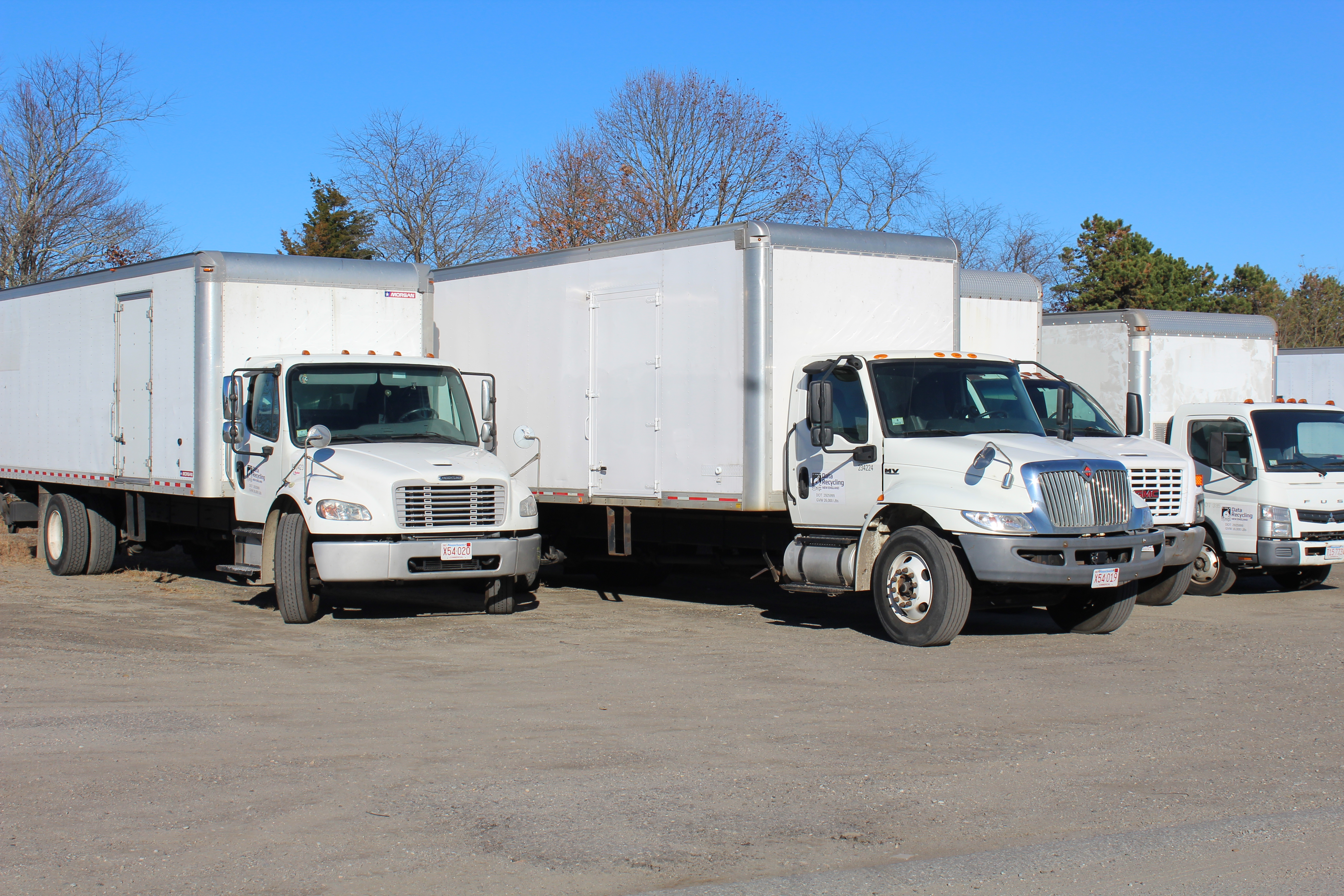
The testimonials on the company's own site, including praise from church community recycling events and partnership notes, are self-published, which puts them in the marketing column rather than the independent-verification column. The company also turns up in Dun and Bradstreet and USDOT carrier records, but those are registry entries confirming the business exists and operates trucks, not evaluations of how well it does the work.
None of that is damning. A regional recycler founded in the mid-2010s that leans on repeat institutional contracts often has a modest public review footprint, because schools and municipalities do not tend to leave Yelp stars after a pickup. Certificates, compliance reporting, and an audit trail are the currency those clients care about, and they rarely translate into visible online ratings. That leaves the record unresolved, though: what backs up the claim that Data Recycling of New England does the job well is mostly its own testimonials plus a scattering of unquantified third-party mentions.
Evaluating the operation's credibility
What tips the balance toward taking the company seriously is the specificity of what it offers. Data Recycling of New England is not selling one service dressed up in different words. There is genuine range across the material side (shredding, de-manufacturing, dismantling), the logistics side (pickup, transportation, collection events), the value-recovery side (buy-back, reuse testing), and the documentation side (certificates, compliance reporting). A vendor that has thought through all four is describing an operation with actual moving parts, and Data Recycling of New England covers each one. A slick homepage alone could not produce that. The reuse-first evaluation step ties it together, since it implies staff and process behind the operation, more than a single truck and a shredder.
For an organization in southern New England with data-bearing equipment to retire, Data Recycling of New England lines up well against the practical checklist. It handles the destruction, produces the paperwork to prove it, will come get the gear, and operates from a fixed location within reasonable reach of most of its stated service area. The reuse angle also gives environmentally minded clients a reason to prefer Data Recycling of New England, since equipment that can be refurbished stays out of the waste stream. Residents get a rare on-ramp for a category that usually ignores them entirely.
The reservation is straightforward and worth stating plainly. Data Recycling of New England reads as a capable, well-scoped regional ITAD and recycling operation on the strength of its own account, and the contact transparency supports that read. The independent proof does not yet match the range of the claims. No confirmed BBB grade, no visible Yelp average, a single unquantified social comment, and testimonials the company controls add up to a service that looks right on paper but has not been widely graded in public. A prospective client handling regulated data would be right to ask for references and confirm the compliance documentation matches its specific standard before handing over a pallet of drives, since on the current record that assurance rests more on what Data Recycling of New England says about itself than on what outside reviewers have confirmed.
Important pages
Business address
Data Recycling of New England
13 Ridge Hill Rd, Unit #8,
Assonet,
MA
02702
United States
Contact details
Phone: 5088222054