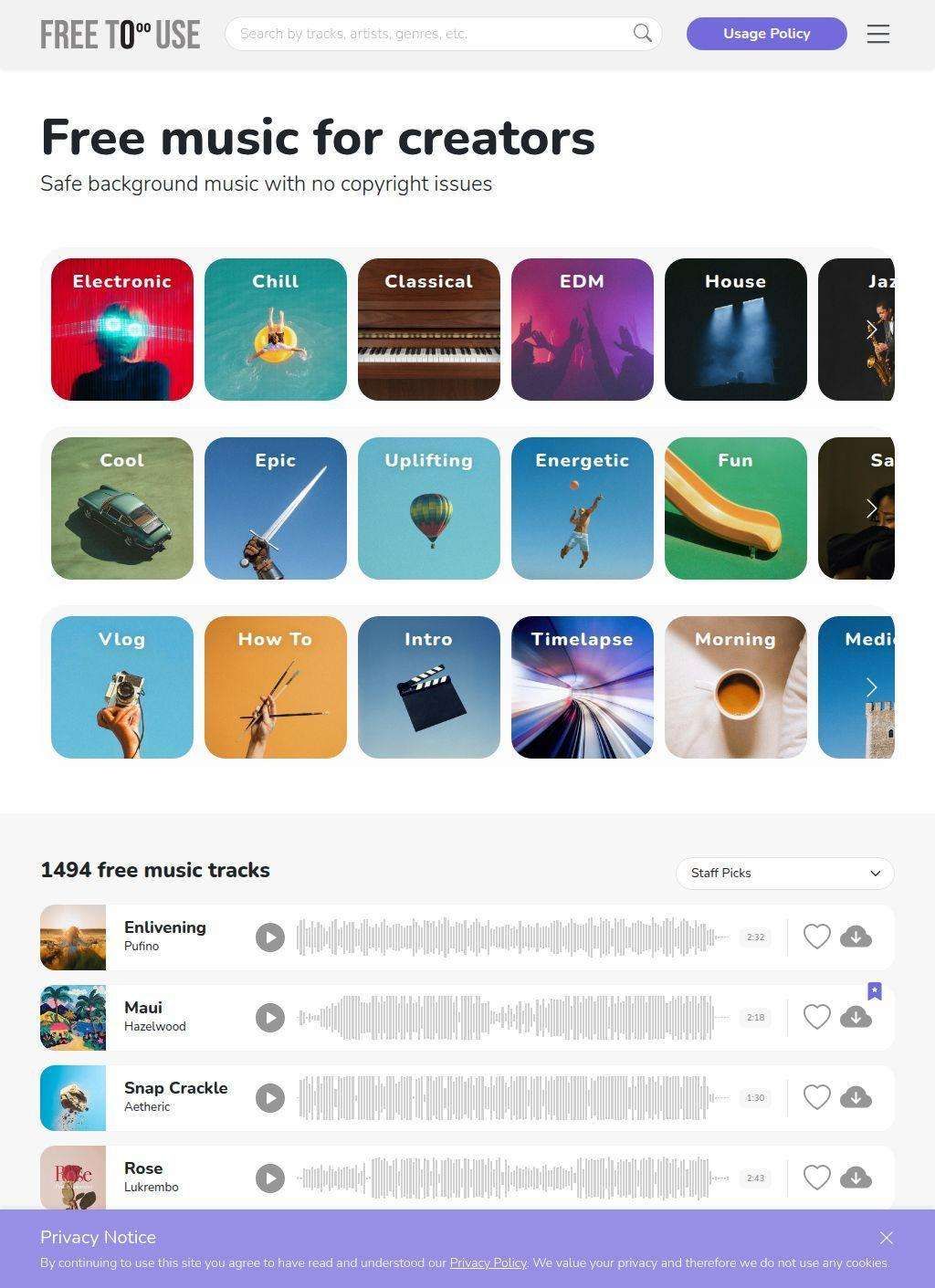
Where does a YouTuber turn when a video gets a copyright claim two days after upload, all because of the music sitting under the intro? That is the exact anxiety Free To Use is built around. The site offers a library of background music that is cleared for use, downloadable at no cost, and meant to survive the automated content-matching systems that flag monetized videos. No sign-up is required for the basic downloads, which lowers the barrier to the point where a creator can grab a track and be editing within a minute or two.
The pitch is narrow, and that focus works in its favor. This is not a stock-everything marketplace. Free To Use does one job, which is handing content creators music they can put behind a video without a strike landing in their inbox later.
It is worth separating two names that sit close together here. The download service lives at freetouse.com, while a related record label operates as Free To Use Music at its own address. The two are linked, and the naming makes them easy to blur, but the thing a creator downloads from is the first.
What the download service gives creators
The core promise from Free To Use is unlimited free downloads of copyright-cleared, high-quality tracks. For someone producing a steady stream of videos, that combination counts for more than any single feature. What worries a heavy uploader is rarely one good song; it is having a whole catalog of them that will not cause trouble across dozens of uploads.
The music is framed as safe to monetize, which is the phrase creators actually care about. Plenty of "free music" sites exist, yet many attach conditions, require attribution in ways that get missed, or leave a track technically flagged by the very systems that decide whether an ad runs. A library that leans on being clean from the start answers a real, specific problem, and Free To Use puts that clearance at the center of everything it says about itself.
Coverage for YouTube, video and streaming
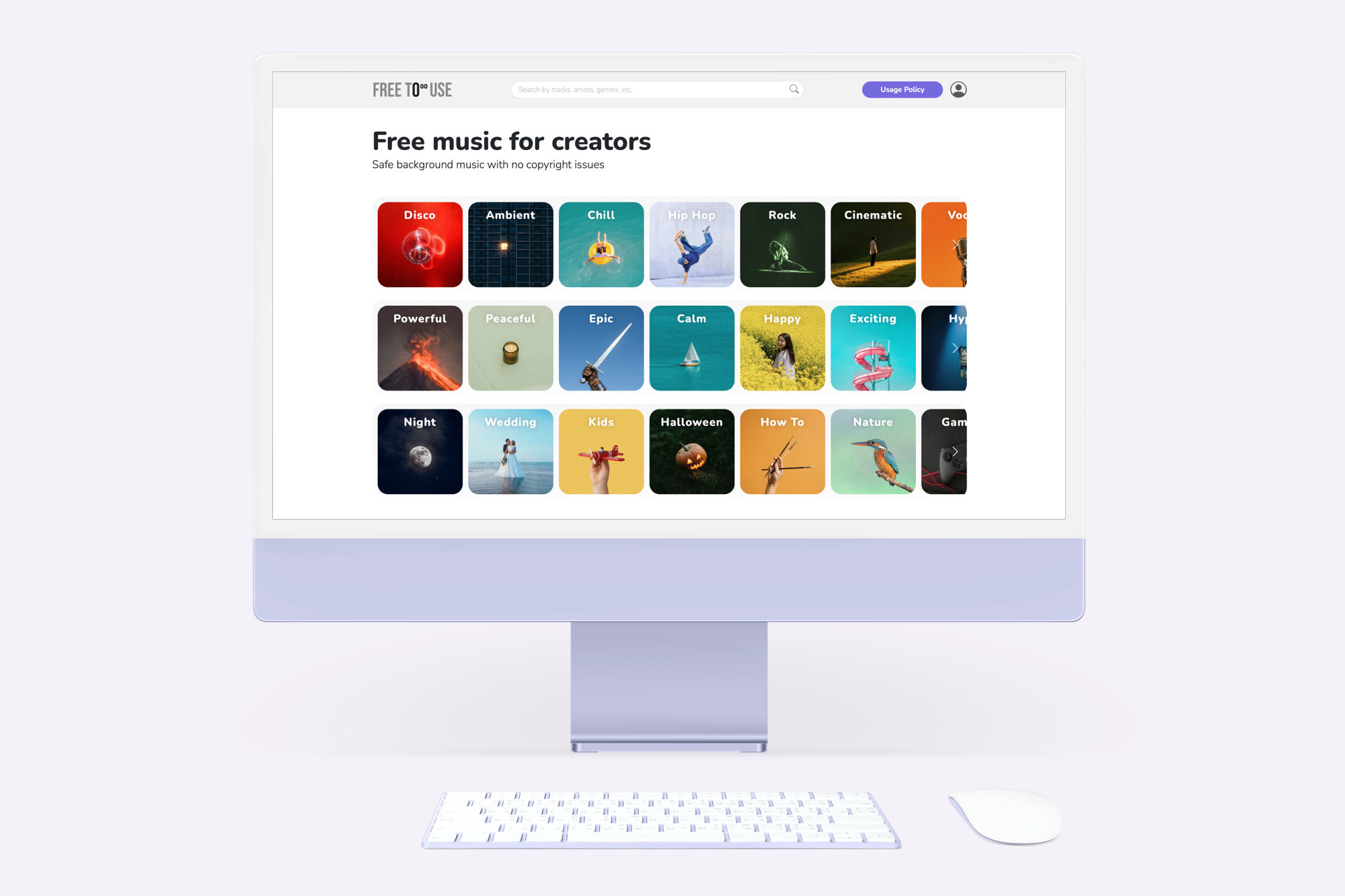
The stated audience is people making content for YouTube, general video work, and streaming. That focus shapes what the library is likely to hold: background beds and mood pieces meant to sit under narration or gameplay, not front-and-center compositions demanding attention.
Whether the catalog runs deep enough to keep a daily uploader from cycling the same three tracks is the open question, and the site does not settle it. Free To Use does not put a number on how many tracks are available, so a creator judging fit has to browse the library and count for themselves. Breadth is the difference between a tool you use once and one you build a channel's sound around, and it is the single thing I would want to check first, before leaning on Free To Use as a regular source.
No sign-up as a deliberate choice
Skipping registration for basic downloads is a small decision with a large effect on how the service feels. It puts the priority on getting music into a project quickly, and it removes the friction of yet another account and password. The trade is that there is no obvious dashboard or download history, so anyone who wants to track what they have already pulled is on their own.
For casual use that is fine. For a team managing a content pipeline it might come up short, and Free To Use does not appear to offer a project-management layer on top of the raw downloads.
The curation angle and who stands behind it
What separates Free To Use from a plain upload dump is the review process described in its FAQ. Artists submit tracks, and each one is vetted before it joins the library. That gatekeeping is the whole argument for trusting the "safe to monetize" claim, since an open-upload model is exactly where mislabeled or improperly licensed music sneaks in and later triggers a claim on someone else's channel.
Curation cuts two ways, though. A vetted library should be cleaner, but it is also smaller and slower to grow than a free-for-all, and Free To Use does not publish how large the catalog is or how many submissions clear review. A creator has to take the process somewhat on faith. The idea is sound; the transparency around it is not fully there.
A platform pointing in two directions
Free To Use is aimed at more than listeners and editors. It also functions as an artist-facing operation, connected to the record label Free To Use Music, and it presents itself as a way for musicians to reach audiences on platforms like YouTube and Spotify.
So the same site is asking creators to take music for free while asking artists to hand over tracks in exchange for exposure. That model can work, plenty of production-music outfits run on it, but it does raise a fair question about how artists are compensated when the downloads are unlimited and free. Free To Use frames it as reach for musicians, and reach is not the same thing as payment. Anyone weighing whether to submit their own work should read the FAQ closely before deciding what they are trading away.
The view from outside the site
On reputation, the picture is mixed and mostly indirect. Trustpilot has a review page for the domain, though a specific rating and count are not something the search snippets pinned down. A review page existing does not say much on its own; it confirms people have shown up to say something, without telling you whether the verdict skews warm or sour. Product Hunt lists Free To Use with at least one positive user note calling it a good blend of music for the kind of work creators do.
Beyond those, the strongest "evidence" comes from automated safety scanners, Scamadviser and a checker site, both of which mark the domain as legitimate with a high trust score. Those tools measure whether a site is a scam, not whether the music is any good or the catalog is worth returning to, so they reassure on the wrong axis. They tell you your download will not install malware. They say nothing about whether a track still sounds fresh on the tenth video, or whether a genre a creator needs is even represented.
There is one practical snag worth flagging, and it is not a small one for a service asking you to build a workflow around it. The site lists no phone number, no address, and no obvious way to get in touch. For a free tool that a hobbyist uses once, that hardly registers. For a creator who might later need to confirm a license, query a takedown, or reach a human when a track unexpectedly gets flagged despite the promises, the absence of a clear route to talk to anyone is a genuine weak spot.
Free To Use rests its entire value on standing behind its clearances, yet offers no visible way to ask about those clearances, which leaves you trusting a process you cannot question if it ever fails you.

Important pages
Business address
Free To Use ApS
Marselisborg Havnevej 36,
Aarhus C,
8000
Denmark