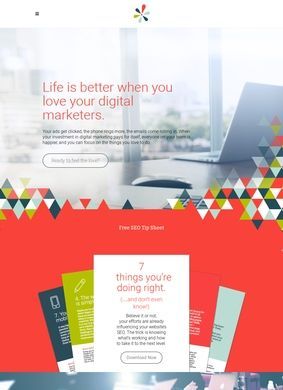
Fitting a 2005-vintage search agency into a year when half the marketing world is scrambling to figure out AI answers is not obvious. Purevisibility, run out of Ann Arbor, Michigan, has tried to answer that directly: alongside the usual paid search and organic work it now sells something it calls AEO, or answer engine optimization, aimed at the AI-driven results that tools like ChatGPT and Google's AI summaries are starting to feed people. That is the freshest thing on the site, and it sits next to two service lines the firm has been running for the better part of two decades.
Core services beyond answer engine optimization
Those two older lines are the spine of the business. The PPC side covers managed advertising on Google Ads, Microsoft Advertising, and LinkedIn, which is a sensible spread if a client wants both broad consumer reach and the B2B targeting LinkedIn is good for. The SEO side aims at organic traffic and the higher-intent keywords that tend to convert, and it branches into specific flavors: technical and content audits, local SEO for businesses tied to a place, e-commerce optimization for storefronts, and a content strategy practice that feeds the keyword work. Purevisibility also runs training and webinars, which suggests it is willing to teach clients rather than keep every tactic behind a curtain.
The way these pieces connect is part of what makes the offering coherent. A content strategy that feeds the SEO work, audits that diagnose before anyone spends, and paid campaigns that can pick up the slack while organic rankings build over months: that is roughly how a competent agency sequences a long engagement, and Purevisibility has the components arranged in that order. The audits in particular are a good sign, because a firm that insists on measuring a site before promising results is usually less inclined to oversell.
Industries the agency targets
That mix tells you who the agency is built for. The site names healthcare, e-commerce, education, multi-location businesses, and technology as the sectors it serves, and those are not random picks. Multi-location work and local SEO go together; healthcare and education both deal with strict, slow-moving search environments where organic visibility is hard-won. A firm that lists those alongside paid media is set up to handle accounts where compliance and long sales cycles matter, not quick-turnaround lead-gen campaigns. Purevisibility targeting education and healthcare clients, rather than chasing whatever account walks in, tells you it knows the difference between selling sneakers and ranking a hospital system.
Founded in 2005 and led by chief executive Linda Girard, Purevisibility describes its team as carrying more than twenty years of combined expertise and managing ad spend across several platforms. Combined-expertise math is the kind of claim every agency makes, so the more useful test is what clients and third parties actually say. On that front the picture is modest in volume but consistent in tone.
Reviews and pricing across platforms
Clutch, the platform agencies tend to care most about because its reviews are verified, lists four reviews for Purevisibility, with an hourly rate in the $200 to $300 range and an average engagement around $9,000. Reviewers there point to timely delivery and clear communication, which are the two complaints that sink most agency relationships, so it counts for something that those are the praised areas. Google ratings surface through DesignRush and Semrush at 4.8 stars across five reviews, Facebook shows 90 percent recommending across five, and Glassdoor carries three employee reviews averaging a perfect five. GoodFirms and UpCity both have profiles up (standard stops in any business directory sweep) but little or no review activity behind them.
None of those samples is large. Four here, five there, three somewhere else, and the counts are low enough that reasonable caution going into any pitch meeting is warranted. What makes the picture more reassuring than a single glowing testimonial would be is the spread. The same general impression shows up on a client-review site, a public social page, and an employee site at once, and the employee rating is worth more than it looks, because agencies that burn out their staff usually deliver erratically to clients. Purevisibility reading well on Glassdoor and Clutch at the same time is at least internally consistent, and that consistency is more telling than any single five-star headline.
The pricing is worth pausing on too. A $200 to $300 hourly band and a typical engagement near $9,000 put Purevisibility in mid-market territory: well above the cut-rate freelancers who promise the moon, below the enterprise shops that bill in six figures before anyone touches a keyword. For a regional business or a mid-sized brand, that is often the right altitude, and it is honest of the firm that this number is discoverable through Clutch instead of hidden behind a contact form.
Contact details and public presence
Contact is not a problem here. A street address in downtown Ann Arbor, a working phone line, and active profiles on LinkedIn, Twitter, Facebook, and Instagram are all surfaced plainly on the Purevisibility site. A real office in a real building, named leadership in Linda Girard, and social accounts that can be cross-checked are the unglamorous markers that separate an established operation from a logo and a Gmail address. You can see who you would be hiring.
If there is a soft spot in the proposition, it is the AEO framing. Optimizing for AI answer engines is genuinely new ground, the rules shift month to month, and nobody, this firm included, has a long verified track record at it yet. Purevisibility is candid enough to present it as a distinct service instead of folding it silently into SEO, but a prospective client should treat it as an experiment the agency is running in good faith, not a settled discipline with proven returns. The paid search and organic work is where the real history sits, and that is where most of the value in hiring Purevisibility will come from in the near term.
Weighed together, the case for Purevisibility is the case for a steady mid-market specialist that has survived twenty years of search engine upheaval and is now stretching toward the AI-search era without abandoning the work that pays the bills. The reviews are few but they agree with each other, the contact trail is solid, and the service menu maps cleanly onto the industries it claims to know. Healthcare groups, multi-location retailers, and tech companies that want paid and organic search under one roof will find the verified pricing, the coherent service structure, and the two-decade track record reason enough to put Purevisibility on a shortlist. The AEO piece is the one to treat as promising but unproven; the paid search and organic history is where the actual evidence lives.