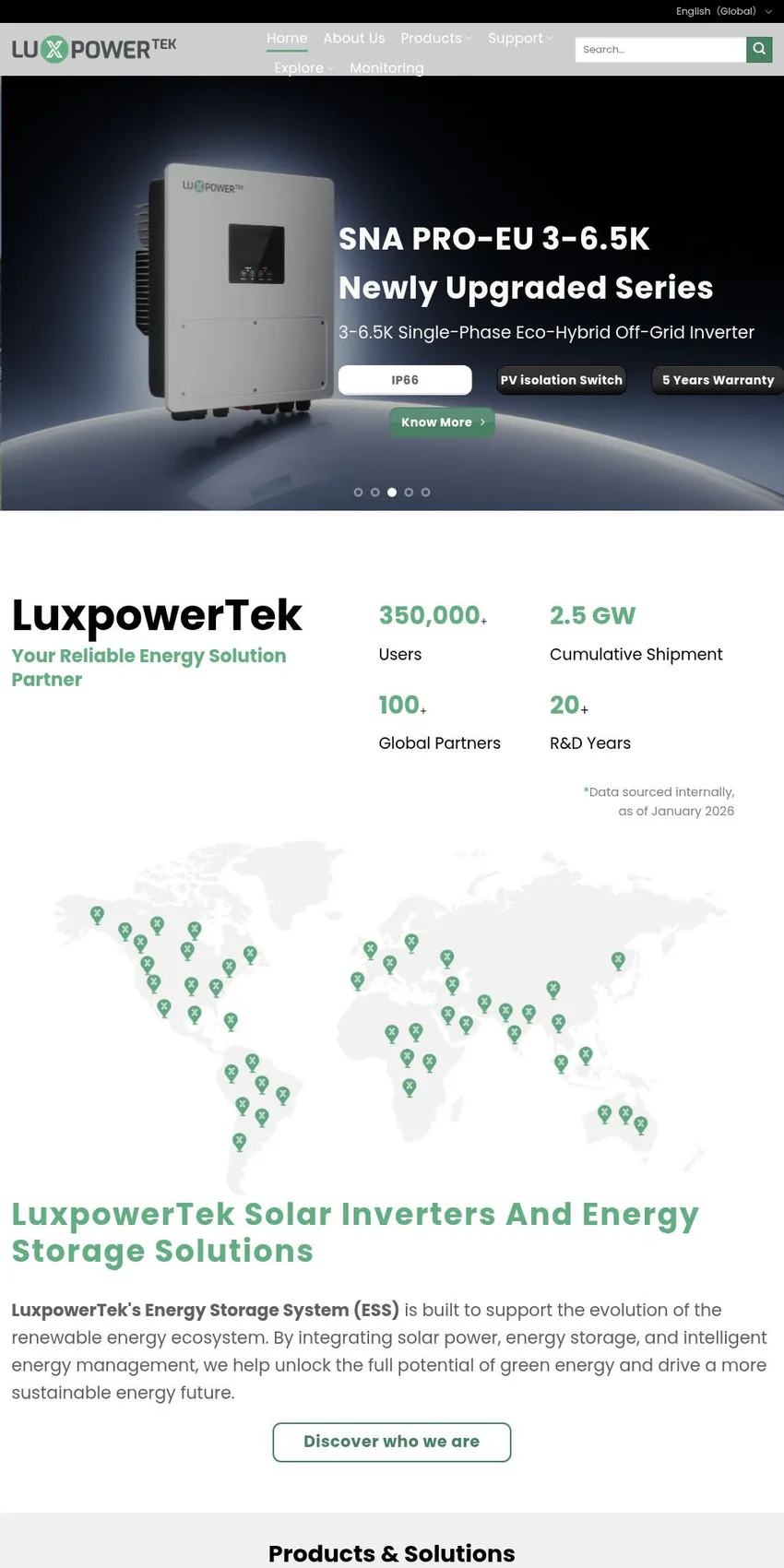
LuxpowerTek, officially known as Lux Power Technology Co. Ltd., is a Chinese manufacturer of solar inverters and energy storage systems. The company is based in Shenzhen and designs both the inverters and the energy management systems that control them. Its products are supplied to homes, farms and commercial buildings across Europe, America, Africa and Asia.
How did it all begin?
The company was founded in 2017, with a focus on energy storage. In 2019, it entered the European market, launched its first hybrid inverter and expanded into Japan and Australia. Two years later, it obtained several international certifications, and its first off-grid model proved popular in South Africa.
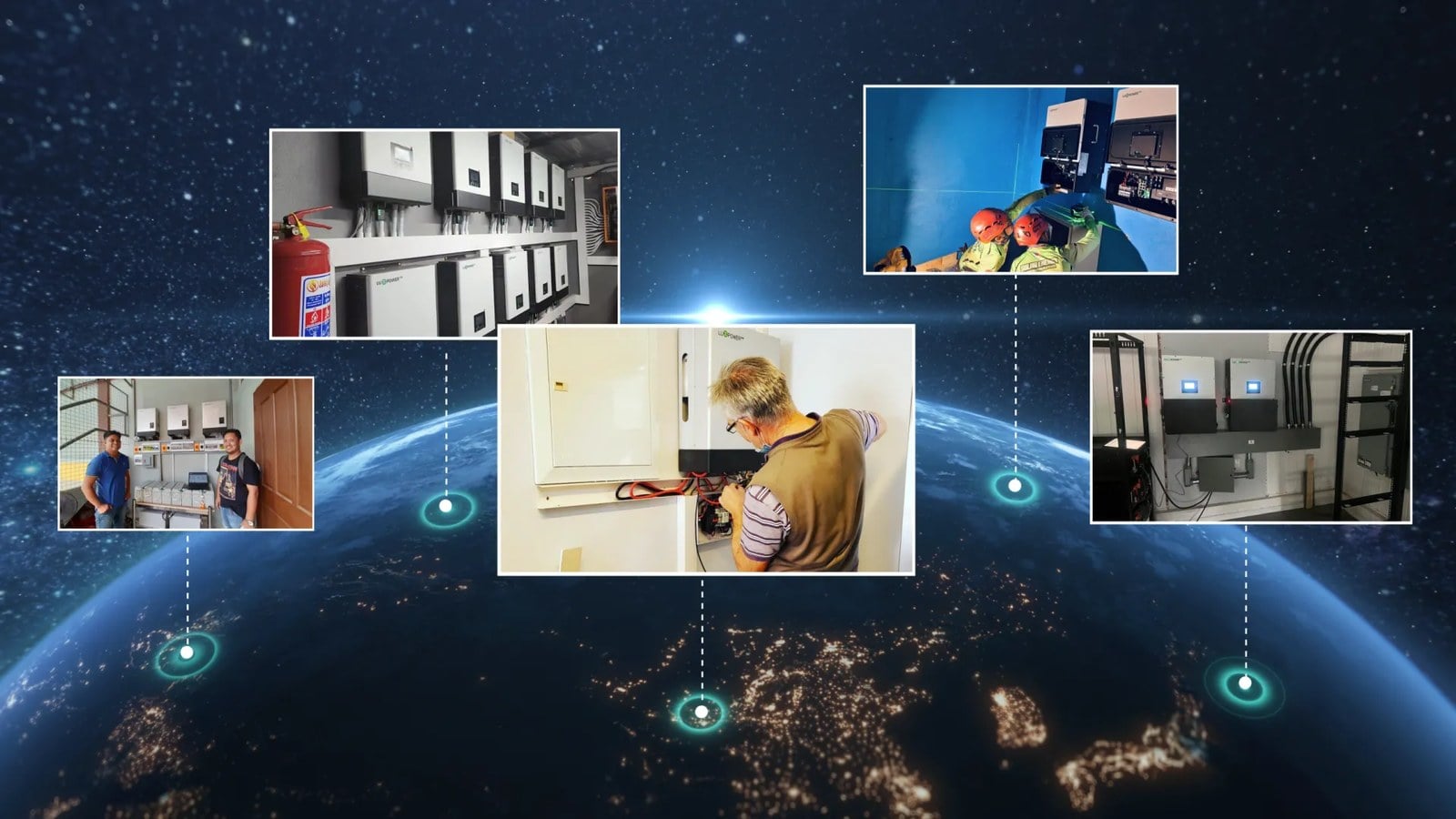
In 2023, annual sales rose by 200 per cent, and the 6 kW off-grid inverter quickly gained ground in the United States. According to the website, by early 2026 the company had reached over 350,000 users and a total of 2.5 GW installed. Its partner network comprises over a hundred companies worldwide.
What, exactly, does an inverter do?
Solar panels produce direct current, whilst the home uses alternating current. The inverter converts between the two, much like a plug adapter allows you to charge your phone in another country. Hybrid models also decide when energy goes to the home, when to the battery and when to the grid.
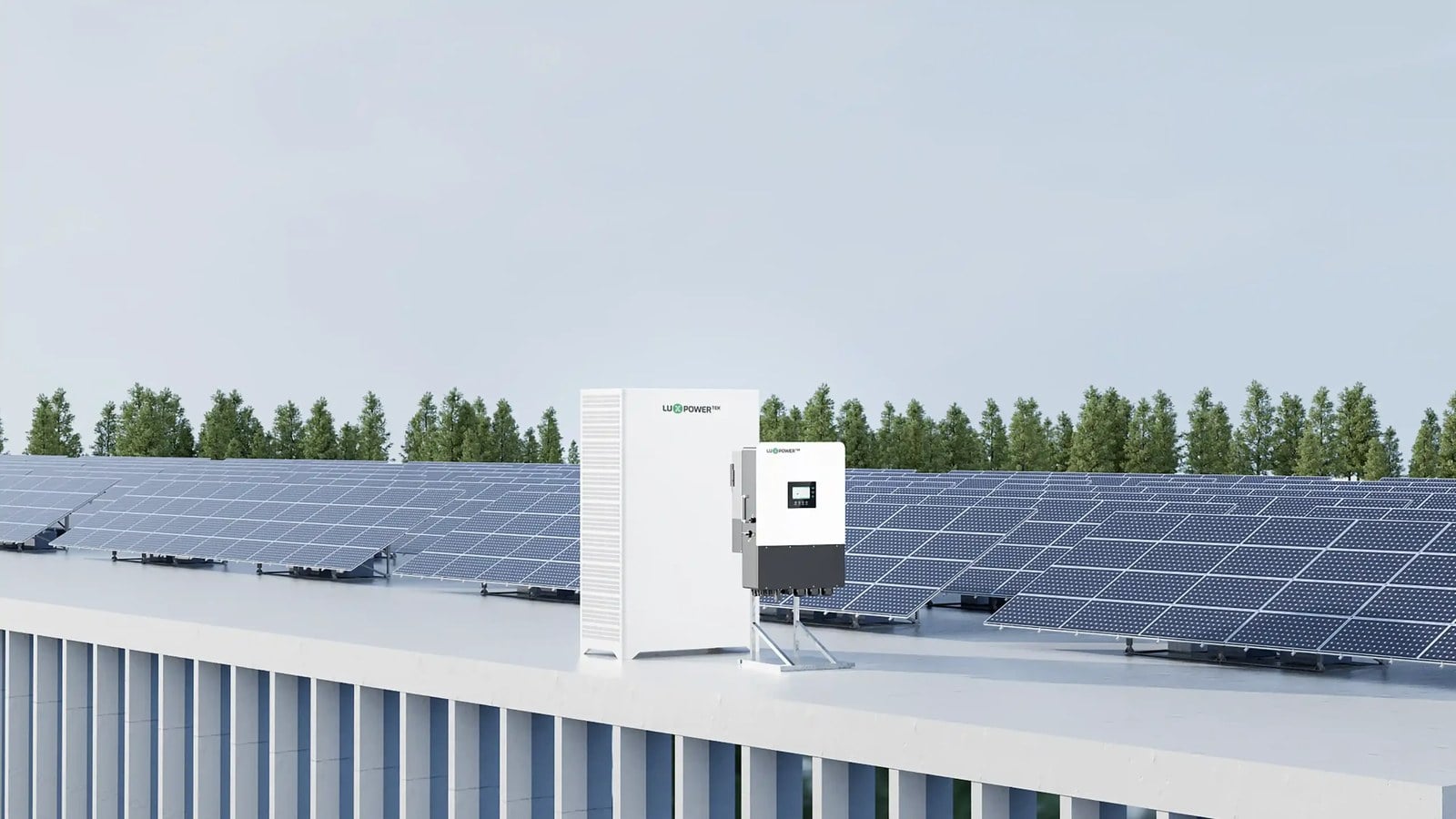
The hybrid range is the most extensive. For Europe, there are the single-phase GEN PRO, GEN3 and GEN2 series, whilst for the US market, with its split-phase grid, there are the 25 kW GEN-LB-US and GEN-HB-US models. The three-phase TriP2 series covers power ratings from 5 to 30 kW, including a high-voltage variant with IP65 protection for commercial and industrial buildings.
Each series has its own key strength. GEN PRO focuses on power density, whilst GEN3 emphasises compact dimensions. The TriP2-LB-US is designed for 120/208 V networks and controls each phase separately. The GEN2-LB-EU series ranges from 3 to 14 kW, so it covers everything from a small house to a large one.
And what if you have no grid connection at all?
For off-grid homes or areas with an unstable grid, there is the off-grid and eco-hybrid range. The SNA PRO-EU series features IP66 protection, an integrated panel separator and a five-year warranty. The GETA-LB-EU is a compact off-grid inverter, whilst the 4.5 kW SNA PRO-US operates at 120 V, the standard voltage in North America.
For existing installations, the company also offers coupled systems. The LXP 3600 ACS connects to the AC side, so it can add a battery to an older solar installation. At the other end, the LSP 100K provides a 100 kW DC connection for commercial and industrial projects.
Batteries and all-in-one systems
The battery range includes the Li-5, PGEM, PShield and PStack models. The 5.12 kWh PGEM is designed for indoor wall mounting. The PShield has the same capacity – 51.2 V and 100 Ah – but is IP65-rated for outdoor installation, whilst the PStack is a high-voltage battery that stacks module upon module.
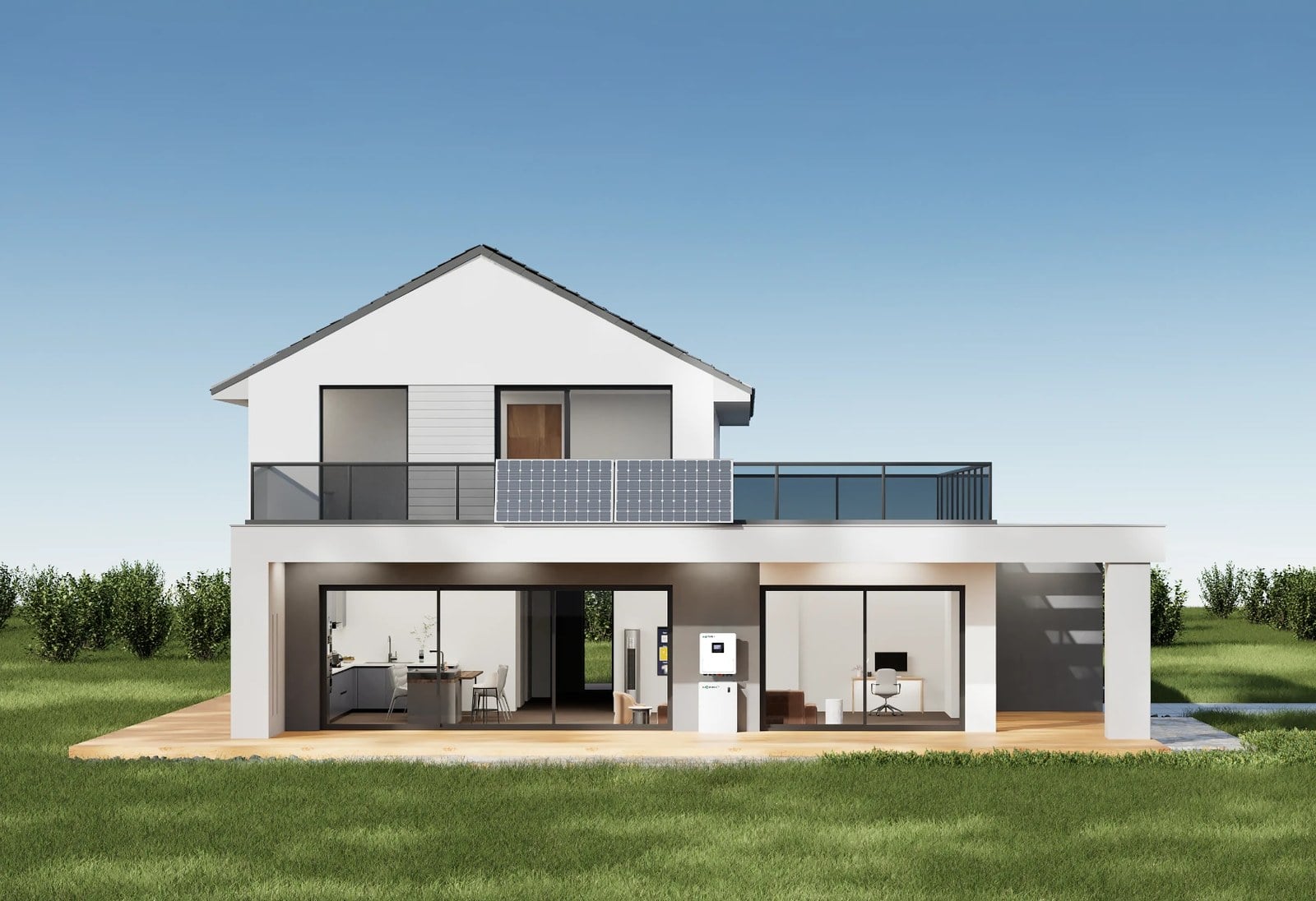
Those who want everything in a single unit can opt for an all-in-one system. The Eco Beast has 6 kW and 5 kWh per battery pack, whilst the new Eco Beast Pro promises simpler installation and a more powerful energy reserve. The LiteStor is the version for two-phase networks.
In my opinion, these systems are the best choice for a homeowner who doesn't want to combine parts from different manufacturers themselves. It's the difference between a ready-built computer and one built from components: the former starts up straight away, with no compatibility worries. Assembly takes less time, and the installer has just one technical specification sheet to follow.
How do you keep track of what's happening?
Monitoring is carried out via the LuxCloud app and a web portal. Accessories include Wi-Fi, 4G/GPRS and WLAN adaptors, plus meters and current transformers (CTs). The website also features a calculator for sizing the inverter and battery, as well as one for the number of solar panels.
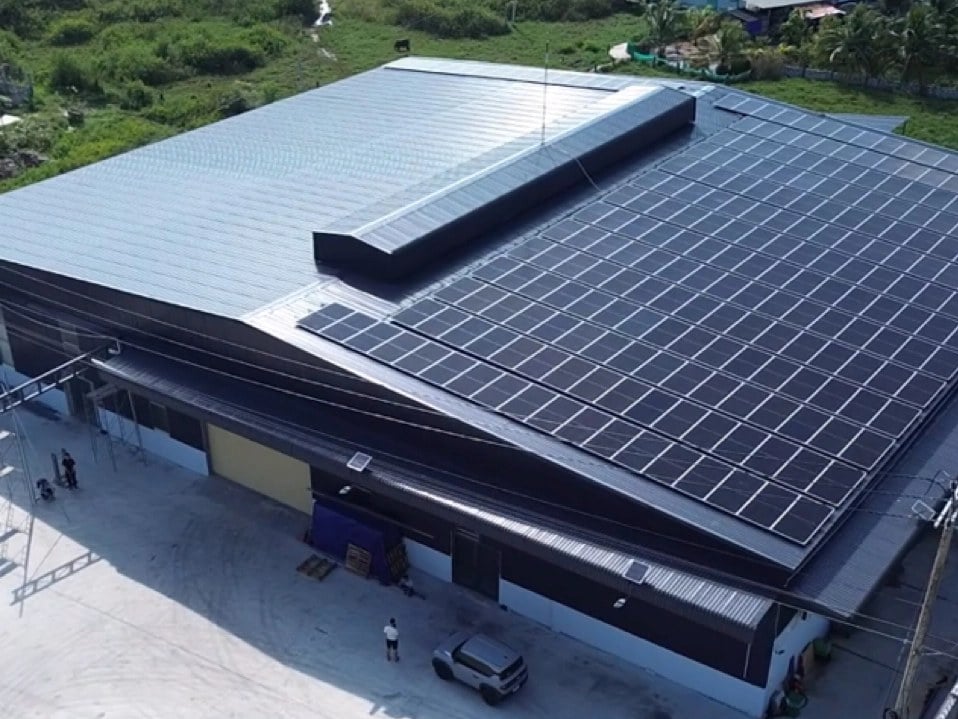
Case studies show the systems in action. One describes a house in Cologne with three-phase storage and an estimated self-consumption rate of over 80 per cent. Another features a 135.5 kWp installation at a fish sauce factory in Vietnam, with a self-consumption rate of 80.35 per cent. Both appear in the Case Study section of the website.
Who installs it?
As a reviewer, I appreciated the programme of certified installers, who are trained and tested by LuxpowerTek. The website features an installer search function, which is useful for those who don't know where to start. The company takes part in trade fairs and roadshows in India, Mexico, Germany, Vietnam and Argentina, and also has a regional website in South Africa.
The support section includes frequently asked questions, downloadable files, warranty information and a demand response programme. The contact page lists separate email addresses for sales and after-sales service, a telephone number, and contact and feedback forms. The website is available in eleven languages, including English, German, Polish and Hungarian.

Business address
LuxpowerTek (Shenzhen Lux Power Technology Co., Ltd.)
Building A, Donghua Industrial Park, No. 5003 Bao'an Avenue,
Shenzhen,
Guangdong
518126
China
Contact details
Phone: +86 755 8520 9056
At LuxpowerTek, we recommend an all in one energy storage system when its available configurations match your loads and…
Inverters are the central mechanisms of the energy systems. They deal with the energy conversions and ensure the seamless…
Meta Description: Why upgrade to an IP66-Rated inverter for outdoor solar installations? Learn the reasons an IP66-rated inverter…
To keep a solar power system running effectively over the long term, it needs routine maintenance. Solar inverters convert stored…