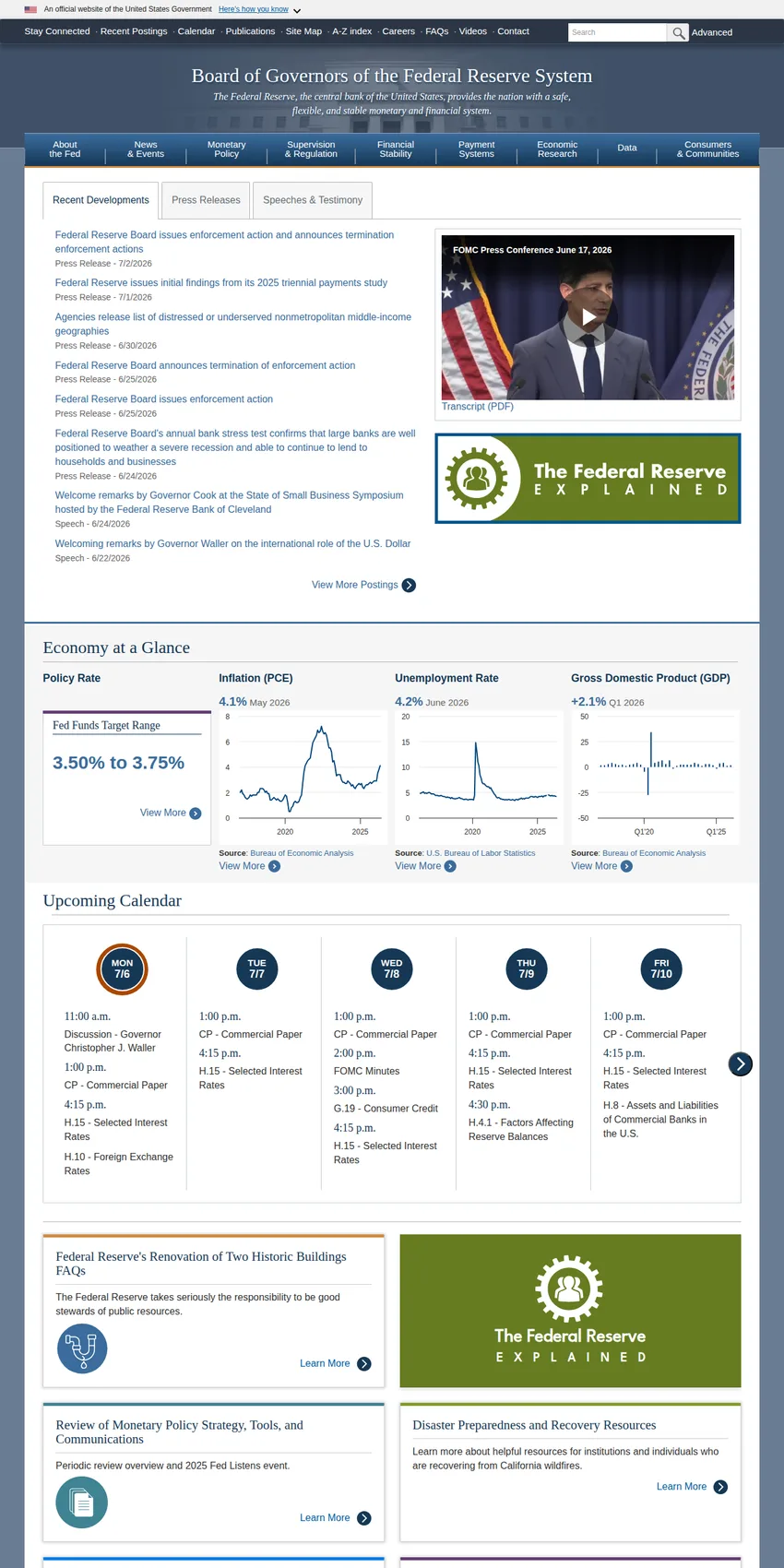
The central bank of the United States
The Board of Governors of the Federal Reserve System is the federal agency at the center of the United States central bank. Congress created the Federal Reserve through the Federal Reserve Act, signed into law on 23 December 1913, and the Board is the part of that system based in Washington. It has seven members, each nominated by the President and confirmed by the Senate to a staggered term of fourteen years, an arrangement meant to hold the agency at a distance from short-term politics. The wider Federal Reserve System pairs the Board with twelve regional Reserve Banks and with the Federal Open Market Committee, which sets the course of monetary policy. Alongside interest rates and bank supervision, the Board carries a set of duties over the payment system, and it is that work, rather than monetary policy, that ties the agency to the economics of card acceptance and cash pricing.
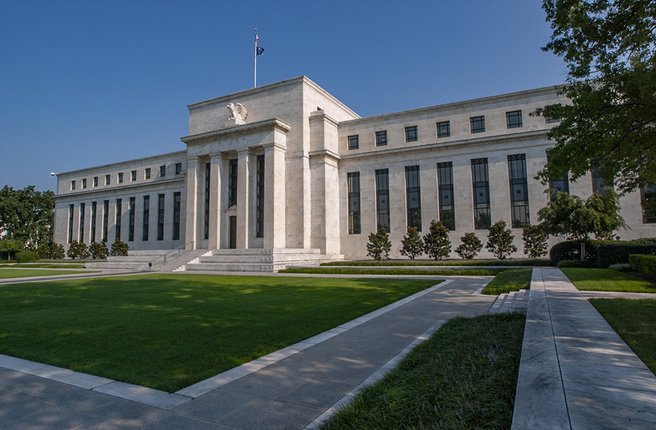
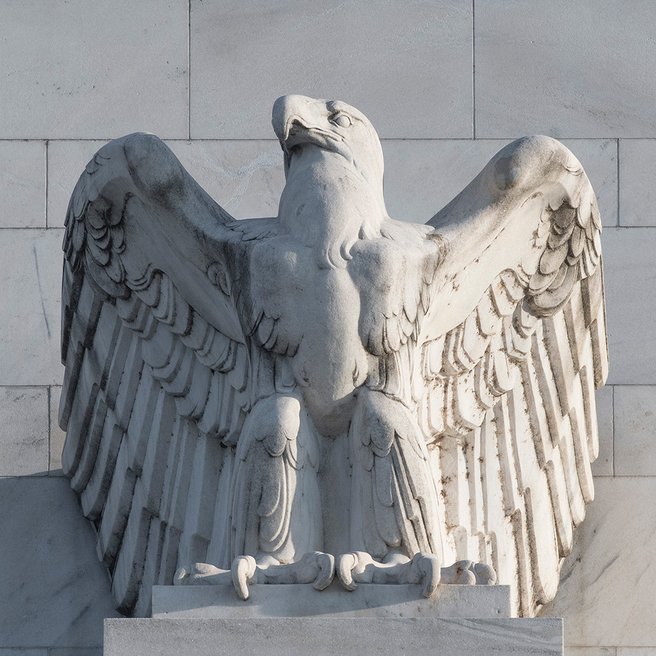
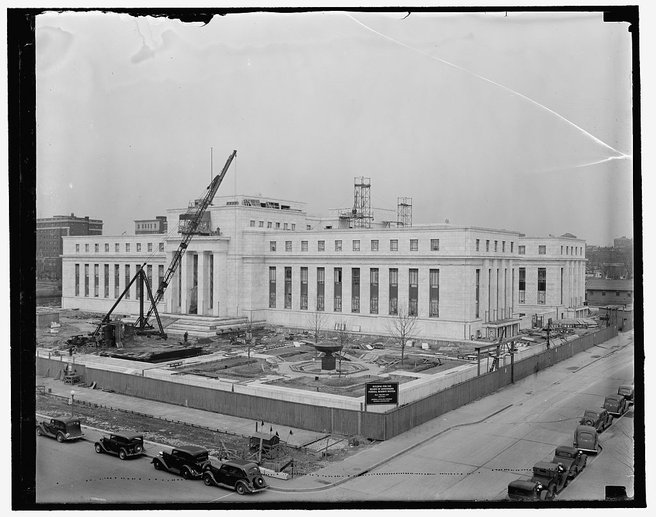
The Board works from the Marriner S. Eccles Federal Reserve Board Building at 20th Street and Constitution Avenue in Washington. The building was designed by Paul Philippe Cret, completed in 1937, and dedicated by President Franklin Roosevelt on 20 October of that year. Congress named it for Eccles, a Depression-era chairman of the Board, in 1982.
Regulation II and the price of card acceptance
The clearest link between the Board and the pricing choices merchants make is Regulation II, titled Debit Card Interchange Fees and Routing. It puts into effect the Durbin Amendment, a provision Congress added to the Dodd-Frank Wall Street Reform and Consumer Protection Act in 2010, which directed the Board to make sure that the interchange fee an issuer collects on a debit transaction is reasonable and proportional to the issuer's cost. Interchange is the charge that moves from a merchant's bank to the cardholder's bank each time a card is used, and it forms a large share of what a store pays to accept plastic. A merchant who posts a lower price for cash is, in plain terms, declining to pass that acceptance cost on to buyers who pay another way.
The Board issued the final rule on 29 June 2011. For a covered issuer, meaning a bank with ten billion dollars or more in assets, the interchange fee on a debit transaction is capped at twenty-one cents plus five hundredths of one percent of the transaction value, with a further one-cent adjustment available to issuers that meet fraud-prevention standards. On an average purchase the cap works out to roughly a quarter. Smaller banks and credit unions sit outside the cap. The regulation also carries routing rules, since a merchant must be able to send a debit transaction over at least two unaffiliated networks, a requirement written to give retailers a degree of choice and price competition. In October 2023 the Board proposed lowering the figures, cutting the base component to 14.4 cents, trimming the percentage component, and raising the fraud adjustment, a change that remained under consideration rather than in force.
Measuring what payments cost
To set and revisit the cap, the Board gathers cost data directly from the industry through a biennial Debit Card Issuer Survey, then reports on average interchange fees, issuer processing costs, and fraud losses. These reports are among the few public, standardized measures of what a debit transaction costs to carry, and they are cited widely in arguments over surcharging and cash discounting. A store owner weighing whether to add a card surcharge or advertise a cash price is working from the same cost picture the Board documents.
The Federal Reserve Payments Study
Since 2001 the Board, working with the Reserve Banks, has run the Federal Reserve Payments Study, a survey conducted every three years that estimates how Americans pay when they do not use cash. It tracks the number and value of payments made by credit card, debit card, automated clearing house transfer, and check, and it records the long shift away from paper toward cards and electronic methods. The study maps the ground on which cash-versus-card decisions are made, showing how large card volumes have become and how the mix keeps moving from one release to the next.
Other payment duties and public information
The Board's payment role reaches past interchange. The twelve Reserve Banks, under the Board's oversight, operate the plumbing that clears and settles much of the country's payments, among them the FedACH network for batch transfers, the Fedwire service for large-value transfers, and FedNow, an instant-payment service launched in July 2023. The Board writes rules that touch electronic fund transfers, check collection, and the availability of deposited funds, several of which shape how quickly and at what cost money moves between accounts. For a merchant, these systems sit underneath every card swipe and every bank deposit of the day's cash.
Much of this material is published for the public without charge. The Board posts its regulations, the biennial interchange reports, the payments study data, staff research, and consumer guides on its website, and it keeps the searchable records that let a reader trace how a rule such as Regulation II was written and amended. For anyone studying the cost side of accepting cards, or the reasoning behind a cash discount, the agency is a primary source rather than a secondary one, since the fee caps and cost surveys originate with it. The Board can be reached at its Washington headquarters, 20th Street and Constitution Avenue NW, Washington, District of Columbia 20551, and its main telephone line is +1 202-452-3000. Its place in this category rests on that pairing: it regulates the interchange fees that make card acceptance costly, and it publishes the cost measurements a merchant uses when deciding to reward cash.
Business address
Board of Governors of the Federal Reserve System
20th Street and Constitution Avenue NW,
Washington,
District of Columbia
20551
United States
Contact details
Phone: +1 202-452-3000