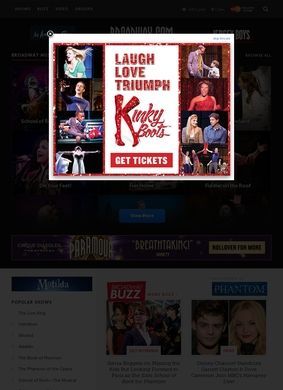
Broadway.com is a ticket marketplace and editorial hub for Broadway and Off-Broadway productions in New York City. It sells seats directly with box-office verification, which is the detail that separates it from resale middlemen who pad prices and hope nobody checks. Tickets come with flexible returns if a show cancels or closes, and the site lets you compare prices across different performances of the same title before you pick a date.
Browsing options for every visitor
The catalog is organized in a way that suits both the person who knows exactly what they want and the person who has no idea. You can browse by date, by genre across musicals, plays, classics and award-winners, or by editorial groupings such as "Fan Favorites" and "Date Night Shows." That last layer is genuinely useful for a tourist with two free evenings, because the volume of shows running at any one time in the theater district is hard to sort through cold. Group sales arrangements and gift cards round out the purchasing options, so the site covers the office outing and the birthday present alongside the solo theatergoer. Broadway has clearly thought about who is arriving at the homepage and what they need.
Editorial content and show guides
Around the transactions sits a real publication. The Broadway Guide section walks through venue tips, Tony Awards background, and seat-selection advice, which is the sort of thing a first-timer never thinks to ask about until they are stuck behind a partial-view column. There are also industry news pieces, feature articles, videos, photo galleries, and reviews from both fans and professional critics. The mix of professional and audience reactions is useful precisely because the two often disagree, and seeing the split is more honest than a single curated star rating would be. A site that only ran the rave pull-quotes would be easier to distrust. Broadway earns attention here by not pretending the editorial and commercial sides of the operation are unrelated.
That editorial weight is a fair part of why Broadway works as a destination beyond the checkout. Plenty of ticket sites are a search box and a payment screen and nothing else. Here the content gives a casual visitor a reason to stay and read, and gives a dedicated theatergoer a place to keep up with openings and closings. The navigation does not force one type of visitor to wade through tools meant for another, and the genre filters do the work of curation without hiding inventory behind them.
Trustpilot and BBB reputation scores
The reputation evidence is mixed in a way worth laying out honestly. On Trustpilot, Broadway holds roughly four stars across 343 reviews, which is a solid score for any company handling money and high-stakes plans like a once-a-year trip to New York. The Better Business Bureau lists it as accredited with an A+ rating, and the address on file there matches the one published on the site. That small consistency quietly supports the rest. On JustUseApp the mobile app carries close to 1,980 user reviews and a safety score of 99.1 out of 100, so the digital side of the operation reads as trustworthy to the people using it day to day.
Service fee complaints
The complaint that keeps surfacing is about money, specifically fees. Tripadvisor lists Broadway as an attraction and ticket seller, and some users there flag high service and handling charges, with reports of surcharges running up to 38 percent on the face value of a ticket. That is a real number and it deserves to sit in plain view. A surcharge of that size can turn a reasonable seat price into a figure that stings at the final screen, and anyone budgeting carefully should add tickets to the cart and read the total before assuming the listed price is what they will pay. Box-office verification and cancellation flexibility are worth something, and convenience has a cost, but buyers are entitled to know how steep that cost can get on a particular order.
The legitimacy of Broadway is not in question. This is an accredited seller with verified inventory, a refund policy when shows fall through, and a strong rating from a large pool of reviewers, which puts it well clear of the sketchier corners of the ticket resale world. The friction is the pricing, and how much that friction matters depends entirely on what you are buying and how price-sensitive you are. There is a real difference between a $90 orchestra seat with a 10 percent charge and a $300 premium ticket with a 38 percent one.
Customer support contact channels
Contact is handled without games, which counts in its favor. A phone line, 1-800-BROADWAY, sits where you would expect it, a physical address in midtown Manhattan is published openly, and a support page carries order tracking and an FAQ. For a company asking people to buy tickets to a dated event, that openness is reassuring. A buyer with a problem the night before a show knows where to turn, and the address matching the BBB record removes any lingering doubt about who is on the other end of the transaction. That transparency is more than a checkbox; it is the thing that separates a credible ticket operation from one you would hesitate to trust with a credit card number.
What Broadway does well is concentrate a sprawling, confusing live-entertainment market into one place a newcomer can navigate without a local friend to call. The genre filters, the editorial picks, and the guide content do real work for someone who has never set foot in a theater on 44th Street. The deep listings and critic-plus-fan reviews serve the regular who already knows the difference between a long-running juggernaut and a closing-soon gem. Both types of visitor can find their footing on Broadway without too many wrong turns.
Weighing the running total
The one thing to keep your eyes on is the running total. Browse the Broadway listings, read the guide, compare a few performances, and weigh whether the service fee is worth what Broadway charges on top of the seat price. Some people will gladly trade the markup for the peace of mind of a verified ticket and an easy refund if the show goes dark. Others will see that surcharge and decide to chase the box office directly. Either choice is reasonable once you know the number going in.