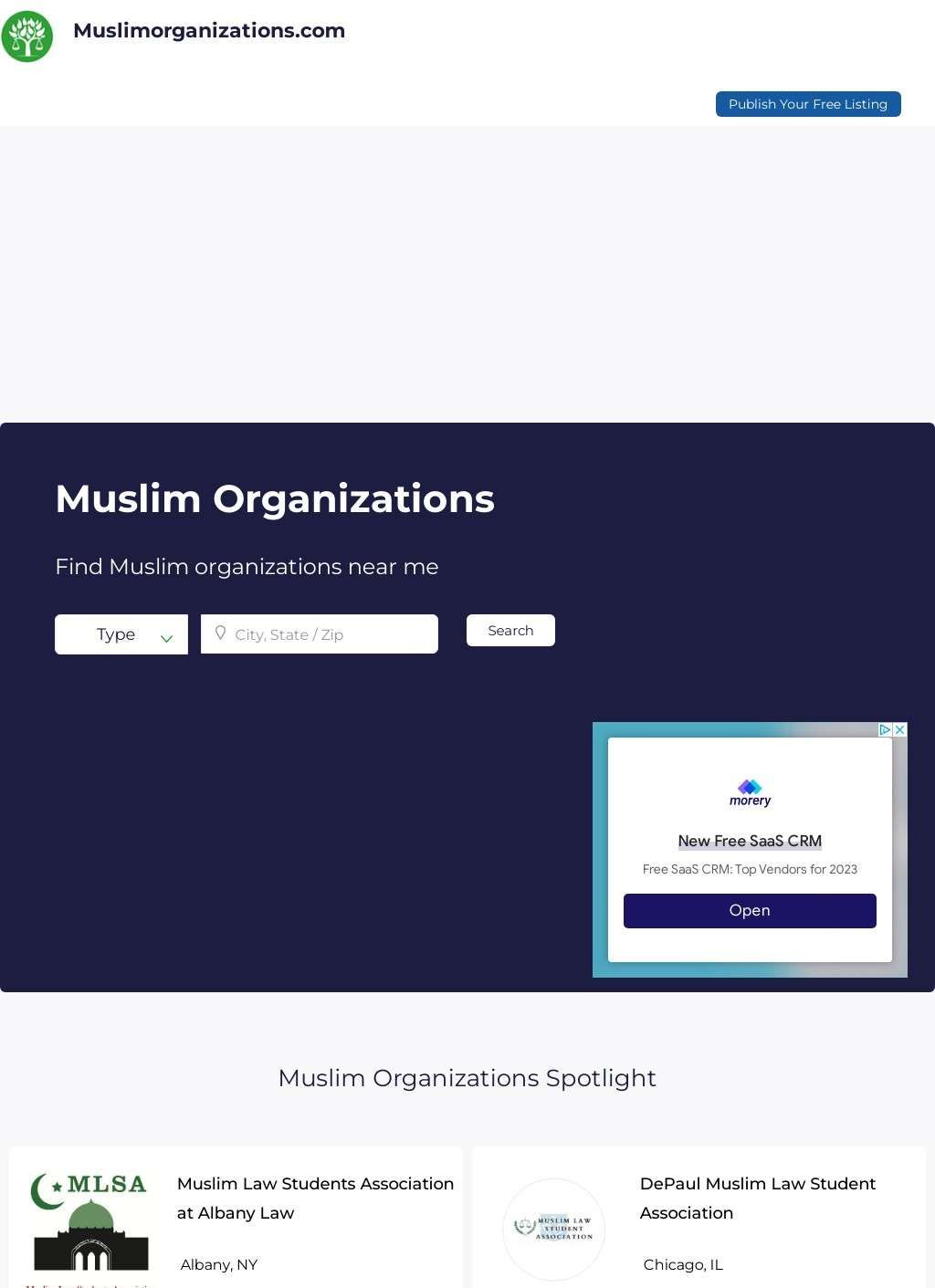
Someone trying to find a reputable Muslim charity, a mosque in an unfamiliar city, or a vetted nonprofit to volunteer with usually ends up bouncing between half-dead Facebook pages and outdated PDFs. That hunt is the gap Muslim Organizations sets out to fill. It pulls Muslim nonprofits and community groups into one searchable place, weighted toward the United States and Canada, and lets a visitor browse by the kind of work an organization does or drill down by city. The premise is plain and the need is concrete, which already puts the site ahead of the scattered listings it competes with.
How the directory organizes Muslim nonprofits
The category breakdown is where the structure pays off. Charities are split into recognisable buckets: animal welfare, arts and culture, education, environmental, health, humanitarian, and more, sitting alongside religious organizations, mosques, and student groups. A person can search by an organization's name or by practice area, which is useful when you know roughly what you want but not who provides it. Featured and spotlight slots push certain entries to the top, and there is a user account layer with dashboards for managing a profile and tracking referrals. Listing an organization is free; a paid leads service sits on top for groups that want inbound contact, a sensible way to keep Muslim Organizations open while still earning something.
Vetting process and legal standing checks
The about page makes a claim most directories never bother with. Muslim Organizations says it compiles a roster of top Muslim nonprofits worldwide and, as part of vetting, checks judiciary and disciplinary records in each nonprofit's state of licensure. If that is carried out consistently, it is a genuine differentiator, because the single hardest thing for an ordinary donor to do is confirm that a charity is in good legal standing where it operates. What is missing on the public-facing pages is any trace of that process: how often records are re-checked, what triggers a listing being pulled, whether the result shows on the profile. The promise is strong. The evidence for it, visible to a visitor, is harder to pin down.
The operator is not hidden, which helps. Muslim Organizations runs under the Heritageweb brand, and its help resources point to help.heritageweb.com, so there is a company behind it with a support footprint, not an anonymous shell. That association also hints that the same engine powers other niche directories, which explains the polished account system and the leads product. Knowing who builds and maintains a vetting directory is part of trusting the vetting itself, and on that front Muslim Organizations does better than community-run lists that go quiet the moment a volunteer loses interest.
Verified organization profiles are advertised as a core feature, and the word verified is doing heavy lifting. For a donor or a parent picking a student group, the difference between a listing that has been confirmed and one that was simply submitted is the whole point of using a curated directory instead of a plain web search. Muslim Organizations asserts it does the confirming. A visitor has to take a fair amount of that on faith, since the public-facing profile does not obviously surface the underlying checks.
Contact options and organizational transparency
On reaching the people behind the site, the picture is functional but limited. There is a contact page, and instead of a bare form the site offers an internal messaging system with a stated 24-hour response window, which is a more accountable setup than a generic inbox that may never reply. Social channels are covered too, with a presence on Facebook, X, LinkedIn, and Instagram. What is missing is a phone number or a street address anywhere obvious, so anyone who prefers to call before trusting a platform with a donation decision will not find that route here. For Muslim Organizations, which positions itself as a vetting authority, the absence of a published address is a fair thing to note. It does not sink the proposition, but a body that audits others invites a little more transparency about itself.
Reputation is the part where there is the least to go on, and it is better to say that directly. A search for muslimorganizations.com turns up no notable independent reviews of the platform itself. The hits that surface belong to unrelated names, a dating site and a separate relief charity, which says more about crowded search terms than about Muslim Organizations. No Trustpilot score, no stack of Google ratings, nothing external to lean on. For a young directory that may simply mean it has not yet drawn commentary either way. For a cautious visitor, the credibility currently rests on what Muslim Organizations says about itself rather than on a chorus of outside voices confirming it. The review count from third-party platforms stands at zero; that is the full picture.
Set against comparable resources, Muslim Organizations has a clearer purpose than the average niche listing site. The geographic filtering down to the city level is practical for someone relocating who wants a local mosque or a nearby food bank run by a familiar community. The specialty categories map onto how people actually think about giving, by cause rather than a long alphabetical list. The free-listing model should, over time, pull in a wide spread of groups, and the spotlight feature gives smaller organizations a chance to be seen that a flat directory would not. These are genuine strengths, felt within a couple of clicks.
Where Muslim Organizations stands apart from the general crowd of listing sites is the combination of breadth and stated rigour. Plenty of sites list Muslim charities; far fewer claim to run legal and disciplinary checks before publishing a profile. If a donor is weighing two unfamiliar nonprofits, a directory that has supposedly screened both for standing in their home state is worth consulting before writing a cheque. That is a meaningful service when it works as described.
Building trust without external verification
The whole proposition of Muslim Organizations turns on that word when. The site builds its case on trust it asks visitors to extend before showing the receipts: vetting that is asserted but not displayed on the profile, a verification badge whose method is not laid out, and no outside reviews to corroborate any of it. The connection to a recognised parent company, with a responsive contact channel, gives reason to believe the claims are made in good faith. The judiciary-record screening may well be happening on every listing. The difficulty is that Muslim Organizations has not yet made it possible for a cautious donor to verify that for themselves, and until it does, the gap between the claim and the confirmable evidence is the site's main weakness.