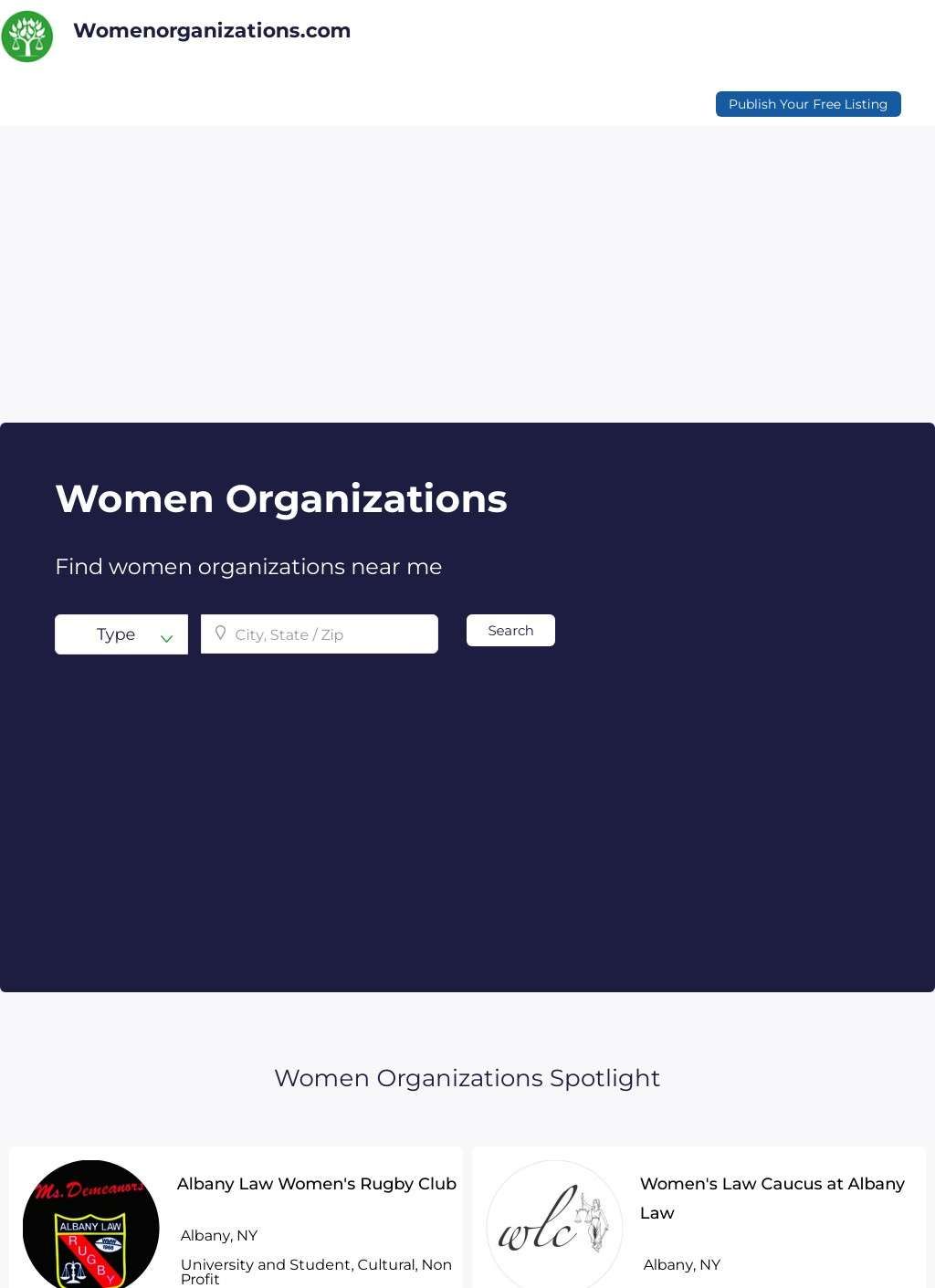
Type a specialty into the search box on womenorganizations.com and pick a city, and what comes back is a set of profiles for women-focused nonprofits, each one carrying details that the platform says it cross-checks against state judiciary records for licensure and any disciplinary history. That verification claim is the most concrete thing Women Organizations puts forward, and it shapes how the rest reads. Women Organizations does not present itself as a blog or a campaign group. It is a structured catalogue of charities, cultural groups, human rights bodies and political organizations led by or serving women, weighted toward the United States but described as worldwide in scope.
Search and verification features
The publisher matters here. Women Organizations runs under Heritage Web, an outfit that has put out more than 300 professional directory publications since 2009. That is not a one-off hobby site, and the family resemblance shows in the feature set: a member dashboard, account and notification settings, a referral program, and paid leads access for the organizations that want them. A messaging system lets a visitor reach out to a listed group from inside the platform, and owners of those groups get tools to manage how their entry appears. The Help Center lives at help.heritageweb.com, shared across the wider stable of sites. Women Organizations sits inside an established production infrastructure, which is a different baseline than an independent business directory launched by a single operator.
Publisher and platform infrastructure
The two main ways in are specialty type and location, and the city browse pages are built out for real markets rather than left as empty templates. Austin and Seattle both have their own pages, and the structure implies the same exists for other major U.S. cities. Someone hunting for a women's shelter in a particular metro, a cultural association, or a rights advocacy group has a path that narrows quickly instead of dumping everything into one long scroll.
Browse by specialty or location
Coverage spans a wider range than the word "charity" suggests. Political organizations sit alongside cultural ones, human rights groups alongside general nonprofits. That breadth is a genuine strength for anyone who does not yet know exactly what kind of group they are looking for, though it also means the listings are only as useful as they are current, and a directory of this size lives or dies on how often its entries get refreshed. Women Organizations does not show, from the public pages, how recently any given profile was updated, which leaves a visitor guessing at how fresh the underlying data is. A profile that looked accurate two years ago may have moved, merged or wound down since, and there is no on-page timestamp to settle the question.
Types of organizations included
The About page frames the mission as compiling top women nonprofits located worldwide. That is a tall order, and the honest read is that the U.S. concentration tells the truer story of where the data actually runs deep. A user in Austin will likely find more to work with than one searching from outside North America.
Contact and support options
Reaching the people who run Women Organizations takes a little digging. A Contact link sits in the footer, the Help Center is one click away, and the brand maintains profiles on Facebook, X, LinkedIn and Instagram. What is absent from the landing page and the About page is a phone number, a street address, or any mailing details. For a platform that asks organizations to manage paid listings and access leads, a prospective listing owner spending money would reasonably want a more direct line than a footer link and a shared help portal. The support route here is online-only, routed through Heritage Web's central desk rather than a dedicated channel for Women Organizations specifically.
How current are the listings?
None of that sinks the site, but it does set expectations. Someone comfortable working through a help center and social channels will manage fine. Someone who wants to call before listing a nonprofit may feel the gap.
Geographic scope and data depth
On reputation, the picture is quiet. A search for Women Organizations as a platform turns up no notable third-party reviews. What surfaces instead is noise: Yelp pages for individual women's organizations in various cities, Charity Navigator scores for unrelated bodies such as Women for Women International, and BBB profiles for nonprofits that have nothing to do with this directory. So there is no independent verdict to lean on here, positive or negative. The platform's credibility rests on the verification claim and the track record of its publisher, not on a crowd of reviewers vouching for it.
That absence cuts both ways. It means no chorus of complaints, but also no outside confirmation that the judiciary-record checks deliver what they promise. A cautious user would treat the verified-details language as a useful starting point and still do their own due diligence before donating to or partnering with any group they find through Women Organizations.
The clearest audience is twofold. A person looking to support or connect with women's nonprofits in a specific American city gets a searchable, categorized starting point that beats raw web searching. And an organization that wants visibility, inbound messages and lead access gets a managed listing within an established directory network. Women Organizations is built to serve both at once, and the dashboard, messaging and referral pieces only make sense when you read it as a two-sided service. The referral program and owner tools are clearly aimed at that second group.
Comparing Women Organizations to Charity Navigator
Set against something like Charity Navigator, the comparison gets honest fast. Charity Navigator offers financial-health scores and accountability metrics that Women Organizations does not surface; it is the better tool for vetting where a donation actually goes. What Women Organizations offers in return is breadth across categories Charity Navigator does not index as cleanly, including cultural, political and rights groups, plus city-level browsing and a direct messaging channel. For discovery and first contact it is the more practical entry point of the two; for hard financial scrutiny before writing a check, the dedicated rating service still does the job better. Used together, with Women Organizations for finding groups and an independent rater for judging them, the two cover what neither manages alone.