The making of UCLA
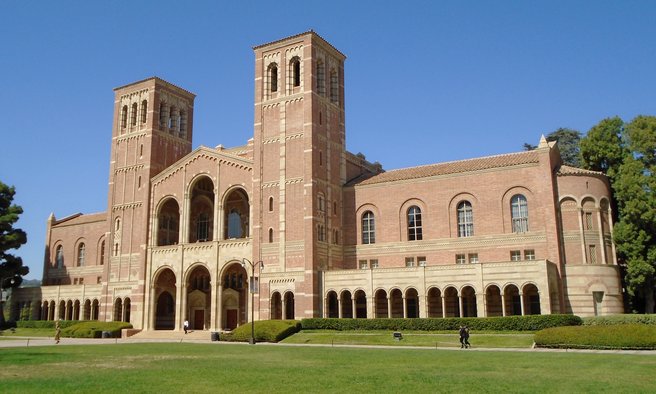
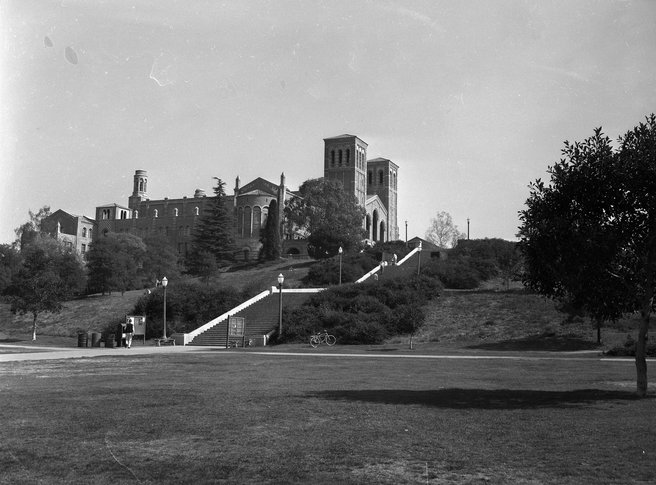
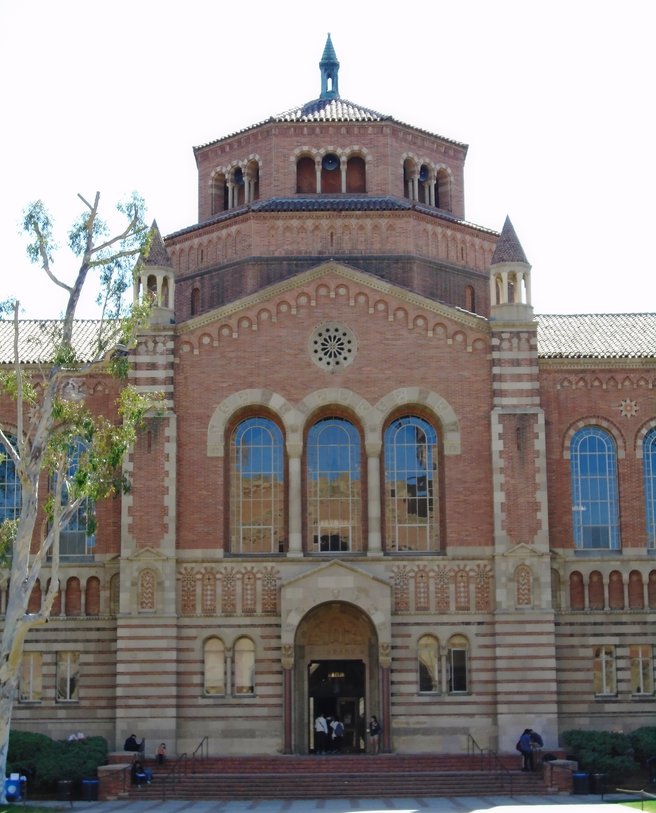
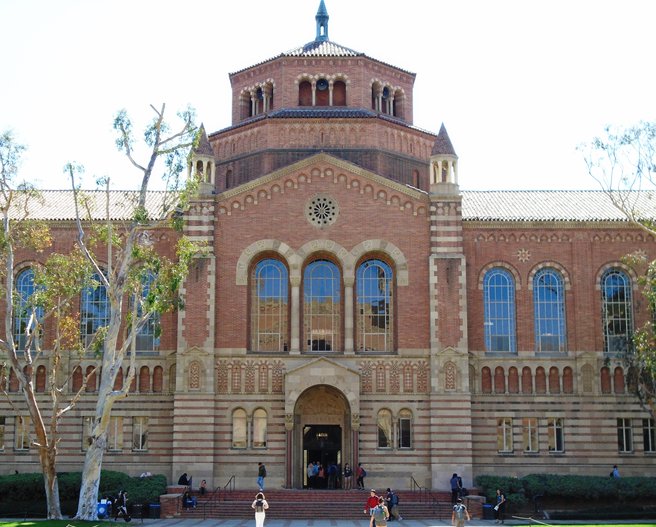
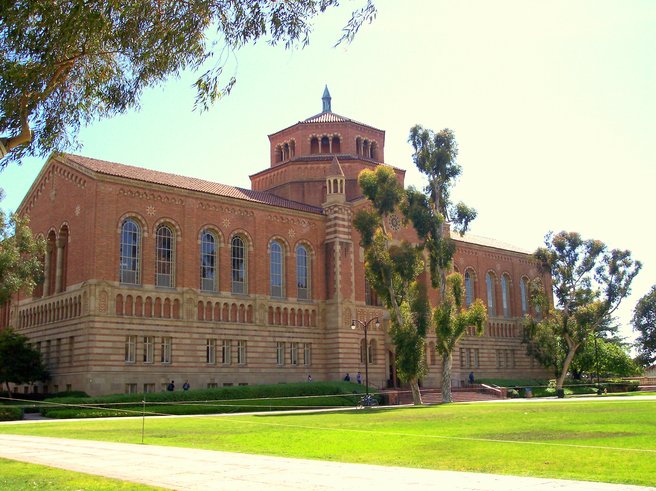
The University of California opened a southern branch in 1919, inheriting a two-year teachers college on Vermont Avenue and a mandate to grow. Enrollment outran that site within a decade. In 1929 the campus moved west to 419 acres of the former Wolfskill ranch in Westwood, where four brick buildings went up around a central quadrangle. Royce Hall and Powell Library, both finished that year in a Romanesque style borrowed from northern Italy, still anchor the oldest part of campus and remain the buildings most people picture when they hear the name UCLA. The institution is one of ten campuses in the University of California system and the largest of them by enrollment.
The name settled over time. The school was the Southern Branch, then the University of California at Los Angeles, and finally UCLA. What started as an undergraduate teachers college added graduate degrees in the 1930s and a medical school in the 1950s, and the professional schools accumulated from there. The change from a regional college to a national research university took about two generations, and the physical campus records that growth, with the original Italianate quad at the center and later decades of construction spreading north and south from it.
The campus and its scale
UCLA today enrolls 49,013 students. That figure breaks down into 33,534 undergraduates, 13,898 graduate and professional students, and 1,581 interns and residents in medicine and dentistry. Teaching and research are carried by roughly 5,700 faculty members. The academic structure is the UCLA College, which covers the liberal arts and sciences that most undergraduates study, plus twelve professional schools in fields that include law, management, medicine, engineering, education, public affairs, and the arts. The course catalog runs to more than 5,000 offerings.
- Founded in 1919; the Westwood campus opened in 1929
- 419 acres in the Westwood district of Los Angeles
- 49,013 students enrolled in 2025 to 2026
- The UCLA College plus 12 professional schools
- Roughly 5,700 faculty members
The medical side of the campus is a working hospital system as well as a school. The David Geffen School of Medicine and the Ronald Reagan UCLA Medical Center treat patients from across the region and give the university a teaching hospital on the same grounds as its lecture halls, which is why the enrollment count includes clinical trainees alongside undergraduates.
Research and a moment in history
Research is the part of the university that outsiders tend to underestimate. UCLA draws about 1.6 billion dollars a year in competitively awarded grants and runs more than 6,000 funded projects at any given time. Its faculty include Nobel laureates and MacArthur fellows, and the campus holds more than 1,200 active United States patents. Those are large figures for any institution, and they are the reason a former teachers college now sits among the country's leading research universities rather than among its regional ones.
Where the internet took a first step
One date is worth singling out. On the night of October 29, 1969, a graduate student in Leonard Kleinrock's lab in Boelter Hall tried to send the word login to a computer at the Stanford Research Institute. The system crashed after two letters, so the first message ever carried on the ARPANET, the network that grew into the internet, was simply the letters l and o. A plaque and a preserved interface message processor now mark the room. For a campus better known to the public for its sports teams, that quiet event in a basement lab is arguably its largest contribution to ordinary daily life.
Arts, humanities, and the public campus
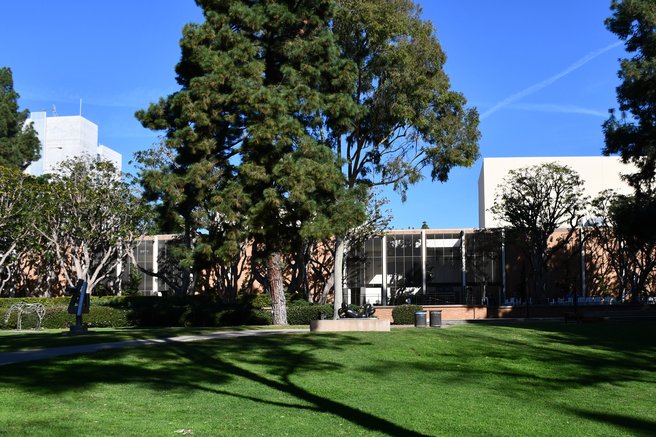
Royce Hall was built as an auditorium and has spent a century as one of the city's serious performance venues, presenting orchestras, dancers, and lectures under the program now called CAP UCLA. Across the quad, Powell Library has served generations of undergraduates as a reading room and study hall. The wider UCLA Library is among the largest academic collections in the country. The campus also runs the Fowler Museum, the Hammer Museum in nearby Westwood Village, and the Franklin D. Murphy Sculpture Garden, which sets modern bronzes among the trees in the northeast corner of campus. Those holdings, together with the humanities departments in the College, are why the university fits an arts and humanities education listing as squarely as it fits any science ranking.
The public also knows UCLA through its athletics. The Bruins have won 123 NCAA team championships, including the run of ten basketball titles under John Wooden between 1964 and 1975, and the university moved from the Pac-12 to the Big Ten Conference in 2024. UCLA athletes have collected more Olympic medals over the years than a good many countries have. None of this is the reason the university exists, but it is part of how Los Angeles has come to recognize the place.
UCLA occupies the Westwood neighborhood of Los Angeles, with its administrative address at 405 Hilgard Avenue, Los Angeles, California 90095. The main campus operator can be reached at +1 310-825-4321, and admissions, department, and visitor contacts branch out from that line. For anyone studying higher education in the arts and humanities, it is a public university whose century of records, collections, and performance spaces stays open to visitors as well as to its own students.
Business address
University of California, Los Angeles
405 Hilgard Avenue,
Los Angeles,
California
90095
United States
Contact details
Phone: +1 310-825-4321