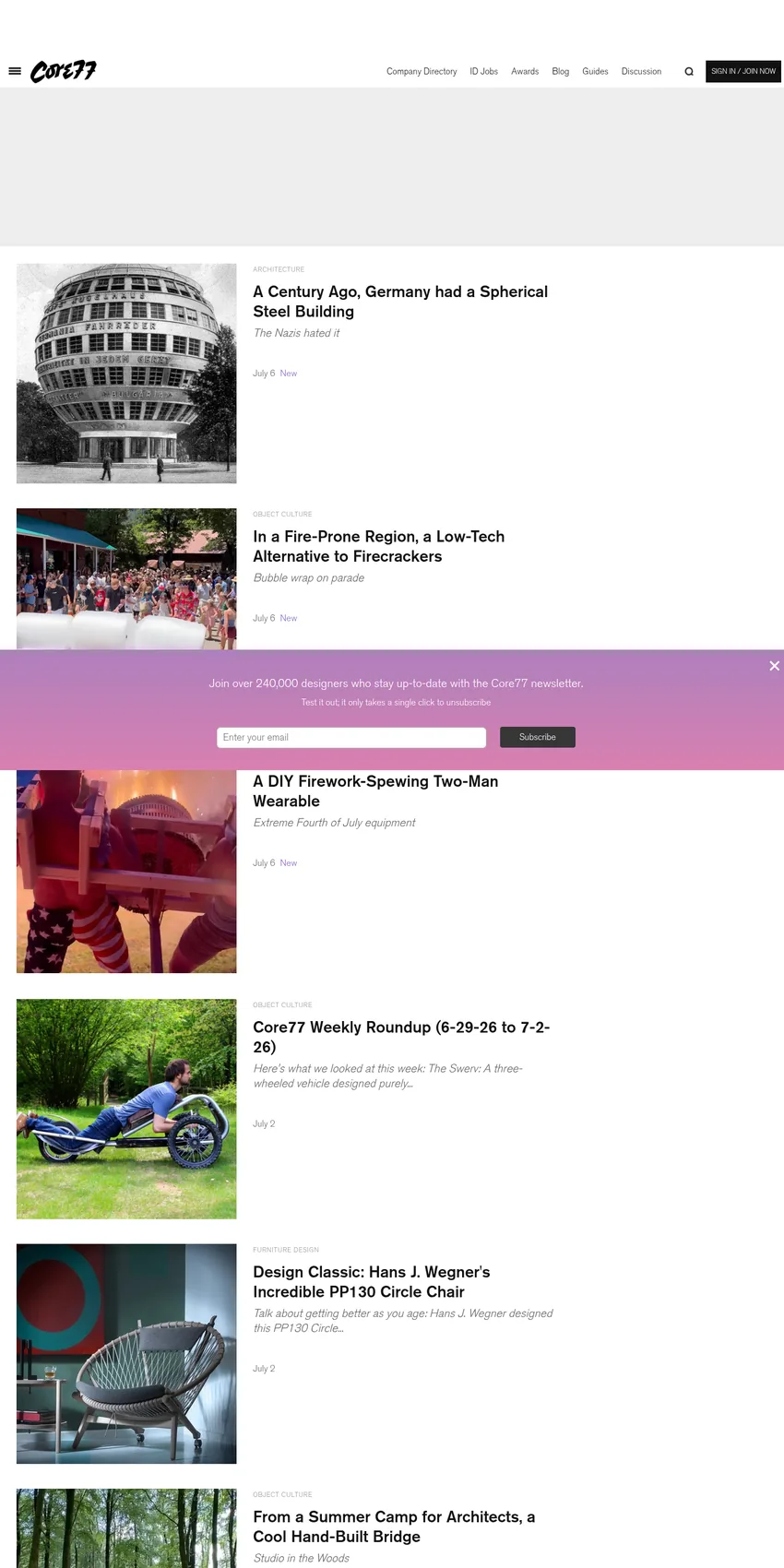
Where does an industrial designer go to read about the trade itself? Core77 is one long-standing answer. It is an independent publication built around a daily feed of design news and object features, and around that feed it has grown a set of working tools for the profession: a company directory, a job board, an awards program, a guides section, and open discussion forums. The shape is a trade paper crossed with a bulletin board, aimed at people who design products for a living as much as at people who simply like reading about objects. The listing sits under arts and humanities, which is fair as far as it goes, but the emphasis is specific: industrial design, the design of physical things, and the site rarely strays far from it.
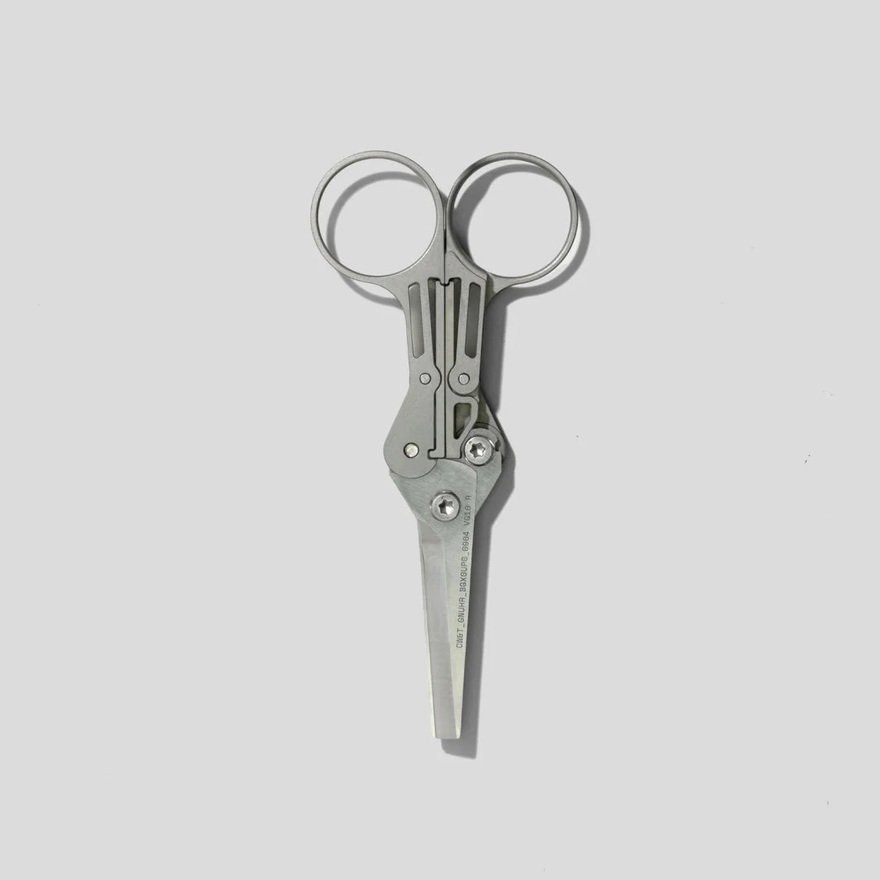
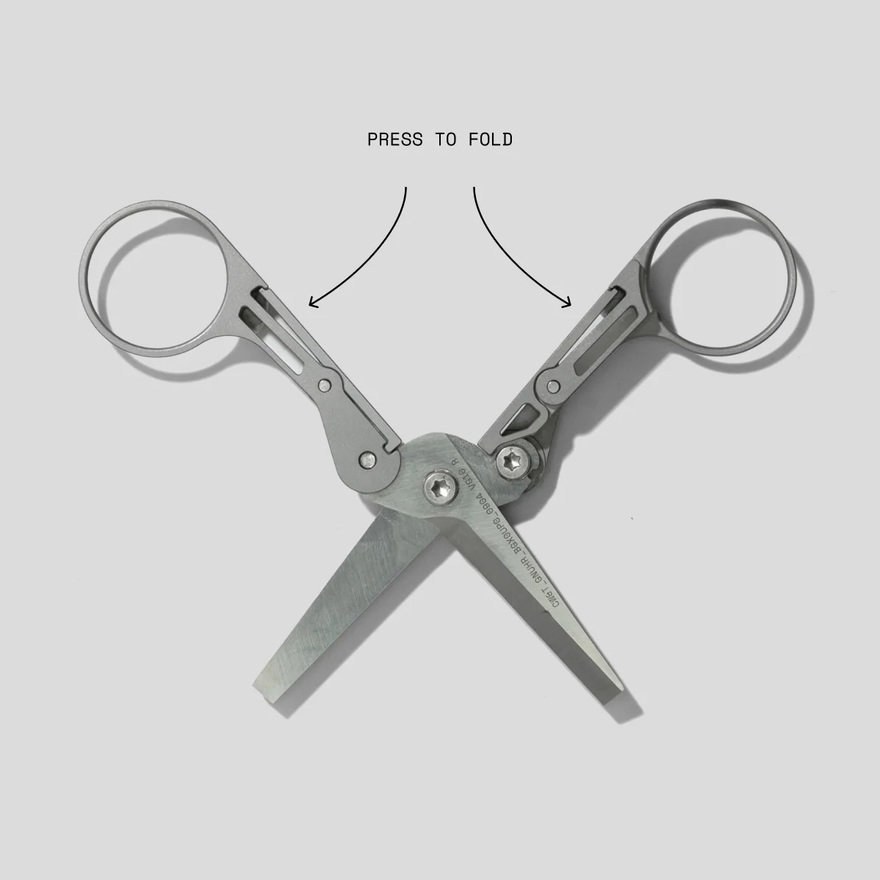
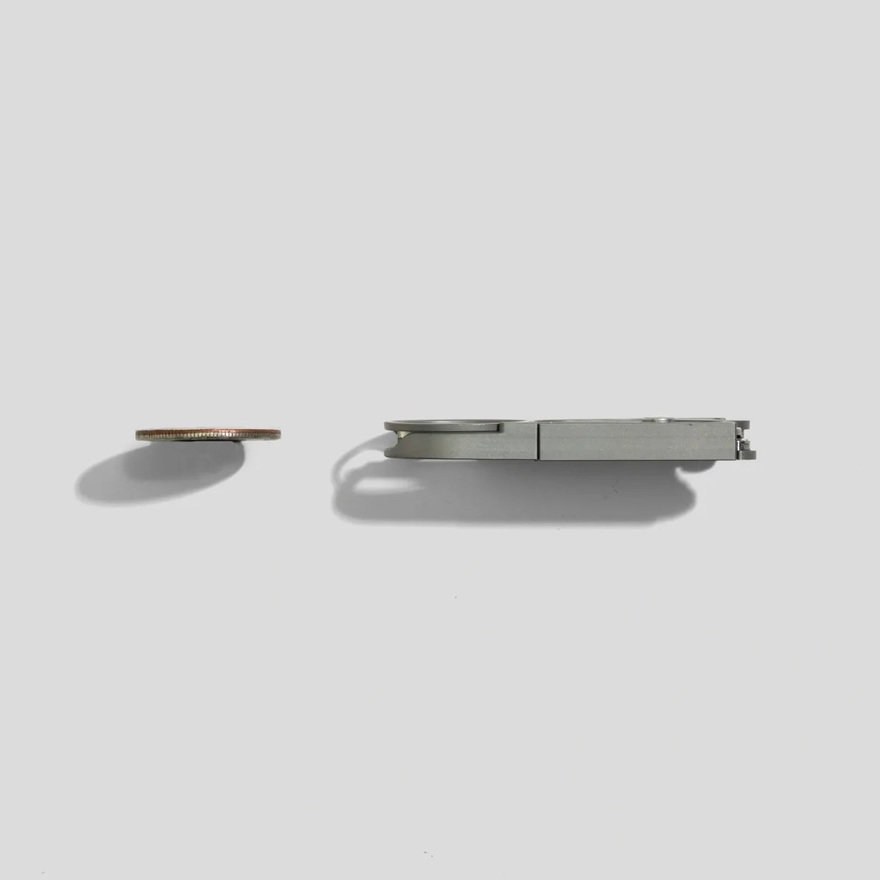
The daily output anchors everything else. Recent Core77 features include a piece on a spherical steel building erected in Germany, a close look at CW&T's tiny functional folding scissors, and an item on the self-leveling wheel center caps fitted to Rolls-Royce cars. That spread is typical: some design history, some product detail, some industry news, each grounded in an object you can picture. I read the scissors piece to the end before remembering the job here was to evaluate the site, which says something about the writing.
Small objects get treated as seriously as buildings, and the photography carries a good share of the load. The homepage is a plain news feed, a hero image over a grid of article thumbnails, and the volume of output is obvious at a glance.
Two recurring formats fill out Core77's editorial side. A retrospective series called Design Classic revisits established objects, the strongest sign that the site cares about the discipline's history as much as its news cycle. A weekly roundup gathers the week's stories into a single post for readers who do not check in every day. The RSS feed is live and well formed, served through FeedBurner, and it carries a steady run of recent items; a small point, but anyone who still uses a feed reader knows how many sites let their feeds rot. One item title carries a stray double-encoded ampersand, the sort of cosmetic slip that bothers nobody except a markup pedant, and the feed parses fine regardless.
Outside opinion on Core77 is scarce in a way that makes sense. It has no presence on the consumer review platforms, and nobody should expect one; those sites exist for restaurants and plumbers, while a trade publication gets judged on its archive and on how widely it is known in its field. By that measure Core77 does fine. It is a familiar name in industrial design circles, its output is public and searchable, and its social accounts on Facebook, X, LinkedIn, Instagram, and YouTube round out a presence that is easy to check against anything said about it here.
Contact is where a skeptic finds something to poke at. The about and contact pages route inquiries through email, a phone number appears on the advertising page, and the company's New York address can be corroborated from outside business records, but that address is not printed on the site itself. For a media company with no storefront the omission is routine, and it does not shift the judgment here. Business hours are absent too, though for an online publication that point is moot. The unpublished address is still the one transparency gap on an otherwise open property, and a line of type would close it.
Directory, jobs, awards, and boards
Core77 would be simple to file as a magazine, but the sections around the editorial core are what make it more useful than a magazine alone. The company directory, the awards program, and the discussion boards each stand on their own, and the awards and the boards run on separate subdomains while staying part of the same property. Moving between them is easy enough that the seams barely show.
There is a proper legal entity behind the masthead, Core77, Inc. A casual reader will skip past that fact, but a firm weighing whether to buy advertising or enter an awards program will look for exactly this before either.
That structure says who the site believes it is for. A casual reader gets the articles. A working designer gets the job listings and the firm directory, a studio gets the awards entry plus a sponsorship program pitched at brands, and the publication describes its own audience as "a devoted global audience of design professionals, corporations, students, enthusiasts and fans." The advertising program is out in the open on a page of its own, which is the honest way for a media property to pay its bills, and the site's own structure does more to prove that audience claim than the sentence alone does.
The company directory and guides
The directory lists design firms, schools, vendors, and services in a browsable grid, which turns Core77 into a reference tool on top of a publication. A student shortlisting schools and a manufacturer hunting for a design partner are plausible users of the same pages, and the supply side of the field sits in the same grid as the creative side. A directory maintained by a publication has an advantage a standalone list lacks: the editorial side keeps designers coming back, so the reference side stays in front of the people who would use it. The Guides section is nearby, presented as its own front page of collected articles. Neither section is flashy. Both look like infrastructure, built for people who arrive with a task in mind.
ID jobs and the design awards
The ID Jobs board is narrow on purpose: industrial design positions, listed plainly.
Specialist boards live or die on focus, and this one has kept its focus. Its home on the main site means a designer reading the morning's stories is a click away from the listings, which is a quiet advantage for both halves. The Core77 Design Awards run on a dedicated site of their own with a full program front page, and for a studio weighing where to enter work, the program's attachment to a publication designers already read is a genuine argument in its favor.
Discussion boards and sign-in
The Core77 boards give the audience a place to talk among themselves, hosted on a subdomain of their own with a conventional forum landing page. Accounts work across the property, and sign-in runs through Twitter or LinkedIn, a choice of providers that hints at a membership that skews professional. Keeping a live forum going is a bet that readers have something to say to one another. In a field as specialized as industrial design, the bet looks sound.
So, worth a visit? For anyone inside or adjacent to industrial design, yes, and without much hedging. The daily coverage is concrete and readable, and the directory, the jobs board, the awards, and the forums turn a reading habit into something closer to a working toolkit built up over enough years for the depth to read as earned rather than performed.
The qualification is scope. A general reader wanting broad arts coverage will find Core77 narrow, because it is, deliberately. Judged as what it is, a specialist publication with working tools attached, it holds up. It reads stronger for professionals and students than for the casually curious, and it is verifiable with ten minutes of browsing.



Business address
Core77, Inc.
561 Broadway, Suite 6B,
New York,
NY
10012
United States
Contact details
Phone: 1-212-965-1998
Here's what we looked at this week:KAIST develops a low-cost way to detect hidden cameras using your smartphone. Industrial…
Traditional timber framing is still very much a thing in Europe. Timber framers often need to drill accurate holes for the pegs…
ENT doctors use nasal speculums to look inside a patient's nose. Typically the tool is held in one hand and a flashlight in the…
In the 1960s, college students stumbled across an abandoned ruin in the wilds of Warsaw, Virginia, outside of Richmond. The…