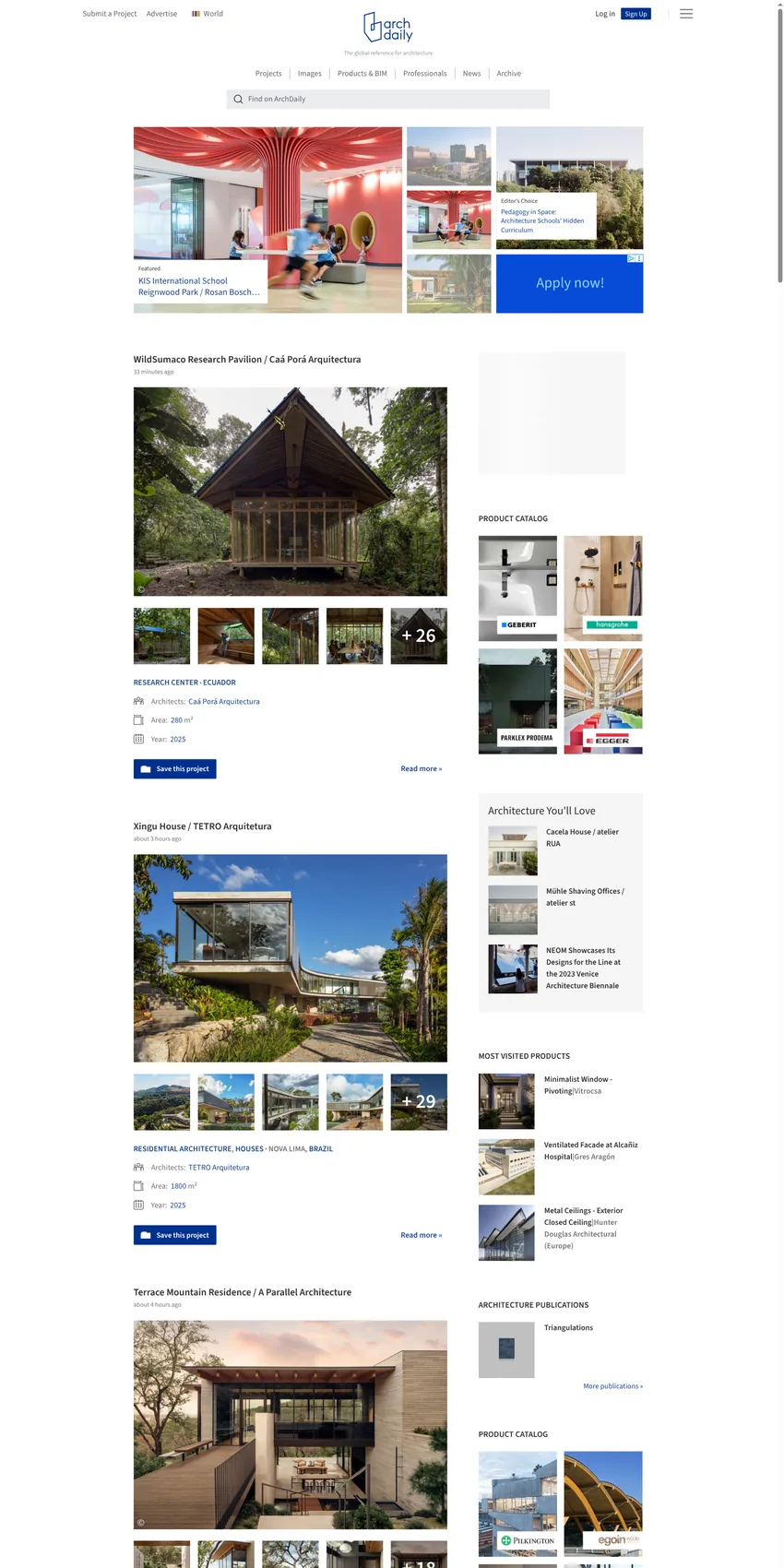
ArchDaily is an online architecture publication and project archive, started in Santiago, Chile by the architects David Basulto and David Assael and now run from Switzerland under the tagline "Broadcasting Architecture Worldwide." The main draw is the daily flow of built work: finished houses, chapels, libraries and civic buildings, each written up with drawings, high-resolution photography and notes from the design team. Individual project pages run to large, well-shot images, floor plans and a short editorial write-up, so a single entry gives a fuller picture of a building than a typical firm website manages. It reads like a magazine, but the thing that makes it stick is the reference library growing underneath every article.
Day to day the coverage is broader than finished buildings alone. There are product releases, competition results, interviews and design commentary, which keeps the front page moving even when no major project has landed. That steady volume is why people check in out of habit, and it is also what feeds the archive over time.
Anyone can read the editorial feed for free. The searchable databases behind it are where a working architect settles in, and they are what turn ArchDaily from a magazine into a working reference.
Projects, products and offices
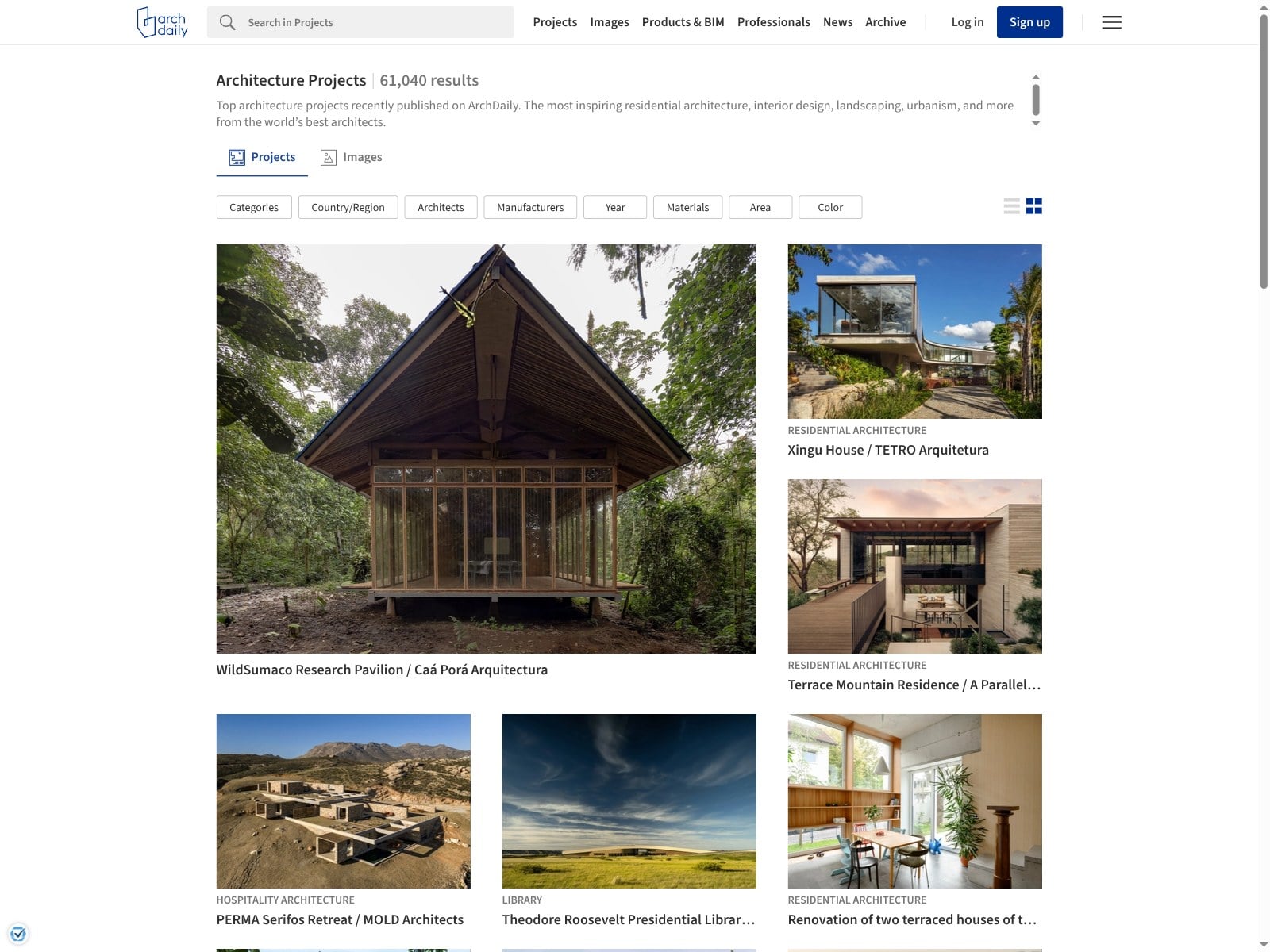
The core of ArchDaily is its Architecture Projects database, a catalogue the site puts at more than 59,000 curated entries. You can filter it by building type, Houses, Libraries, Churches, Renovation and Sustainability among them, and by country, which turns it into a real research tool for anyone hunting precedents on a specific brief. Browsing by country is more than a convenience, since it lets someone studying a warm-climate house or a northern school pull up comparable work in the same setting. Each entry pairs a full photo set with the details an architect actually wants: location, floor area and the practice responsible. The curation matters here. Because editors select what goes in instead of opening the doors to anything submitted, the archive remains a filtered record of built work, and that filtering is a large part of why the collection is worth searching in the first place.
Sitting next to the projects is a products database that indexes building materials and manufacturer specifications, and a separate Architecture Offices directory that profiles firms worldwide. The products side is the commercial engine, built for specifiers comparing materials and for manufacturers who want their systems in front of the people drawing the details. The offices directory is a global register of practices, handy when you want a firm's back catalogue in one place or need to size up who did what on a project you admire. Between them they explain how ArchDaily pays for a free magazine without depending only on banner ads, since manufacturers and firms are paying to sit in front of a professional audience.
Building of the Year
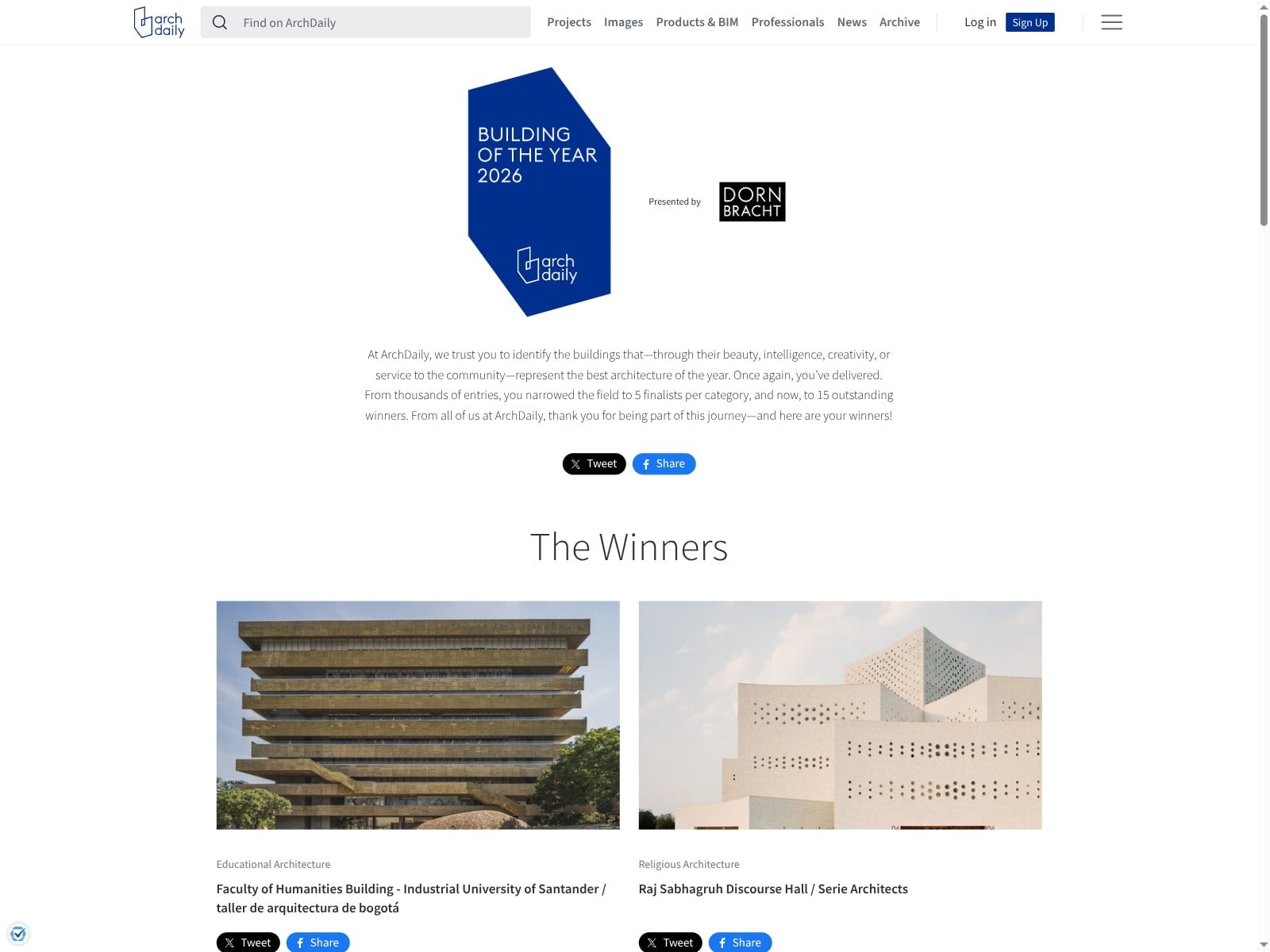
The most public thing ArchDaily runs is its Building of the Year awards, hosted on their own subdomain. The vote is open to readers across fifteen building-type categories, and the latest round drew more than 120,000 votes from over 100 countries, so the winners come from a large crowd rather than a small jury. That is clever audience engagement, and it hands the year a public scoreboard of what practising architects and enthusiasts rate most. For a firm a category win brings genuine publicity, and for a reader the shortlists are a fast way to find strong recent work without wading through the whole feed.
Competitions and interviews
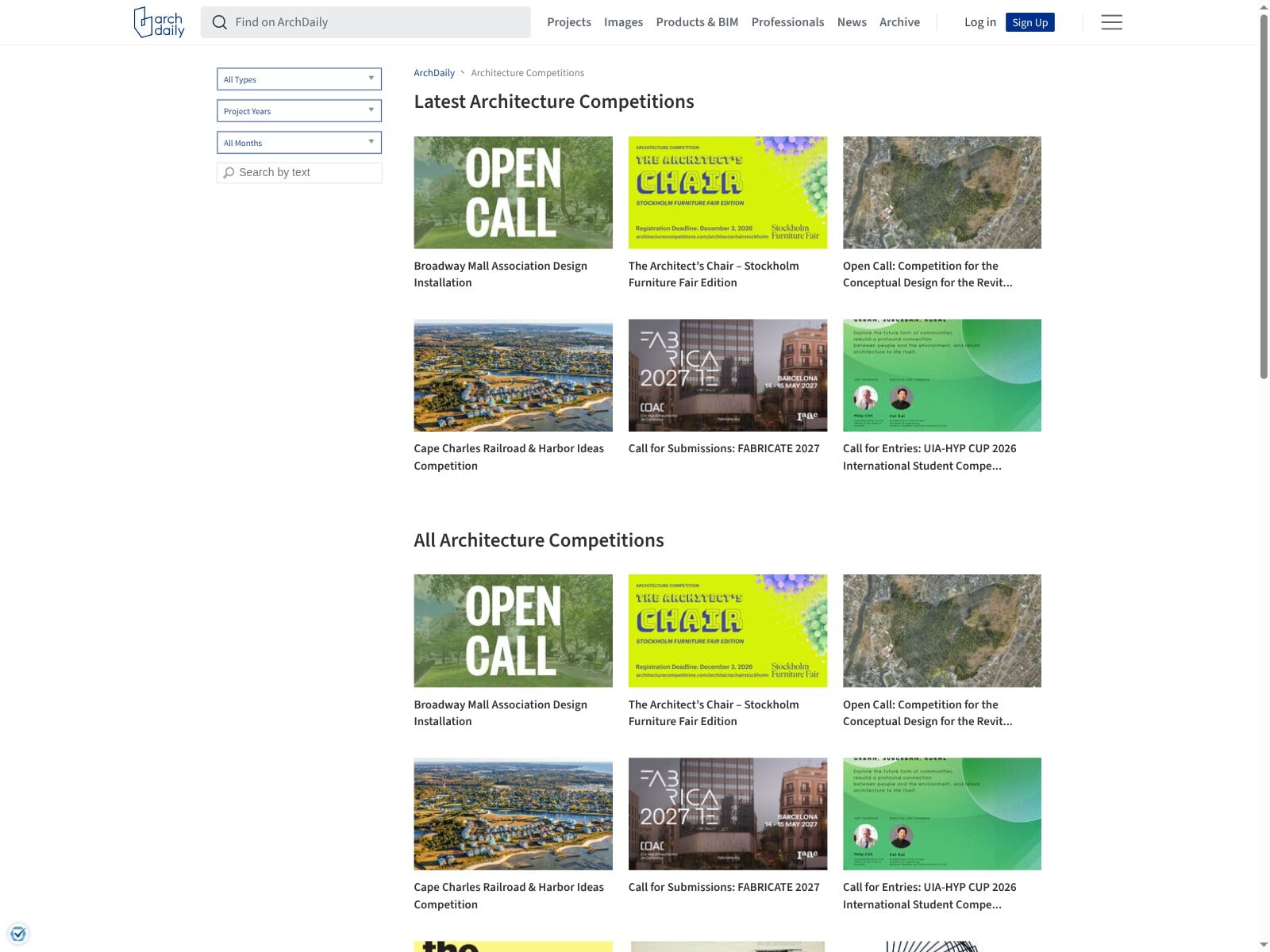
Two quieter sections fill out what ArchDaily publishes. The Architecture Competitions listings gather open design competitions in one place, which is practical for students and young practices looking for a way in without trawling a dozen separate sites. A separate Interviews tag collects longer Q and A pieces with architects and firms, the sort of longer reading the fast news feed does not carry on its own. Neither is the reason most people first land here. Both give regulars a reason to keep coming back.
Reach and ownership
ArchDaily is not shy about its scale. Its own business pages claim well over 100 million visitors a year, more than a billion page views and around 15 million social followers across Facebook, Instagram, YouTube and the rest, figures plainly pitched at advertisers and at firms deciding where to place a project. Independent traffic trackers put the everyday number a good deal lower, closer to a few million visits a month, with a global rank somewhere around seven thousand. The gap is worth noticing. Even so, those same trackers place it first among architecture sites anywhere, so the audience is genuinely large while the headline marketing figures run ahead of what an outside tool measures.
The ownership is easy to verify, and that counts in its favour. A full legal imprint names the operating company, a Swiss digital-media firm registered in Zurich inside a bigger European publishing group, together with its registration number, tax details and the managing directors who run it. Few editorial sites bother spelling out that much, and the openness makes it easy to see who stands behind the coverage. Outside ratings sit on one platform: a high average on Sitejabber, but from just seven reviews, far too few to lean on, and no profile on Trustpilot or the Better Business Bureau. I read that traffic ranking as a signal of reach and nothing more, since a busy site is not automatically a trustworthy one. On balance, the transparency of who owns ArchDaily does more for its credibility than the star ratings do.
Regional editions and My ArchDaily
ArchDaily reaches wider than the English homepage lets on. It publishes regional editions for Chile, Brazil, Mexico, Colombia and Peru, plus a Chinese edition, so a reader in Sao Paulo or Beijing gets local coverage in a local language instead of a translated afterthought. Registered users get a personalized layer called My ArchDaily, which lets them follow authors and offices and save projects into their own folders and streams, which is genuinely useful once you are tracking dozens of practices. Paid tiers named Premium, Professional and Student strip the ads out for people who read every day. None of this is novel, yet it is the steady housekeeping that holds a big readership in place.
For a practising architect assembling a reference library, or a student chasing precedents for a studio project, ArchDaily is worth a permanent bookmark. Start in the Architecture Projects search, filter by building type and country, and see how far the catalogue stretches before paying for an ad-free tier. The free tier already covers most of what a casual reader needs. Anyone weighing a subscription should read a week of the feed first and check whether the products database and offices directory are worth it for the work at hand. Take the traffic claims with a grain of salt, judge the archive on what it holds, and the time is well spent.
Important pages
Business address
DAAily platforms AG (operator of ArchDaily)
Seehofstrasse 16,
Zurich,
8008
Switzerland
Contact details
Phone: +41 44 297 20 20
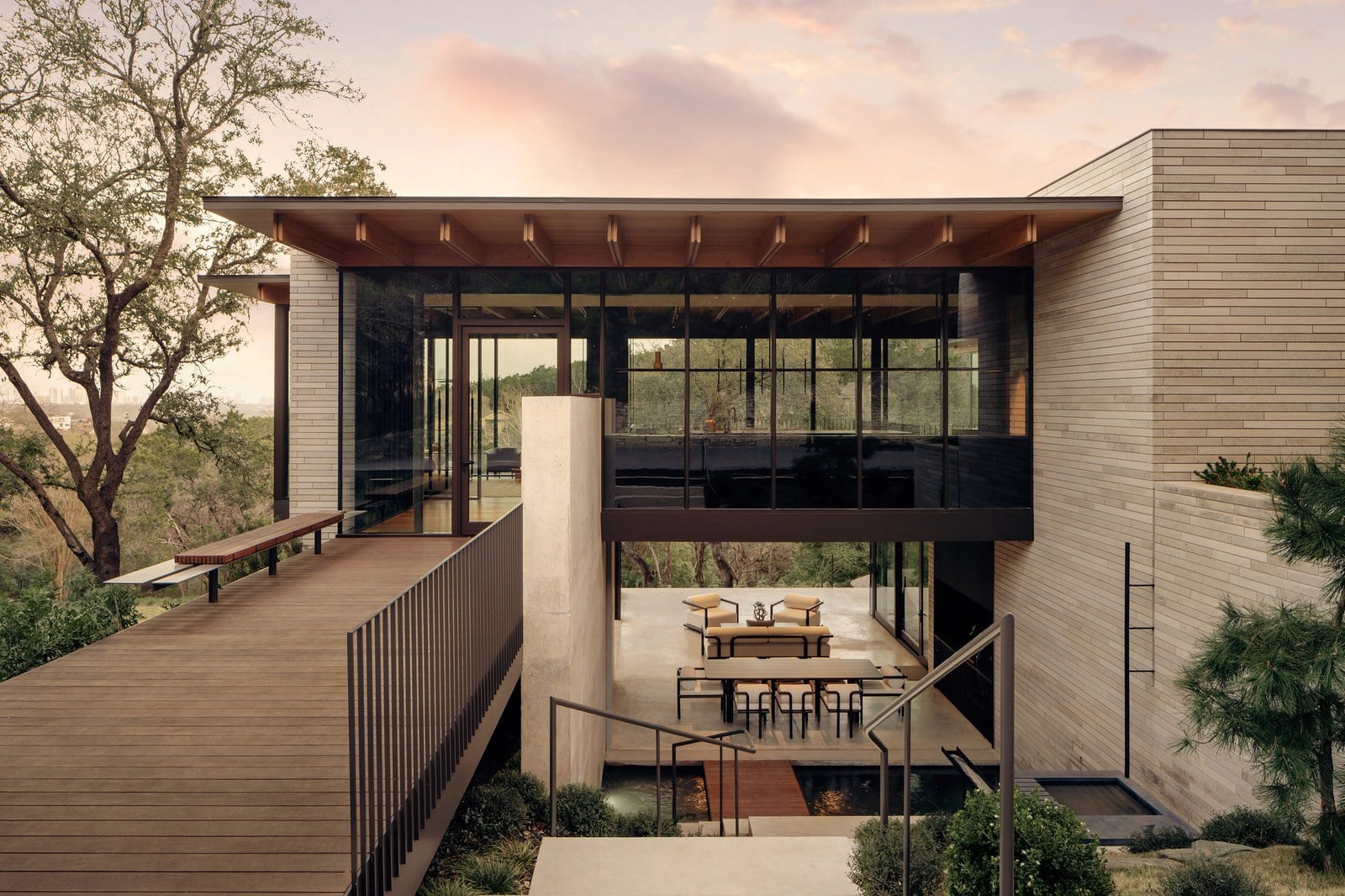
Located in a quiet rural village in Ibaraki Prefecture, this house is designed as a final home for a mature couple. The project…
In the culturally steeped landscape of Thanjavur, Terràvué emerges as a 5,565-square-foot manifesto on sustainable luxury…
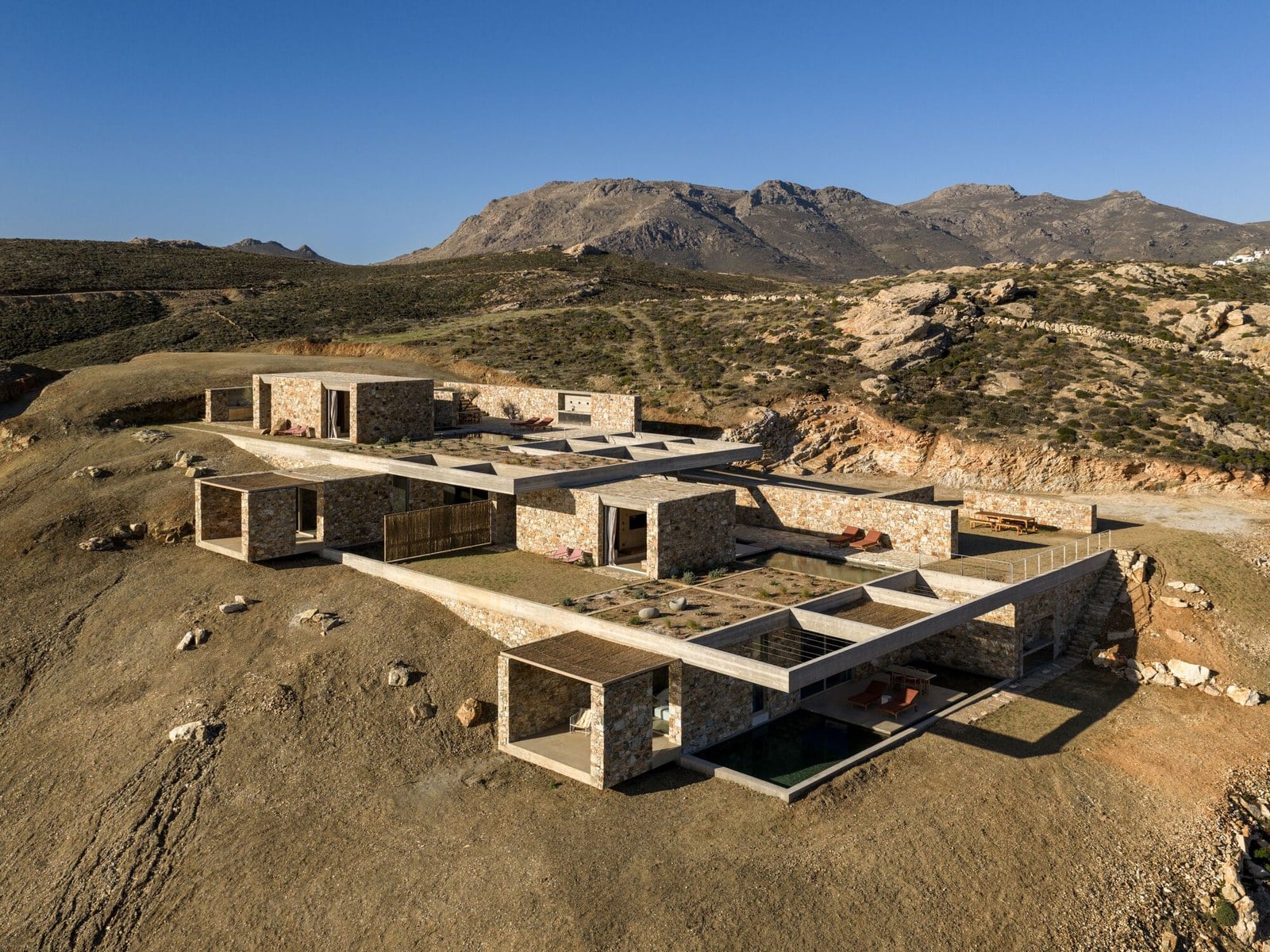
Original Architecture's exploration of construction is based on an understanding of geography, climate, anthropological research…
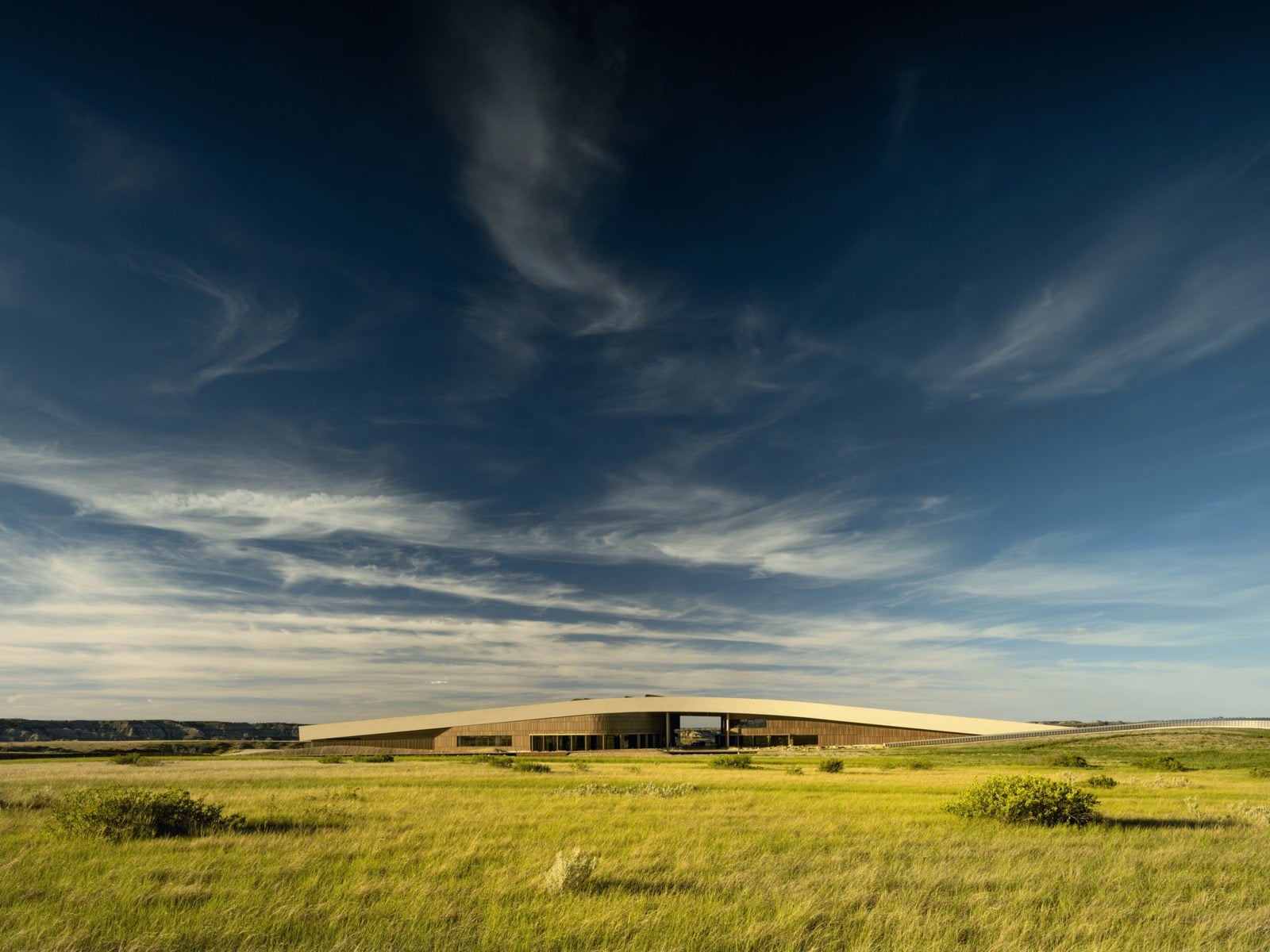
In Peruvian construction, brick masonry is rarely left exposed: it is built, plastered over, and disappears beneath the finish…