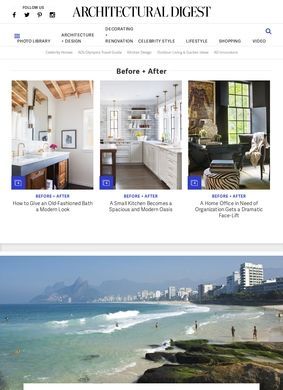
Every issue published since 1920 sits in the Complete Archive on this site, which means a reader can pull up an interior spread from a hundred years ago and set it next to a home tour filmed last month. That span is worth knowing before spending any time here. Architectural Design, the listed name for the publication most people call Architectural Digest, runs on that long memory while feeding a steady stream of new editorial, and the two layers explain most of what the website is and who keeps coming back to it.
Celebrity home tours and design news
The daily reading material is broad. There are home tours of celebrities and public figures, the format Architectural Design is best known for, where a musician or actor walks through a renovated townhouse or a desert retreat. Alongside those sit architecture and design news, shopping recommendations, travel destinations, coverage of art and cultural events, and features on high-end real estate. A subscriber to the print product gets a different rhythm of the same material, but the open web version carries enough to fill an afternoon on its own. Nine international editions extend the reach, so the design conversation is not confined to American interiors. Those editions give Architectural Design a perspective that shifts noticeably when you move between them, and the photography from a Milan apartment or a London terrace reads differently than it would from an American-only lens.
AD PRO membership for industry professionals
Two tiers of access run underneath the free content on Architectural Design. The first is AD PRO, a membership Architectural Design built for people who work in the field. It carries member-only industry reports: trend analyses, deep-dives into how established designers run their practices, the sort of material a working interior designer or a firm principal might read between client meetings. The second is the archive, which sits behind membership as well. Subscription itself comes as a digital-only plan at $49.99 a year or a print-plus-digital bundle, so the entry point flexes depending on whether you want the magazine in your hands or just the website and its back catalogue.
Both audiences are handled, and the split is cleaner than it first looks. A casual visitor lands on a celebrity house tour from Architectural Design, scrolls the photos, maybe saves a paint colour or a furniture name, and leaves satisfied without paying anything. That audience is large and the free editorial is tuned for it. The headlines lean toward access and aspiration, the photography is the real draw, and the shopping and travel pieces are easy to dip into.
How the archive serves students and designers
The professional layer is where the publication stops being a glossy and starts being a tool. AD PRO's reports are not the same as the home tours dressed up in jargon. They are aimed at someone deciding how to price a project, which trends are cooling, or how a named studio structured its growth. I find that the value of the archive shifts entirely depending on who is using it: for a student or a historian it is a primary record of how taste changed decade by decade, while for a practising designer it is a reference shelf for precedent and proportion. One subscription, two very different reasons to keep it.
Editorial consistency across platforms
What keeps the whole thing coherent is that the editorial standard does not drop between the free and paid material. The same eye that frames a kitchen for a free tour frames the imagery inside a PRO report. That consistency is rarer than it sounds in a publication this size, and it is the main reason Architectural Design has held its position across print, web, and now its social channels on Instagram, TikTok, Facebook, Pinterest, and LinkedIn, where short clips and single-image posts pull people back toward the longer pieces.
If there is a limit to flag, it is the obvious one: this is a luxury-design publication, and the homes it documents sit at a price point most readers will only ever look at. The shopping recommendations skew expensive. The real estate features are aspirational by design. None of that is a flaw in execution, but it does set expectations. Someone hunting for budget renovation advice or beginner-level how-to guides is in the wrong place, and Architectural Design has never pretended otherwise. It documents the high end and documents it well.
The reading experience rewards a particular kind of patience. The home tours are long, the photography is meant to be lingered over, and the news coverage assumes you already care about who designed what. That is a strength for the right reader and a barrier for the wrong one. Architectural Design works best when you treat it as a magazine that happens to live online rather than a quick-answer site, and the archive only deepens that impression, since its real pleasure is wandering, not searching.
Architecture, objects, travel, cultural events
The subject range goes beyond interiors. Architectural Design moves between architecture proper, the objects that fill a room, the places worth travelling to see, and the cultural events that shape what designers reference next. A reader who comes for one celebrity house often stays for a piece on a museum opening or a furniture fair, and that drift between topics is deliberate. It keeps the publication feeling like a single point of view across a wide field rather than a set of disconnected verticals.
Reader reviews on third-party platforms are limited in volume by the nature of the medium; a search turns up few independent ratings for the website itself. The publication's editorial standing has been built over more than a century of print, and the website's consistent traffic reflects that accumulated ground-level trust. Architectural Design's subscription pricing is transparent, the archive access is clear about what is and is not behind the paywall, and the difference between free editorial and PRO-tier material is easy to map out before you spend anything. For a publication of this scale, that clarity counts.