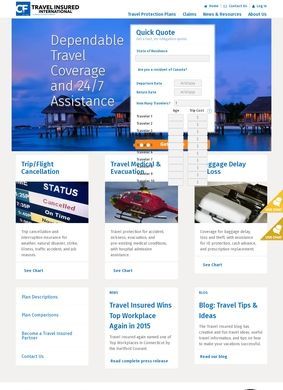
A policy from Travel Insured International is, at its most basic, a bet against the things that derail travel: a cancelled flight, a hospital admission abroad, a bag that disappears between connections. The Glastonbury, Connecticut company sells single-trip and annual multi-trip protection in three named tiers, Essential, Deluxe, and Platinum, and the gap between them is mostly a question of how much medical and evacuation coverage you want. Medical limits run from $50,000 on the entry plan to $500,000 at the top, which is a meaningful spread once you start thinking about an air ambulance out of somewhere remote. Annual revenue is not disclosed, but Travel Insured International sits inside Crum and Forster, a subsidiary of Fairfax Financial Holdings, which gives the underwriting arrangement some institutional depth that smaller standalone insurers cannot match.
Coverage tiers and medical limits
The core of every plan is recognizable to anyone who has shopped this market. Trip cancellation and interruption sit at the center, and the list of covered reasons is broader than the bare minimum: weather, natural disaster, a labor strike, illness, a traffic accident on the way to the airport, and certain job-related situations all qualify. On top of that there is emergency medical, evacuation, baggage delay and loss, missed connections, and trip delay benefits. None of this is exotic, and that is the point. These are the claims that happen most often, and the tiers are organized so a buyer can see at a glance which level covers what without combing through dense policy language.
Trip cancellation and emergency benefits
Where things get more interesting is the optional layer. Travel Insured International offers Cancel for Any Reason as an add-on, which frees you from the fixed list of covered reasons and lets you walk away from a trip on your own terms, usually for a partial refund. There is also a Cruise Bundle and a Flight Bundle for travelers whose risks cluster around those modes. One detail worth flagging for anyone with a health history: a pre-existing condition waiver is available, but only if the policy is bought within 21 days of the initial trip deposit. Miss that window and the waiver is gone, which is the sort of fine print that quietly decides claims months later. Travel Insured International does mention this prominently in its plan materials, which is more transparency than some competitors manage.
Optional add-ons for specific situations
The company casts a wide net on who it expects to insure. Students, solo travelers, families, seniors, and people booking specific kinds of trips all get coverage options, including golf, adventure, business travel, and cruises, across both domestic and international itineraries. Backing all of it is a 24/7 global assistance line that handles emergency support, concierge requests, translation help, and destination information. Claims are filed online.
Customer service and claims experience
I find the assistance-line piece more valuable than the marketing usually makes it sound, because the worst travel moments tend to arrive at 3 a.m. in a language you do not speak. Travel Insured International publishes a dedicated international collect number alongside its domestic lines, and customer care contact details are easy to locate rather than buried in a footer. For an insurance product, where reaching someone fast is the whole point of paying the premium, that visibility counts.
If a traveler found Travel Insured International through a business directory and wanted an independent read on how the company performs in practice, the outside record is mixed in a way that deserves a straight read. On Trustpilot, Travel Insured International carries around 2,054 reviews at roughly four stars, which is a respectable volume of feedback. That number represents a lot of customers who bought, traveled, and came away satisfied enough to say so. The buying experience gets consistently high marks.
What independent reviews reveal?
The picture changes around claims. Squaremouth lists Travel Insured International with customer satisfaction ratings, but several reviewers there describe communication friction during the claims process and a heavy paperwork burden. ConsumerAffairs shows the same split: smooth purchase experiences sitting alongside complaints once a payout is on the line. The Better Business Bureau page for the Glastonbury office includes customer reviews that flag denied and delayed claims. Cruise Critic forum threads carry negative claim stories too. The pattern across these platforms is consistent enough to take seriously: the buying is easy, the collecting can be a slog.
Independent reviewers add useful context. Forbes Advisor reports that 78 percent of Travel Insured International customers would recommend the company, which lands below the 87 percent industry average it cites, and the publication singles out the Platinum plan as pricier than top-rated competitors. NerdWallet has published its own review as well, with broadly similar findings. None of this brands Travel Insured International as untrustworthy. It does mean a buyer should price the top tier against rivals and read the claims documentation closely before assuming a payout will arrive without friction.
Travel Insured International is a legitimate, well-established provider with a coverage menu that covers the cases most travelers worry about and a 24/7 assistance backbone that is more useful than the brochure version makes it sound. The honest caveats are the claims complaints that recur across several platforms and a top tier priced above comparable competitors. Buyers who document meticulously and understand the pre-existing condition window will likely do fine. Those who assume the policy will pay on a handshake may find the process more adversarial than they expected. Travel Insured International is worth pricing out; whether the Platinum tier is worth the premium over rivals is a closer call.