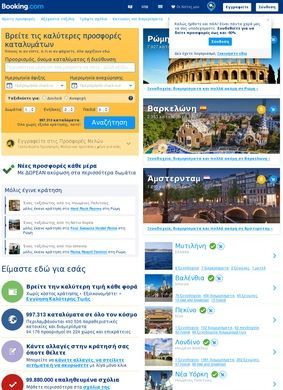
You have a three-night trip to plan, two cities on the route, and a budget that does not stretch to mistakes. That is the moment most people land on Booking.com, and it is the moment the platform was built to handle. You type a destination and dates, and within a second you are looking at hundreds of places to stay, each with a price, a review score, and a map pin. The search does the heavy lifting that would otherwise mean a dozen separate hotel websites and a spreadsheet.
Comparing property types and cancellation filters
The catalogue is the reason it works. Booking.com lists well over 28 million properties across more than 220 countries and territories, and the range goes far past the word "hotel" in the name. Apartments, villas, hostels, guesthouses, bed-and-breakfasts, and private holiday homes all sit in the same results. A family of five and a solo backpacker want very different things from the same city, and the breadth of the inventory reflects that. Filters let you narrow by price, property type, review score, distance from a center point, available amenities, and cancellation terms. That last filter is worth reaching for early, because the free-cancellation option on many listings turns a reservation into something you can change when plans shift, and they always do.
Beyond hotel bookings to transfers and activities
What is easy to miss on a first visit is how much sits beyond accommodation. Booking.com also handles flight search, car rentals, airport taxis and private transfers, and tickets for attractions and activities. You can string a whole trip together without leaving the interface, which is genuinely useful when you are coordinating an arrival flight, a transfer to the hotel, and a museum slot on day two. Whether the flight prices beat a dedicated airline search is another question, and worth a quick check elsewhere before you pay, but having it all in one account spares you the usual juggling of logins and confirmation emails.
International reach with mobile support
Booking.com runs in more than 40 languages and processes payments in a long list of currencies, so a traveler in Bucharest and a traveler in Tokyo get roughly the same experience in their own terms. There is a mobile app for iOS and Android that mirrors the website and sometimes surfaces app-only rates. Customer service runs around the clock through in-app messaging, a help center, and phone support that opens up once you have a reservation tied to your account.
Weighing Genius discounts against direct rates
Frequent users get pulled into the Genius loyalty program, which steps through tiers and hands out discounts in the region of ten to twenty percent plus extras like room upgrades or free breakfast at participating properties. It rewards sticking with one platform, and Booking.com clearly wants you to. The flip side is that the cheapest headline rate is not always the Genius rate, and the budget-minded traveler should still compare the final total, taxes and fees included, against what a property charges on its own site.
Behind Booking.com's corporate structure
There is practical significance to the corporate structure here. Booking.com B.V. operates out of Amsterdam as a subsidiary of Booking Holdings, the publicly traded group behind several of the largest travel brands. That scale is why the inventory is deep and why the system rarely falls over during a holiday-weekend rush. It also explains the steady stream of special offers, seasonal deals, and weekend or city-break packages that Booking.com pushes, which can be real savings or can be the usual urgency nudges depending on the property and the date.
Where Booking.com earns honest criticism is the same place its size helps it. With this many listings, quality control rests heavily on the review scores, and a high number next to a property is only as good as the people who left it. The pricing display, while improved over the years, still leans on the language of scarcity ("only two rooms left," "booked 14 times today"), and a careful traveler learns to read past that. None of this is unique to one brand, but it is fair to name it.
For most trips, the verdict is straightforward. If you want one place to compare a huge spread of lodging, see real cancellation terms up front, and bolt on transport and activities without opening five more tabs, Booking.com does the job about as well as anything on the market. The reservations are reliable, the breadth is hard to match, and the free-cancellation inventory takes real risk out of planning ahead. I would still cross-check a flight price or a direct hotel rate before clicking confirm, and treat the countdown banners as marketing rather than gospel. With those two habits in place, Booking.com is a tool worth keeping in the rotation.