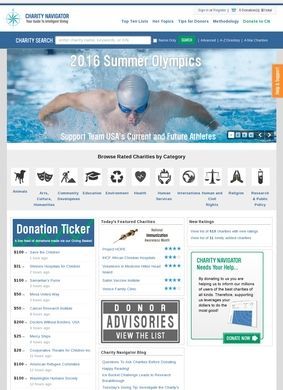
Charity Navigator has spent more than 25 years building a case that donors deserve better than a charity's own press release. The platform now rates over 245,000 U.S. nonprofits for free, scoring each on finance, accountability, and impact, and it draws much of that data directly from IRS filings rather than from the organizations being reviewed. That single design choice separates Charity Navigator from most giving guides: the scores rest on public records, not self-reported brochures. A donor can search by cause or name and come back with a rating that took real auditing to produce, not a star average collected from user opinions.
How ratings are built from public records
The scale is worth pausing on. Eight million or so visitors a year use Charity Navigator, and more than $338 million has moved to nonprofits through its own donation tools. A rating system is only as useful as the number of people who act on it, and those figures show the scores hold real authority among everyday givers and institutional ones alike. Outside the site, Charity Navigator has been covered by major press outlets for years, and a Google search for the name turns up consistent references across philanthropy and finance publications, with no pattern of controversy. No independent review count from aggregator platforms surfaces prominently, which is typical for a research tool and not a consumer product.
Scale and influence among donors
Each charity profile on Charity Navigator breaks the overall score into three components, so a donor who cares most about overhead can isolate the finance section, while someone focused on results can weigh the impact measure. For people who do not want to sift through thousands of profiles, Charity Navigator publishes curated lists: top-rated organizations, the most cost-efficient ones, and groups that achieved a perfect score. These shortcuts carry real utility for a casual donor who knows a cause but not the specific names doing the best work within it.
Finding organizations by cause or crisis
The site also organizes giving around active events. "Where to Give Now" pages collect vetted organizations responding to specific crises; at the time of this review those pages covered the Hawaii wildfires, Gaza, Ukraine, and immigration. Causeway Funds take a different shape: cause-based portfolios that spread a single gift across several vetted groups working on issues like women's health, climate, or homelessness. The Giving Basket then functions like a cart, letting a donor support several charities in one checkout instead of repeating the process site by site. None of these features require an account to browse, which removes a layer of friction that other platforms add early.
Curated lists for different giving goals
Charity Navigator layers education underneath all of this. Giving 101 guides walk through the basics of effective giving, and the platform publishes frameworks for thinking about where a dollar does the most good. Planned giving and tax guidance, volunteer opportunity listings, and articles on spotting charity scams and protecting personal data round things out. The mix means a first-time donor and a seasoned one both find material pitched at their level, not a single page built for one type of reader and unhelpful to the rest.
Educational resources for donors at all levels
Corporate giving programs use Charity Navigator to structure employee donation matching and grant decisions, and nonprofits themselves can claim their profiles to update the data behind their ratings. That last point has a concrete payoff: organizations get a direct path to improving their transparency instead of leaving the page static and hoping donors interpret the gaps charitably. Discovery cuts several ways too. A visitor can browse by cause, by active crisis, or even by the public figures associated with particular charities, which is an unusual but genuinely useful entry point for people who first encounter a nonprofit through a celebrity campaign.
What holds the whole platform together is that the data is free to read. No paywall stands between a curious donor and a charity's financial breakdown, which is the opposite of how due-diligence information gets gated elsewhere. For a household trying to give a few hundred dollars responsibly, that openness is the difference between an informed choice and a guess.
If there is a limit to Charity Navigator, it is one of scope rather than quality. The ratings cover U.S. charities, so a donor researching organizations registered abroad will need to look elsewhere for comparable scoring. Within that boundary the depth is hard to match. IRS-sourced finance data, accountability checks, and impact measurement together produce a fuller picture than a single overhead percentage ever could, and the crisis pages keep the recommendations current with whatever is actually happening.
Tax guidance for giving decisions
The tax and planned-giving resources deserve specific mention. Giving carries real financial consequences for many people, and having guidance on deductions and on structuring larger gifts in the same place where the ratings live saves donors from cobbling together advice from scattered sources. Paired with the scam-protection guides, the picture is of a platform that takes the donor's caution as seriously as their generosity. A practical approach: pick a cause, read two or three top-rated profiles on Charity Navigator side by side, and compare the finance and impact scores to settle where the money goes. Nonprofit staff who suspect their rating undersells the organization should claim the profile and update the underlying data, since on Charity Navigator the score follows the documentation.