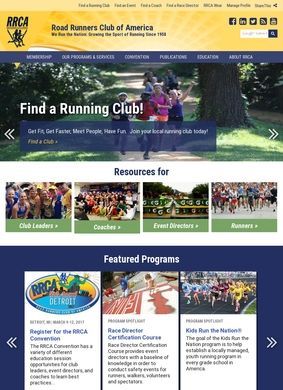
Who actually backs the local 5K, the weekly group run, or the kids' fun run at a neighborhood school? Across a lot of American towns, the answer traces back to the Road Runners Club of America (RRCA), a national nonprofit membership association built around community-based running clubs and the events they produce. It is the connective tissue between thousands of local organizers, and the site lays out exactly what that support looks like in practice.
Membership categories for clubs and runners
Membership is structured around three groups: running clubs, individual runners, and event companies. A small-town club with twenty members and a major race-production outfit both have a place here, and the programs branch out from there. The Road Runners Club of America (RRCA) links its members into a network of more than 700 running clubs, which is the scale that makes the rest of the offering meaningful.
Certification programs for coaches and directors
The credentialing side is one of the more concrete things on offer. The Road Runners Club of America (RRCA) runs a Coaching Certification Program and a separate Race Director Certification Program, two distinct tracks for two distinct jobs. Coaching a beginner toward a first half-marathon is not the same skill as safely staging a road race with permits, course marshals, and a finish line, and the organization treats them as separate disciplines worth formal training. That distinction reflects real understanding of how the sport works at ground level.
Administrative support for volunteer clubs
Most of it is the unglamorous administrative work that keeps a volunteer-run club alive. Insurance programs offer liability coverage for clubs and events, which is the single issue that can sink a small organization trying to go it alone. Music licensing for race events is covered too, an obligation many organizers do not realize they have until it becomes a problem. Nonprofit status guidance, club startup resources, and a vendor directory round out the picture of a group that has thought hard about the tedious parts of running a club.
That practical bent carries into the educational material. The Road Runners Club of America (RRCA) publishes training plans, weather-specific running safety guidance, and trail running safety protocols, plus leadership training materials aimed at the people steering clubs and group runs. Weather and trail safety in particular are the sort of topics that get glossed over until someone gets hurt, so dedicated guidance for them is a point in the organization's favor.
Youth outreach programs
Youth programming runs through Kids Run the Nation, which helps schools and clubs introduce children to running. It is a sensible piece of the mission, since the clubs the Road Runners Club of America (RRCA) serves depend on new runners coming up behind the current ones. The RunLead Badge Program sits alongside it, training and recognizing the volunteers who lead community group runs, a role that usually goes unrecognized despite its importance to keeping clubs active week to week.
For runners aiming higher, the RunPro program supports emerging elite athletes, giving the organization a presence at the competitive end of the sport as well as the recreational one. The Championship Event Series sanctioning gives road races a path to formal recognition, and the Runner Friendly Community Designation reaches outward toward local governments, recognizing towns and cities that invest in pedestrian and running infrastructure. That last program is interesting because it aims past individual runners and clubs at the policy level, where sidewalks and trails get funded or do not.
Elite athlete support programs
Taken together, the programs cover a wide span of the running world: a child trying the sport for the first time, a volunteer learning to lead a group, a club treasurer wrestling with insurance, a race director seeking certification, an elite hopeful chasing a breakthrough, and a city council weighing a trail project. Few governing bodies in any recreational sport reach that many constituencies at once. The Road Runners Club of America (RRCA) clearly sees its job as building the whole ecosystem rather than picking favorites within it.
The site also keeps a staff and board directory, which makes the organization legible to the clubs that depend on it. There is genuine value in knowing who steers a national association, especially one your local club is paying dues to. The Road Runners Club of America (RRCA) does not hide its structure behind vague language, and the transparency reinforces the sense that this is a working organization rather than a logo.
One question worth raising is depth versus breadth. With so many programs running at once, the natural worry is whether each gets enough attention or whether some exist mostly on paper. Nothing on the site points to neglect, and the certification programs in particular look substantial, but anyone evaluating the Road Runners Club of America (RRCA) for a specific need should look closely at the relevant program and not assume uniform quality across the whole catalog. A club shopping for insurance has different priorities than a coach seeking a credential, and those two groups will have different experiences of what the Road Runners Club of America (RRCA) delivers day to day.
The combination of certification, insurance, youth outreach, safety education, and a 700-plus club network covers most of what a community running organization needs to get going and stay legitimate and the value is concentrated in whichever corner of the catalog matches your actual situation.