Who does the operating when a clinic ties its name to one surgeon? At Montreal Facial Surgery Centre the answer is unambiguous: Dr. Mark Samaha, and only Dr. Mark Samaha. This is a single-surgeon practice in Mount Royal, Quebec, built entirely around facial work, and that narrow focus is the first thing a prospective patient should weigh. There is no body sculpting tucked in a side menu, no breast or general cosmetic department. Faces, necks, eyelids, noses, ears, chins. That is the whole map.
Single-surgeon facial practice
The procedure list at Montreal Facial Surgery Centre is specific enough to tell you the practice means it. On the surgical side there is facelift and neck lift, blepharoplasty, brow lift, rhinoplasty, chin augmentation, cheek implants, buccal fat removal, otoplasty, and lip lift. The non-surgical side runs lighter: wrinkle relaxers, dermal fillers, chemical peels, and intense pulsed light treatment. Someone exploring a deep plane facelift sits in the same place as someone who only wants a course of fillers, which is a reasonable spread for a face-focused clinic. The pairing makes practical sense: a patient often starts with a non-surgical treatment and later considers surgery, and having both handled by the same surgeon removes the awkward handoff between a med-spa and an operating room.
Surgical and non-surgical procedures
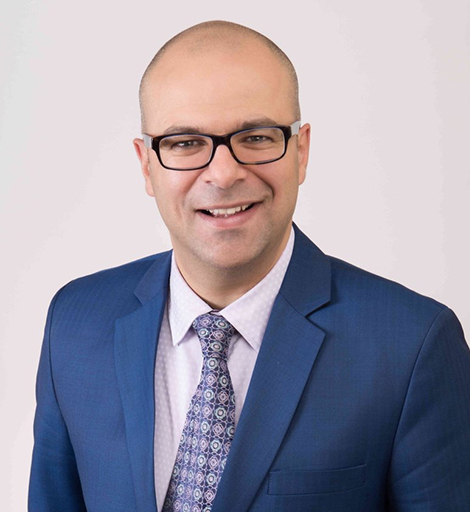
The surgeon behind Montreal Facial Surgery Centre is double board-certified, by the Royal College of Canada in otolaryngology and head and neck surgery, and by the American Board of Facial Plastic and Reconstructive Surgery. Dr. Samaha trained at Harvard and reports more than 3,000 facial surgeries performed. For an elective procedure where the result sits in plain view for the rest of your life, that combination of ENT background and facial certification is worth verifying, and both certifications are stated plainly on the site.
Dr. Samaha's credentials
The otolaryngology training is worth dwelling on. The anatomy of the nose, the airway, and the facial nerve overlaps heavily with rhinoplasty and facelift work. A surgeon who came up through head and neck surgery has spent years inside that territory before cosmetic refinements ever entered the picture, and that is a meaningful distinction from a generalist who added faces to a broad cosmetic menu. It does not guarantee outcomes, but it tells you the anatomical knowledge did not arrive through a weekend course.
ENT background in facial surgery
Where a patient should slow down is the proprietary "Maximum Result Minimum Recovery" system, trademark symbol attached, that Montreal Facial Surgery Centre promotes. Branded recovery protocols are common across cosmetic surgery, and the phrase tells a patient very little on its own about technique, downtime, or what separates this approach from another surgeon's. The credentials are solid and verifiable. The trademarked promise stays vague until someone asks the clinic, in plain language, what the protocol does and does not include.
Trademarked recovery protocol
On RealSelf, Montreal Facial Surgery Centre has a profile, and Dr. Samaha appears in Montreal facial plastic surgeon listings with a rating of about 4.7 out of five drawn from 24 reviews. That is a strong score, and RealSelf tends to attract people who have genuinely had cosmetic procedures done, so the feedback is typically more specific than a generic star tally. WhatClinic also lists the clinic with patient reviews, though the count there did not come through clearly in the search.
Patient reviews on RealSelf
Twenty-four reviews is the part that gives me pause. For a surgeon reporting thousands of operations, that is a modest public sample, and no Trustpilot, Yelp, or Google totals surfaced to widen the view. The rating is good and the reviews read as credible. The volume behind it is limited, and a careful patient would want to read the individual write-ups rather than lean on the average. Montreal Facial Surgery Centre lists the phone number, the full street address at Suite 200 on Beaumont Avenue, the operating hours Monday through Friday from 8 a.m. to 4 p.m., and an online consultation request form, so reaching the clinic or confirming its location is straightforward. Those are short hours, worth noting for anyone juggling a full work schedule, though surgical follow-up typically runs by appointment anyway.
Limited review volume and location details
The case for Montreal Facial Surgery Centre rests on the surgeon more than the website, and that is the right order for this kind of work. The credentials are verifiable, the focus is genuinely narrow, and the RealSelf score of about 4.7 across 24 reviews is consistent if shallow in volume. The published evidence supports a strong, specialized credential and a positive though limited review record; it does not, on its own, prove that the trademarked recovery promise delivers what it implies. On that record the practice reads as a credible specialist option, with the review volume the one number a careful patient will want to read through line by line.
Business address
Dr. Mark Samaha Montreal Facial Plastic Surgery
1240 Beaumont Avenue, Suite 200,
Mount Royal,
Quebec
H3P 3E5
Canada
Contact details
Phone: 514-700-6646