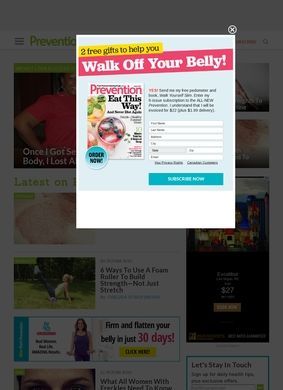
You wake up at three in the morning with a question that feels too small to ask a doctor and too persistent to ignore: is it normal to sweat through the sheets at this age, does cutting carbs really do anything, what is the actual difference between two supplements on the shelf. Prevention.com is built for exactly that kind of search, the in-between health worry that sends people to a phone before they send it to a clinic. Type the question, land on an article, and what comes back is a piece written by a staff editor who has gone and asked a registered dietitian or a physician what the answer is.
How Prevention organizes health information
Prevention has been around for more than seventy years, starting life as a print magazine and now running as a digital arm of Hearst. That lineage shows in how the site is organized. It splits into clear verticals: a Health section that covers mental health, sleep, healthy aging and general wellness; a Food and Nutrition area heavy on recipes, diet breakdowns and what specific foods do; a Weight Loss section with meal plans and dietitian-backed approaches; Fitness with exercise routines; and a Beauty section that leans into skincare and the products around it. There is also a steady stream of editor-tested product reviews, the sort where someone on staff has used the thing before recommending it.
Free access to most content
Most of this reads for free. A slice of material sits behind the subscription that also gets you the print magazine, but a casual visitor can move through the bulk of the content without hitting a paywall every few clicks. This suits the kind of reader Prevention attracts, which tends to be someone checking one specific thing, not someone looking to commit to a platform. The recipe and meal-plan sections in particular lean practical, with grocery-level detail and portion guidance instead of vague advice to eat better, and the fitness routines are written for people exercising at home without a trainer looking over their shoulder.
Editorial credibility through named sources
The editorial posture is the strongest thing Prevention has going for it. Articles name credentialed sources and lean on registered dietitians and doctors instead of vague gestures toward research. When a piece tells you a particular eating pattern helps with something, it usually has a named professional standing behind the claim. For health content aimed at a general audience, that is the right instinct, and it separates Prevention from the wall of unsourced wellness writing that fills the rest of the internet.
Factual accuracy concerns and limitations
That said, the record is not spotless. Media Bias/Fact Check rates Prevention Magazine as mixed on factual reporting and flags some content as leaning toward pseudoscience. This is worth holding in mind. The site is a useful starting point and a good way to frame a question before a real appointment, but it is a consumer wellness publication with a commercial side, not a medical authority. A reader who treats a single article as settled fact, especially on the more aspirational diet and supplement topics, is asking more of it than the format can deliver. Read it as a well-sourced magazine, cross-check anything that would change a medical decision, and the visit pays off.
Product reviews with commercial interests
The product reviews sit in a similar place. Editor-tested is more honest than the affiliate roundups that pretend to be tests, and there is genuine value in someone trying skincare or a piece of fitness gear before writing it up. Still, Prevention makes money partly through those recommendations, so the enthusiasm in a glowing review should be read with that in the background.
Subscription and billing complaints dominate reviews
Outside opinion is mixed and mostly tied to the magazine business, not the website. Trustpilot carries a single review of Prevention, which is nowhere near enough to read anything into. PissedConsumer has more to say, with 207 reviews averaging around 2.5 out of 5 across the rated ones, and the complaints cluster tightly: trouble cancelling subscriptions and print issues that never arrived. That is a billing and fulfillment grievance, the kind that follows almost every legacy magazine into the digital era, and it says little about the quality of the free articles a typical reader actually comes for. On the safety question, both Scam Detector and ScamAdviser rate the domain as legitimate and safe, which is the baseline you would expect from a long-running Hearst property but still worth confirming.
Finding editorial support
Getting in touch is the weaker corner of the operation, at least from a reader's seat. No contact route is surfaced prominently up front, and what exists points toward subscription support, not the editorial team. A customer service phone line and a subscription email do exist, traced through third-party sources, but both are aimed at people sorting out magazine deliveries and renewals. Someone wanting to reach an editor, flag an error, or ask about a specific article will find that harder than it should be. Since the whole value of Prevention rests on editorial credibility, a more visible editorial contact path would do it favors.
Strengths in sourcing and organization
None of that undoes what the site is good at. The breadth is there, the sourcing discipline holds, and the free access removes most of the friction. A person searching at midnight for whether their symptom is worth worrying about will find a readable, expert-cited answer faster here than almost anywhere comparable, and the structure makes it easy to wander from one health question into the adjacent recipe or fitness piece. The cautions are about calibration, not danger: know that you are reading a commercial wellness magazine with a strong editorial backbone and an uneven factual record on the fringes, and use it accordingly.
What a visitor actually gets, then, is a deep and well-organized library of consumer health writing backed by named professionals, free for the most part, sturdy on safety, shakier on direct editorial contact, and worth treating as a first read rather than a last word.