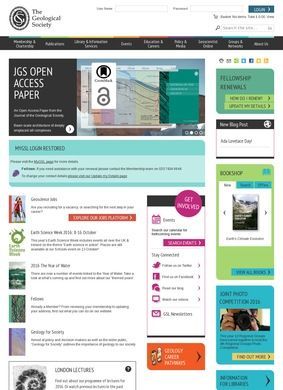
Britain's oldest geological learned society has been running since 1807, and the Geological Society now operates out of Burlington House on Piccadilly alongside the Royal Academy and a cluster of other learned bodies. That address tells you something about how the organisation positions itself: it is not a trade lobby or a certification mill but a serious scientific institution with a library, a publishing catalogue, a membership ladder, and a public events programme, all under one roof and one registered charity number.
Chartered credentials and professional membership
The part of the Geological Society's work with the most practical weight is chartership. CGeol (Chartered Geologist) and CSci (Chartered Scientist) status, both awarded through the Geological Society, are the credentials employers reach for when hiring people to sign off on ground investigations, contaminated land reports, or seismic assessments. Behind those letters sit the Society's CPD framework, training workshops, and an Early Career Network for people still building the portfolio that chartership requires. Membership runs from Student and Postgraduate grades through Associate and Fellow, with Corporate Partner status for firms and Honorary Fellowship reserved for distinction. If you are a geoscientist in the UK, the progression through those grades is essentially a map of a professional career.
Publishing through the Lyell Collection
Publishing is where the Geological Society extends its reach well past its own members. The Lyell Collection brings journals, books, and special publications together in one digital archive, and for a discipline where a paper from the 1970s can still be the primary reference on a particular formation, that back catalogue matters. There is also Geoscientist Online, the Society's magazine, and an online bookshop that runs from technical monographs to GeoGifts merchandise. The combination is unusual for a learned society, but it reflects how seriously the Geological Society treats its role as a publisher rather than treating publication as a sideline.
Library holdings and research access
The library at Burlington House is the part that most visitors to the website probably overlook. Physical collections, a Map Room, archives, and a picture library are backed by database search tools and a document copying service, with online exhibitions for researchers who cannot travel to London. A learned society that has been collecting material for over two centuries accumulates holdings that are genuinely hard to find anywhere else, and the Geological Society spells out practical access routes alongside what the holdings contain.
From conferences to venue hire
Events span the professional and the public. The Geological Society runs specialist conferences alongside open lectures, so the same programme serves a first-year undergraduate and a Fellow with thirty years of fieldwork. Burlington House is also available for venue hire, weddings included, which is an unusual detail but a straightforward one: a historic building in that location has rooms that generate income, and that income goes back into the charitable work. The Geological Society does not obscure that logic.
Educational resources for schools and students
Education is the section that points furthest forward. Resources for primary, secondary, and university levels sit alongside fieldwork guides and the Schools Geology Challenge. The "This is Geoscience" initiative is an explicit attempt to raise awareness of a subject that most people never encounter in a school curriculum. Outreach at this level is easy to promise; the range of materials on the Geological Society's site is consistent enough that this looks genuinely resourced.
What holds it together is that the Geological Society manages to be genuinely useful to several quite different audiences without the overall picture becoming incoherent. A student can find the membership grades and chartership requirements. A practising geologist can reach CPD courses, journals, and conferences. A teacher can pull lesson material. A researcher can query the library. Each audience finds something concrete, not a general welcome page.
Inside the professional network
A search of independent review platforms returns no meaningful volume of public ratings for the Geological Society in the way a consumer business would have. That is typical for a professional body of this kind: the people it serves evaluate it through peer networks and professional experience rather than leaving stars on a listing. The absence of a review trail is not a concern here; it means the published record on the site itself is the main thing to read.
Navigation is worth flagging as the one genuine friction point. An organisation doing this many distinct jobs across publishing, accreditation, library access, and events has to work to keep its site readable, and a visitor arriving for one purpose will need to filter past the other three. Most will manage once they know which of those functions they came for. The depth across all of them is consistent, and the Geological Society's credentials in the field go back long enough that the substance is not in question.