A dissolved CO2 sensor and a cell capacitance system for tracking biomass inside a bioreactor are the sort of instruments most people never see, and they sit near the center of what this Belmont firm sells. Optimal Biotech Group works as an authorized manufacturer's sales representative, which means it does not build the hardware itself but sits between the firms that make process measurement equipment and the labs and plants that have to run it. The territory is specific: Northern California and the Pacific Northwest. The customers are specific too, namely biotech, pharmaceutical, food and beverage producers, and operations handling USP and WFI grade pharmaceutical water.
Bioprocess monitoring and water quality instruments
That narrowness shapes everything else about the offering. Optimal Biotech Group is not a general lab-supply catalog. The instruments it carries line up around a few real problems in regulated production: knowing what is happening inside a fermentation or cell-culture run, checking the purity of process water, and reducing particle size or breaking cells open under high pressure. Each product family maps to a measurement someone in a GMP plant is legally and practically obligated to get right.
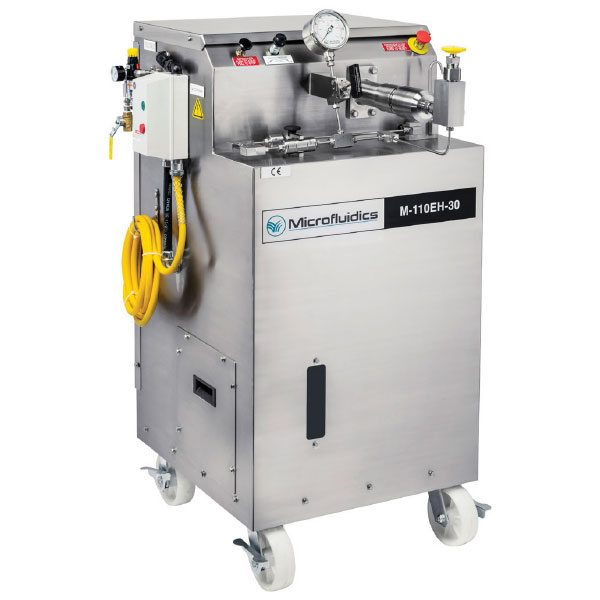
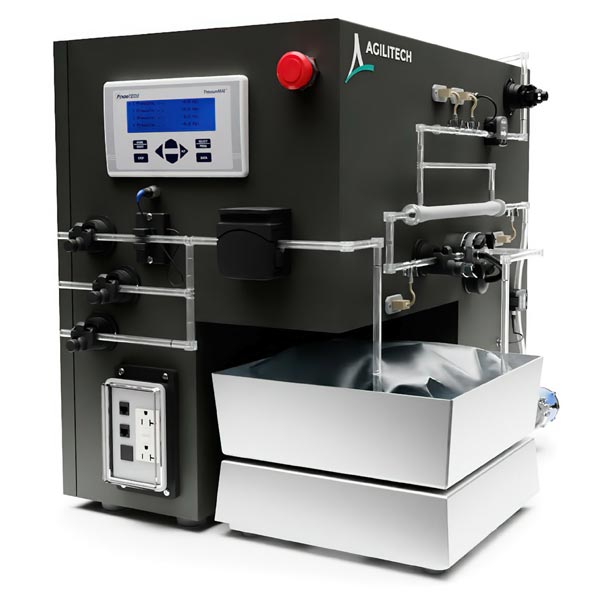
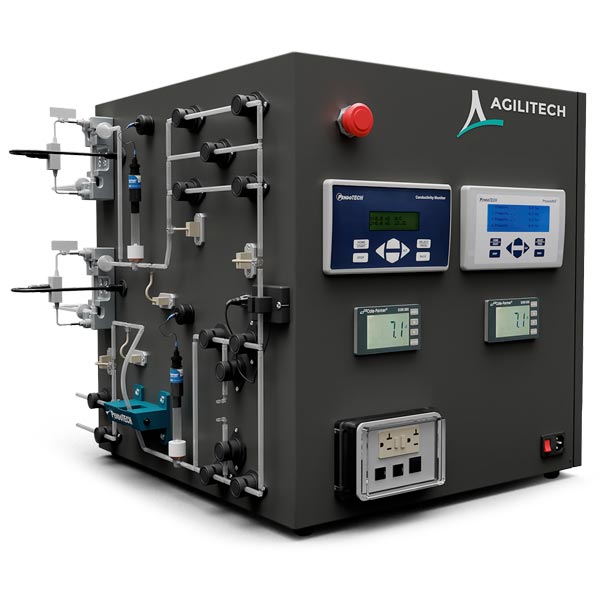
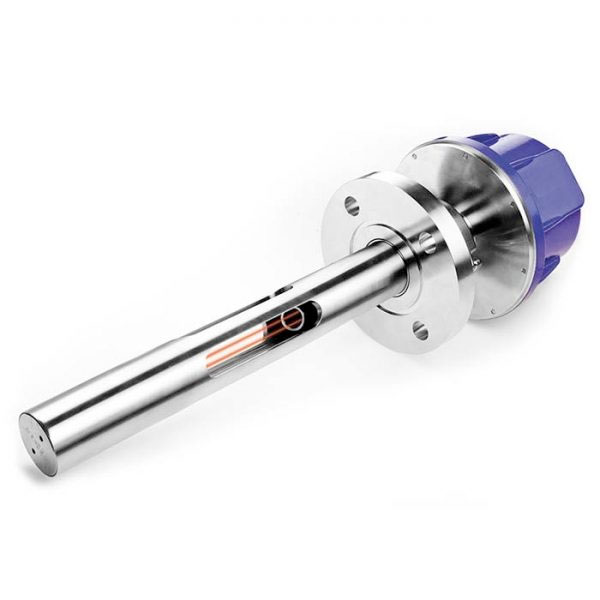
On the bioprocess monitoring side, the dissolved CO2 sensors and cell capacitance measurement systems give an operator a live read on culture conditions, the kind of data that decides whether a batch is healthy or quietly going wrong. The analytical instruments cover TOC analyzers and bioburden monitoring transmitters, both of which speak directly to the water-quality and contamination concerns that pharmaceutical water systems live and die by. Then there are the Microfluidizer high-pressure homogenizers for particle-size reduction and cell disruption, automated sampling systems, and level transmitters for tanks and vessels. It is a coherent set, and Optimal Biotech Group keeps the families tied to one another. Someone outfitting or troubleshooting a process line could plausibly source several of these through one relationship.
Established manufacturer partnerships
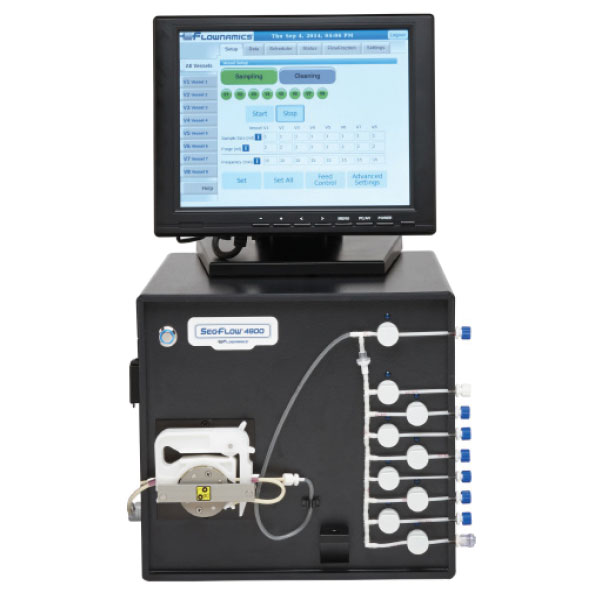
The brands behind that lineup are established and specific. Mettler-Toledo is about as proven as process analytics gets. Aber is known specifically for capacitance-based biomass measurement, Microfluidics for the Microfluidizer homogenizer technology, and Flownamics for automated sampling. Optimal Biotech Group holding the regional representative role for these names tells you the manufacturers vetted it as a channel into a demanding market. Manufacturers do not hand their flagship instruments to a rep they do not trust to install, demo, and support them in front of pharma quality teams. That vetting is a quieter form of credibility, and it is the kind a buyer can verify by asking the manufacturer directly.
Technical support in regulated environments
It is a fair thing to ask, because "manufacturer's representative" can sometimes mean a layer that just forwards orders. The structure at Optimal Biotech Group reads differently. In GMP-regulated environments the friction is rarely the purchase order, it is the qualification, the calibration, the documentation, and whether a given sensor will hold up against an auditor. A technical rep that knows several complementary product lines and the local plants can be genuinely useful in that gap, helping a process engineer match an instrument to a validated method without learning four manufacturers' ecosystems from scratch.
Comparing options across product lines
The honest flip side: a buyer who already knows exactly what they want and has a direct manufacturer relationship may not need the intermediary at all. Where Optimal Biotech Group looks strongest is the messier middle, the engineer comparing a TOC analyzer against bioburden monitoring options, or someone weighing whether a Microfluidizer fits their cell-disruption step. That advisory role only works if the depth is real, and the spread of brands and applications on the site points that way.
Food and beverage applications
The food and beverage angle widens the picture for Optimal Biotech Group a little without scattering it. The same measurement disciplines that matter for pharmaceutical water, organic carbon, microbial load, process consistency, carry over to beverage production and other high-purity food applications. That is reusing genuine expertise across adjacent industries rather than stretching into areas it has no foundation in.
Contact and verification details
Reaching Optimal Biotech Group is about as plain as it gets, which counts for something with a regional B2B operation where deals start with a phone call or a quote request. The site puts a Belmont, California street address on the page, a direct phone line, a fax number, and two email contacts, one general and one to a named individual. For a prospect trying to confirm this is a real company at a real location with real people answering, the named email in particular means you will reach a person and not a ticket queue.
Outside reputation is where the picture goes quiet, and it is worth being straight about it. A BBB profile exists for the Belmont location under the Scientific Instruments category, but Optimal Biotech Group is not BBB Accredited and the profile shows no rating or review count. There is a LinkedIn company page. A Glassdoor listing turns up, though the reviews on it appear to belong to a different outfit called Optimal Bio, so they tell you nothing about Optimal Biotech Group and should be set aside. No customer-facing ratings or review counts surfaced on Google, Yelp, Trustpilot, or anywhere comparable.
That absence is fairly typical for a specialized industrial rep. Firms that sell capacitance probes and TOC analyzers to a handful of pharma plants in two regions do not accumulate consumer-style star ratings the way a restaurant does. The reputation that matters to Optimal Biotech Group lives in purchase orders, repeat business, and the trust of the manufacturers whose lines it carries. A prospect who wants third-party validation will need to ask for references or lean on those brand relationships directly, because the public web does not supply it.
What you will not find on the site is pricing, downloadable specification sheets in any depth, or a self-service catalog a buyer could work through without talking to anyone. That is by design for this business model, since quotes and applications get handled by conversation. Optimal Biotech Group is built to be the start of a relationship, and the page reflects that by putting the contact route front and center and letting the brand names do the technical persuading. Process engineers, validation specialists, and procurement contacts at biotech or pharmaceutical operations in Northern California or the Pacific Northwest are the obvious fit, and the specificity of the product list is enough to confirm whether a particular need lands inside or outside what Optimal Biotech Group actually covers.

Business address
Optimal Biotech Group
131 Industrial Rd Unit #7,
Belmont,
CA
94002
United States
Contact details
Phone: (650) 376-3837
Fax: (866) 941-6822