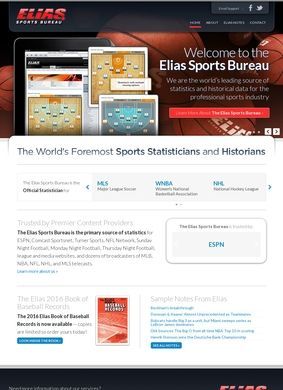
A network producer forty minutes from air has to be sure the number on the graphic is right. Is this the most home runs by a rookie since a stated season, or a figure someone half remembered from an old telecast? Somebody has to keep the official record and answer for it. That work belongs to Elias Sports Bureau, which collects, checks, and hands out the statistics that leagues and broadcasters treat as the last word.
Elias Sports Bureau is the official statistician for a long roster of American sports. The league partners run through Major League Baseball, the NFL, the NBA, MLS, the WNBA, the G League, the PGA, and Minor League Baseball, and the site puts the total near forty leagues. That spread is the whole point. When a record gets claimed on air, the number almost always traces back to one place.
What the bureau keeps and verifies
The core job is record-keeping and verification. Elias Sports Bureau logs what happens on the field, confirms it against the rules of scoring, and turns it into the historical context a commentator reads out during a lull or a viewer sees printed beside a box score. Pre-game statistical preparation belongs here too, so the notes an announcer reaches for in the third inning were assembled somewhere upstream well before the first pitch.
Laid out plainly, the service list is short and specific: official statistical record-keeping and verification, historical sports research and the context that surrounds a milestone, pre-game preparation for the people calling the action, and finished media content and insights for both broadcast and online coverage. Around forty leagues feed into that pipeline, from the marquee names down to the minor and developmental circuits, which is a lot of live scorekeeping to get right on deadline every single night.
There is a research operation that goes well past counting. Historical context, the settling of what qualifies as a record and what does not, and the rulings that decide how a given play is scored all sit inside the same house. The About page describes staff with unusual tenure, including someone credited with more than forty years of reviewing NFL plays week to week and working with the office of the MLB Commissioner. Longevity like that is the line between a database and an authority people actually trust.
From the leagues to the broadcast booth
The output does not stop with the leagues. Media partners named on the site include ESPN, MLB Network, NFL Network, NHL Network, and CBS Sports, which is where most of the public meets the work without ever noticing it. The stat under a batter's name, the note about a scoring streak, the aside a play-by-play voice drops between pitches: much of that is Elias Sports Bureau data dressed for television.
Fantasy platforms and betting services draw on the same underlying feed, so the reach carries well past the broadcast and into the phone in a fan's pocket, whether that fan knows the source or not.
How reachable it is, and how proven from outside
Contact at Elias Sports Bureau runs through a contact page on the site, with a New York office address listed and social links to LinkedIn and Twitter. No phone number or email shows on the pages reviewed, so reaching the company means the form. For an operation whose customers are leagues and networks instead of walk-in visitors, that is a defensible setup. A member of the public with a stray question, though, has a narrower door than a listed phone line would give them.
Someone who comes across Elias Sports Bureau through a business directory entry rather than a broadcast credit might expect the same open contact channels as an ordinary local business. That expectation does not quite hold here. The address and the social links at least confirm a real operation at a real place, which counts for something when the rest of the public footprint is this quiet.
What the outside record shows
Independent reviews are sparse, and they want careful reading. Indeed carries employee reviews of the bureau at 4.5 out of five, based on two entries, and Glassdoor keeps a small employee page with positive notes on culture and leadership. Those are staff reviews of a workplace, not verdicts from clients. A Yelp listing under the same name sits in a sports-wear category at a different Manhattan address, which does not match the statistics operation and reads like a mix-up. No customer or client reviews of Elias Sports Bureau itself came up at all.
That absence stings less for this business than it would for most. Its clients are leagues and broadcasters, who do not leave star ratings, and its standing comes from being the name those clients cite. Judging Elias Sports Bureau purely on public consumer feedback turns up close to nothing to weigh.
The verdict is plain enough. Elias Sports Bureau does one thing at a level the biggest leagues and networks in American sport have leaned on for decades, and the site states that role without inflating it. There is no phone number in front of you, the public reviews are sparse and mostly about working there, and the value is largely invisible, folded into numbers already seen with no byline attached. None of that undercuts the operation; it just means the proof sits in the broadcast, not on the page.