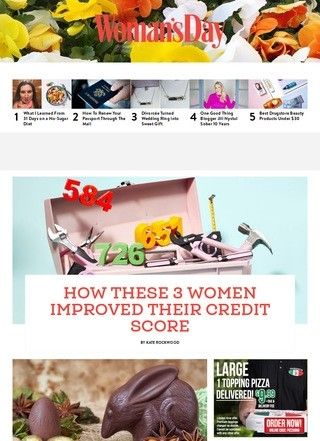
Where do you turn when you want a weeknight dinner sorted, a quick fix for a chipped cabinet, and a sane answer to a thorny in-law problem, all in one place? Woman's Day Magazine has spent decades answering exactly that kind of question, and the website carries the same practical instinct into a daily feed of recipes, health notes, home projects, and family advice. This is one of the Seven Sisters print titles, published by Hearst Magazines, and while the print edition now runs bimonthly, the online side updates continuously. The result is a steady stream of short, usable articles aimed at people who want to get something done today.
Recipe planning for real schedules
The food coverage is the clearest anchor. Woman's Day Magazine recipes lean toward the healthy and the doable, with meal planning sitting alongside the individual dishes, which is the part most home cooks actually need. You get the recipe, but you also get help fitting it into a week. That balance tells you who the editors picture on the other side of the screen: someone with a real schedule, not a culinary hobbyist with a free Saturday. That focus is more honest than the glossy aspirational angle a lot of food sites chase, because it matches how people really cook.
Food section approach
Beyond the kitchen, Woman's Day Magazine spreads across health and wellness, beauty and style, home decor and DIY, and the broad territory of relationships and family. The Life section pulls in travel, pets, personal finance, holiday celebrations, and gift guides, so the seasonal stuff has a home too. Everything sorts into four plain top-level sections, Food, Health, Life, and Style, which keeps navigation legible even as the article count grows. Daily articles are joined by videos and a set of interactive tools, and readers can sign up for customizable email newsletters to pull the topics they care about into their inbox.
Sections across household life
One thing worth flagging for anyone who reads with a careful eye: Woman's Day Magazine is open about how it makes money. The site states its editorial policies, labels sponsored and advertiser-partner content clearly, and discloses that it participates in affiliate marketing programs. A lot of lifestyle content blurs the line between a genuine recommendation and a paid placement. Spelling out which is which, in plain sight, is the kind of disclosure a skeptical reader should want, and it raises the trust level of the product reviews and gift guides that fill the seasonal calendar.
How the site discloses sponsorships
The publication's reach extends past its own pages. Woman's Day Magazine keeps a sizable Pinterest presence, more than 528,000 pins spread across nine boards, which is a logical fit for a brand built on recipes, home projects, and style ideas, all of which travel well as saved images. For readers who already live on Pinterest, that becomes a second front door into the same body of work, and it speaks to how much visual material the editorial team has produced over time.
Pinterest boards and social reach
If there is a limitation, it sits in the breadth itself. A site that covers food, health, beauty, home, finance, travel, and pets is never going to go as deep on any single subject as a specialist outlet would. Someone hunting for advanced nutrition science or serious renovation engineering will outgrow Woman's Day Magazine quickly. What it does instead is serve the generalist, the reader who wants a competent, readable take across the whole sweep of household and personal life without bouncing between a dozen narrow sites. Judged on that goal, the range is a feature, and the editorial consistency across sections holds it together.
Breadth over specialist depth
The long history behind the name is real enough that it has shaped how the site operates. A title that has survived the move from a print staple to a continuously updated website has had to keep proving itself to readers who could leave at any moment. The bimonthly print cadence now plays a supporting role to the online operation, which is where the daily rhythm and the bulk of the audience attention live. That shift is visible in how the site is built, with the web sections doing the heavy lifting and the newsletters and social boards extending the reach. Woman's Day Magazine is not coasting on a legacy brand name; the volume and pace of new content make a case independent of the archive.
Practically speaking, Woman's Day Magazine rewards browsing as much as searching. Drop into the Food section before dinner and you will likely leave with a plan; wander into Life around a holiday and the gift guides and celebration pieces are already lined up. The interactive tools and video add a bit more than a wall of text, and the newsletter sign-up is the right move for anyone who would rather have relevant pieces delivered than go digging each day. None of this is flashy, and that is fine. The point is utility, repeated daily, across the parts of life most people are juggling at once.
Woman's Day Magazine is an easy site to bookmark and return to regularly. Start in the Food section for the meal planning, then sign up for the customizable newsletter so the topics you follow come to you, and check the About page if you want to see the editorial policies and disclosures before trusting a product pick. The transparency around sponsored content is more than a legal formality; it is what lets you actually use the gift guides and product reviews without second-guessing the motive behind each one.