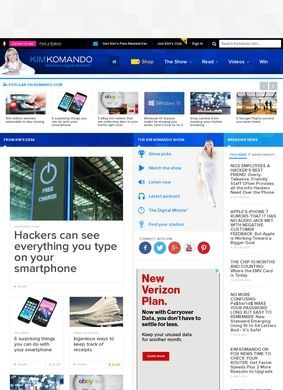
More than 420 radio stations carry The Kim Komando Radio Show, and komando.com is where that on-air program turns into something you can read, listen to, and search at your own pace. The premise behind The Kim Komando Radio Show is narrow on purpose: take consumer technology, strip out the jargon, and hand ordinary people advice they can act on. Cybersecurity warnings, privacy settings, gadget questions, scam alerts. Material that usually gets buried in dense how-to articles appears here in plain language for people who do not work in IT.
Content streams for non-technical listeners
The content splits into a few clear streams. There is artificial intelligence coverage aimed at people trying to figure out what the fuss means for them, cybersecurity pieces that lean toward warnings and fixes, digital privacy guidance, a deals and bargains section, and lighter lifestyle technology articles. That mix tells you who the audience is: not developers or sysadmins, but the person who got a strange text, wonders whether a smart speaker is listening, or wants to know which laptop is worth buying.
Audio programs across multiple platforms
Audio is the spine of the operation, which makes sense given the radio roots. Three podcasts run under the brand: the main show carrying the host's name, plus The Current and Digital Life Hack. They are available through iHeartRadio and Apple Podcasts, so anyone who already listens to podcasts can follow along without learning a new app. A station finder tool on the site lets listeners locate the nearest broadcast of The Kim Komando Radio Show, a genuinely useful feature for a program built around terrestrial radio. I went looking for that kind of tool expecting it to be buried, and it was easy enough to find.
Newsletter and community channels
The newsletter is where the site stakes its biggest claim. It reports more than 900,000 subscribers, a figure that, if accurate, puts the reach well beyond what a single radio slot delivers. There is also a Toolkit section pulling resources together, an "Ask Kim" form for sending in questions that might get answered on air or in writing, a YouTube channel, and a community forum at its own subdomain. The social presence is wide: Facebook, Instagram, X, TikTok, LinkedIn, and Threads. For a property anchored in the older medium of broadcast radio, that spread across newer platforms points to a real effort to follow the audience wherever it has drifted.
Audience reception and review ratings
This is where things get more complicated, and worth slowing down for. On Trustpilot the listing for The Kim Komando Radio Show carries more than a thousand reviews at five stars, which is a striking score for any consumer brand. A near-perfect rating across that many entries draws attention from anyone in the habit of reading reviews skeptically, because it is unusual for a large audience to agree so completely.
Mixed feedback across review sources
Other sources tell a more mixed story. An aggregator called SmartCustomer shows a much cooler 2.8 out of 5 across a few dozen reviews. RateItAll has user reviews running both ways. Podcast platforms including Reason.fm carry listener rankings and comments, and iHeart and Apple both have listener feedback, though no single aggregate score surfaced in searching. Put those side by side and you get a picture closer to what most long-running media brands look like: a devoted core that loves it, a quieter group that does not, and a lot of people somewhere in between. The Trustpilot number alone would oversell it.
Loyal following with some critics
That spread is not a mark against The Kim Komando Radio Show so much as a reason to read the glowing tally with one eyebrow raised. A consumer tech show that has been on the air for decades will accumulate strong opinions in both directions. The honest read is that The Kim Komando Radio Show has a real and loyal following, tempered by critics who find the advice too basic or too commercial. Where you land probably depends on how much you already know about technology before you arrive.
Contact and submission process
On reaching the operation directly, the site keeps it lean. A contact page routes most queries through the Ask Kim submission form, which fits a radio show that fields listener questions for a living. There is no phone number or mailing address on the homepage, so the relationship is built around submitting to the show rather than reaching a person directly. For a media brand this is a defensible choice.
What the site does well is consistency of purpose. The technology landscape it covers shifts constantly, and the value of The Kim Komando Radio Show is in translating those shifts for people who would otherwise tune them out. The deals section and the steady drumbeat of scam alerts on The Kim Komando Radio Show give listeners a practical reason to keep coming back, and the multi-platform podcast distribution means the advice travels well beyond the original broadcast.
If there is a fair criticism, it is that the same accessibility that serves newcomers can frustrate anyone who wants depth. This is a starting point, a translator, a friendly first stop, and it does not pretend to be a technical manual. For its intended reader that is exactly right. The Kim Komando Radio Show has carved out a clear lane and stayed in it across radio, podcasts, newsletter, and social feeds, and the reach behind it is hard to wave away. Whether the tone suits you depends on how much you already know going in, but the audience it is built for has clearly found it worth returning to.