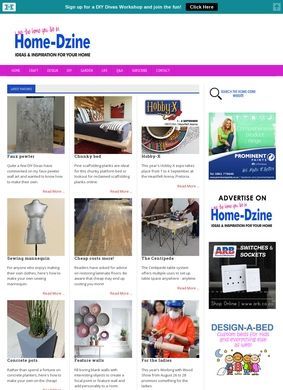
Home-Dzine is a South African DIY and home-improvement website that has been publishing project tutorials and home ideas since 2005. It was started by Janice Anderssen, who still runs it as editor, and the stated purpose is non-commercial, which shows in how the content is put together: less about selling anything, more about walking a homeowner through a task they were hesitant to attempt themselves. The audience is clearly local, aimed at people renovating, repairing, or decorating houses in South Africa, though most of the practical advice travels well enough to be useful anywhere.
Topic areas and skill levels
The breadth of topics is the first thing worth noting. Sections on Home-Dzine run through Crafts, Decor and Design, general DIY, Garden, Lifestyle, a News and Property Market feed, Home Improvement, and then room-by-room coverage for Kitchen, Bedroom, and Bathroom. There is also a Green and Sustainable Living area and a Home Office section. That spread means the site is not stuck at one skill level. A beginner looking to hang a shelf and someone tackling a full renovation are both catered for, with material pitched at beginner, intermediate, and advanced readers.
Step-by-step tutorials for specific projects
What holds Home-Dzine together is the project format. Instead of vague inspiration, the site leans on step-by-step tutorials that show how to fix a specific problem or build a particular piece, with plenty aimed at decorating a room on a budget. Home repairs and renovations sit alongside lighter craft projects, so the same visitor might come for a leaking-tap fix one week and a painted-furniture idea the next. That mix is the reason a reader tends to stay once they arrive.
Daily updates with searchable archives
Content keeps arriving. The associated Facebook page states that Home-Dzine updates daily, and there is a working search-results page that lets you dig for a specific article or project instead of clicking through categories one by one, so the site behaves less like a scrolling blog and more like a business directory you can actually search. For a site with this many topic areas, that search function is more useful than it might sound. The archive after twenty years is deep, and browsing alone would bury a lot of it.
Practical tone from an active author
The tone across the material is practical. Home-Dzine reads like a site built by someone who does the projects and then writes them up, which is a different thing from a content farm assembling articles for ad clicks. The longevity backs that up. A hobby-scale publication does not run for two decades unless the person behind it is genuinely invested and readers keep coming back for the next how-to.
Room-focused sections plus gardens and crafts
The room-focused sections are where Home-Dzine's practical value concentrates. Kitchen, Bedroom, and Bathroom each get their own space, which is a sensible way to organise home content because that is how people think about their own houses when something needs doing. The Green and Sustainable Living area adds a thread that many older DIY sites skip entirely, and the Home Office section reads like it grew out of readers actually asking for it. Home-Dzine gives the Garden and Crafts categories equal weight too, so the site is not narrowly about hard renovation work; a wet weekend indoors is as well served as a summer build outside.
Independent mentions from local guides
On outside coverage, the picture is modest but positive. There is no cluster of Google, Trustpilot, or Yelp ratings for this specific site, and a search mostly turns up unrelated "Dzine" brands, an AI design tool and some Indian interior-design firms, which muddies the results. Setting those aside, the Johannesburg city guide Joburg.co.za gave Home-Dzine an editorial write-up calling it "choc full of inspiration" and praising the free, practical content. A separate listing on isdown.co.za describes it as an easy-to-navigate DIY resource. Neither is a star rating, but both are independent nods, and for a non-commercial site the absence of formal reviews is unsurprising.
Social media presence and engagement
The social following gives a rough sense of reach. The homedzine Facebook page carries around 1,566 likes, and the founder's own AnderssenJ page sits near 4,891. Those are not huge numbers, but they are steady and they line up with the daily-update habit. A reader wanting a second opinion before trusting a tutorial has at least a couple of outside references to go on. It also tells you Home-Dzine has an active author behind it, not an abandoned archive left to gather dust.
Contact page location and accessibility
Getting in touch is the one area where the site could be easier. A Contact link sits in the navigation, so there is a route to the editor, but no phone number or physical address appears next to the articles themselves. Anyone who wants to reach out has to click through to that separate page. For a content site like Home-Dzine where readers mostly consume, this is a minor point, and putting a form behind a tab is a normal choice. The lack of anything visible up front is a small friction worth mentioning, though this entry links straight to the Contact page, which saves a step.
Weighing it up, Home-Dzine is a durable, well-stocked DIY library with a clear personality behind it and enough independent mention to feel trustworthy. The room-by-room structure and the searchable archive make it easy to land on something useful, and the free, non-commercial stance means the advice is not bent toward selling materials. The lack of formal star ratings and the tucked-away contact details are the honest caveats, and neither undercuts what the site does well after two decades of publishing.