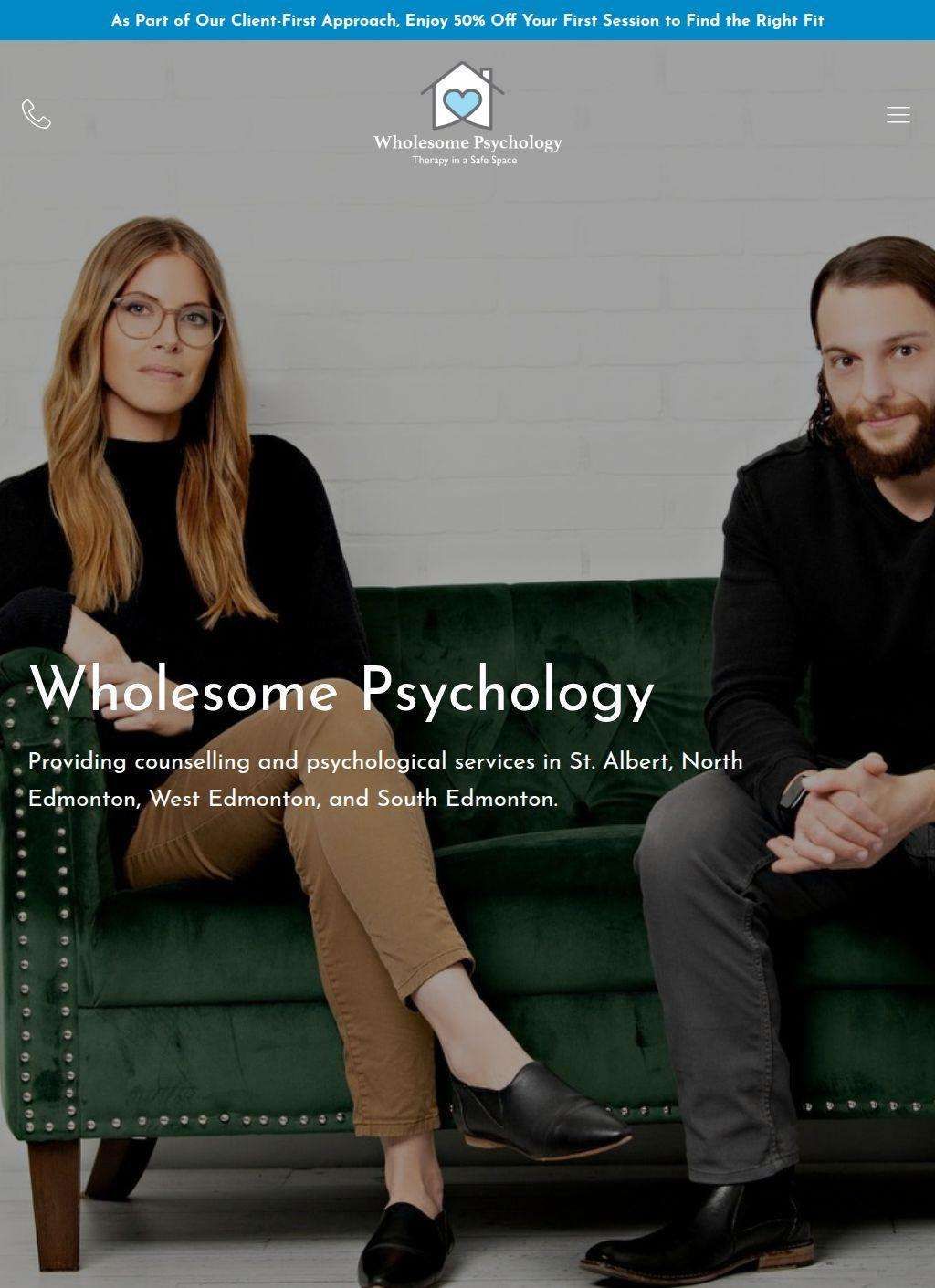
Someone lands on a psychology practice website usually because something has gone wrong and they need a real person to talk to, fast, ideally close to home. Wholesome Psychology - Psychologists Edmonton & St. Albert answers that need with breadth: five named offices spread across North, West and South Edmonton plus two in St. Albert (Green Grove Drive and Jensen Lakes), each with its own page so a prospective client can pick the location that is nearest before they ever pick up the phone. That practical framing sets the tone for the whole site.
Therapy services and psychological assessments
The service range at Wholesome Psychology - Psychologists Edmonton & St. Albert is wide without feeling padded. There is individual therapy, couples and marriage counselling, work with children, teens and adolescents, family sessions, and group therapy. Alongside the talk-therapy side sits a formal assessment arm that a lot of smaller clinics skip: psychoeducational and psychological testing for ADHD, cognitive and behavioural questions, and personality. The assessment section walks through what the process involves, from the testing itself to scoring and interpretation by a licensed psychologist and a feedback session at the end. Anyone who has waited months for an assessment slot elsewhere will understand why spelling out that pathway matters.
Specialties and treatment methods
On the clinical side, Wholesome Psychology - Psychologists Edmonton & St. Albert names the specific problems it treats and the methods it uses, which is more useful than a vague promise of support. The specialty list runs through anxiety, trauma and PTSD, depression, bipolar disorder, self-esteem, eating disorders, grief, career transitions, and sports and performance psychology. The modalities are named too: CBT and DBT, Internal Family Systems, Humanistic therapy, the Gottman Method for couples, Play Therapy for younger clients, and EMDR for trauma. For a reader who already knows they want, say, EMDR or a Gottman-trained couples therapist, that specificity saves a phone call.
Client populations served
The practice is explicit about the populations it serves, and the list is broader than the usual adults-and-couples default. It covers children, teens, couples and families, but also first responders, educators, and healthcare workers, groups whose work stress and trauma exposure are distinct enough to warrant the mention. LGBTQ+ clients and multicultural communities are named as well.
Therapist profiles and office locations
Backing this up, Wholesome Psychology - Psychologists Edmonton & St. Albert runs an "Our Therapists" section with individual practitioner profiles, which lets a client read about a specific clinician's background and approach before booking. Pairing that with the per-location pages means the site is trying to answer two of the most common pre-therapy questions at once: who would I see, and where would I go. It is a sensible structure for a multi-office group where fit between client and therapist does a lot of the heavy lifting.
The keyword hints around low-cost therapy point to an intake option worth confirming directly, since affordability is often the deciding factor for people weighing whether to start at all. Wholesome Psychology - Psychologists Edmonton & St. Albert clearly positions itself as a general-practice mental health resource across the Edmonton area, and the assessment offering gives it a second reason to exist beyond weekly counselling.
Booking an appointment online
Getting in touch is straightforward. There is a listed phone number and online booking through a JaneApp portal, the kind of self-serve scheduling that suits someone who would rather book at 11pm than leave a voicemail. Email is reachable through the site, and the multiple offices behind Wholesome Psychology - Psychologists Edmonton & St. Albert are named outright, so there is no mystery about where the practice physically operates. For a healthcare business, that counts for something, because a client needs to know a real clinic stands behind the website rather than a bare listing on a business directory somewhere.
Reviews across major platforms
Outside feedback is harder to pin down than the service depth would suggest. Birdeye carries a 4.9-star rating from 24 reviews for the West Edmonton location, a strong score even if the volume is modest, and it sits under the healthcare category. Beyond that, the search did not surface specific rating figures on Google, Yelp, or Trustpilot, and RateMDs indexes Edmonton psychologists generally without a clear number attached to this practice. The reputation evidence is positive where it exists, it just does not extend far past that one platform tied to one of the seven offices.
Weighing clinical depth against reviews
That is the honest tension in this listing. The website itself is detailed, well-organised, and specific about services, methods, and the people delivering them, which is exactly what someone in distress needs to see. Wholesome Psychology - Psychologists Edmonton & St. Albert has done the harder work of documenting its clinical range and assessment process rather than leaving those as assumptions. The public review trail has not caught up to that scope yet, at least not in a way a quick search can confirm across the major platforms.
What does the site get right?
The verdict is fairly clear from what is published. Anyone in Edmonton or St. Albert who wants a practice that treats a named condition with a named method, and possibly needs an assessment on top of counselling, gets a credible starting point here, with easy booking and clear locations. The strong Birdeye score is one data point covering one office out of seven at Wholesome Psychology - Psychologists Edmonton & St. Albert, not a picture of the whole practice, so it is worth reading as a genuine but narrow signal, not a full verdict. What the site gets right is substance: named specialties, named methods, named therapists, named offices. What it has not yet built is a public record broad enough to match that.
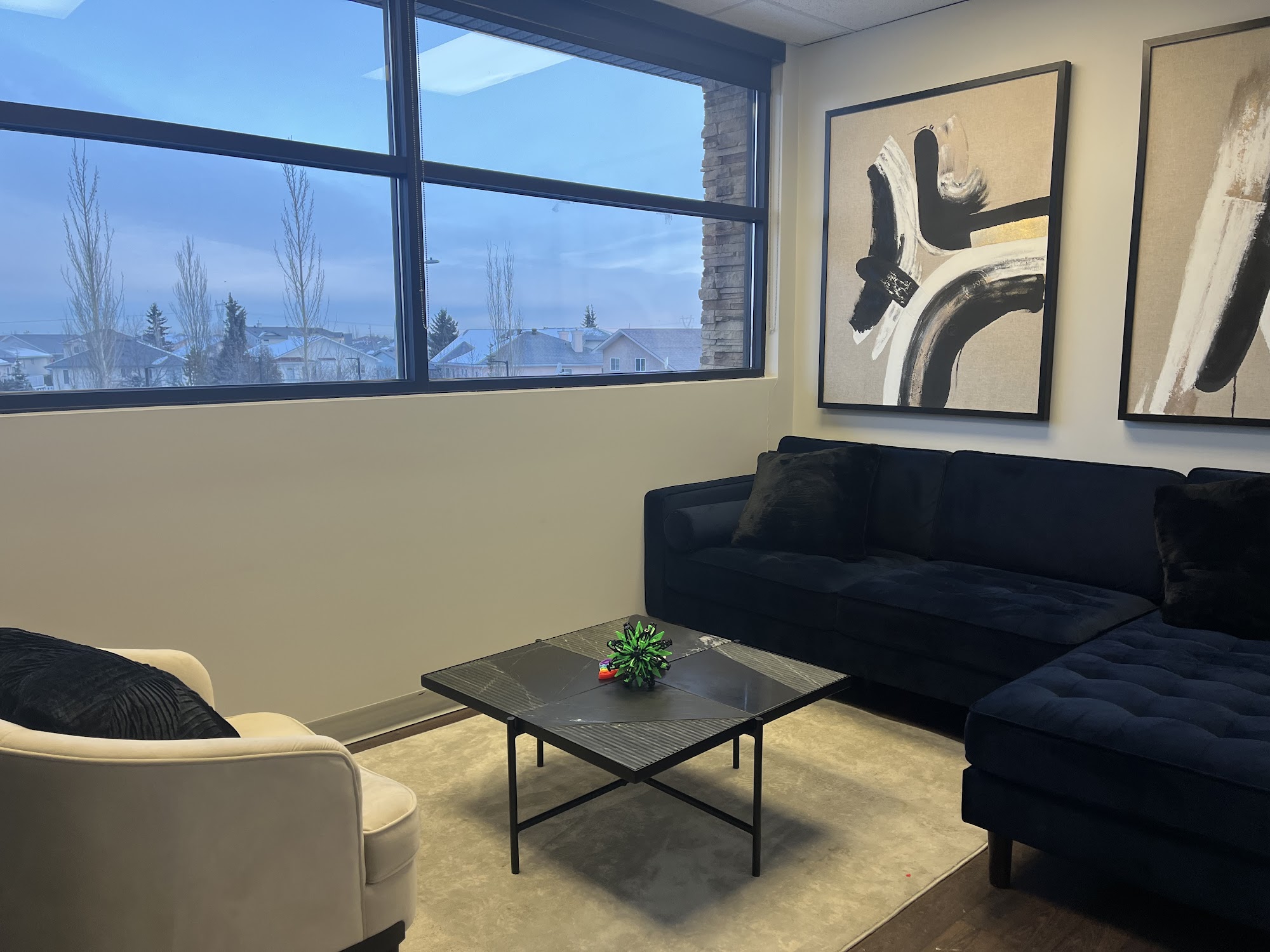
Important pages
Business address
Wholesome Psychology
8119 160 Ave NW #unit 204a,
Edmonton,
Alberta
T5Z 0G3
Canada
Contact details
Phone: +1 (780) 904-4880