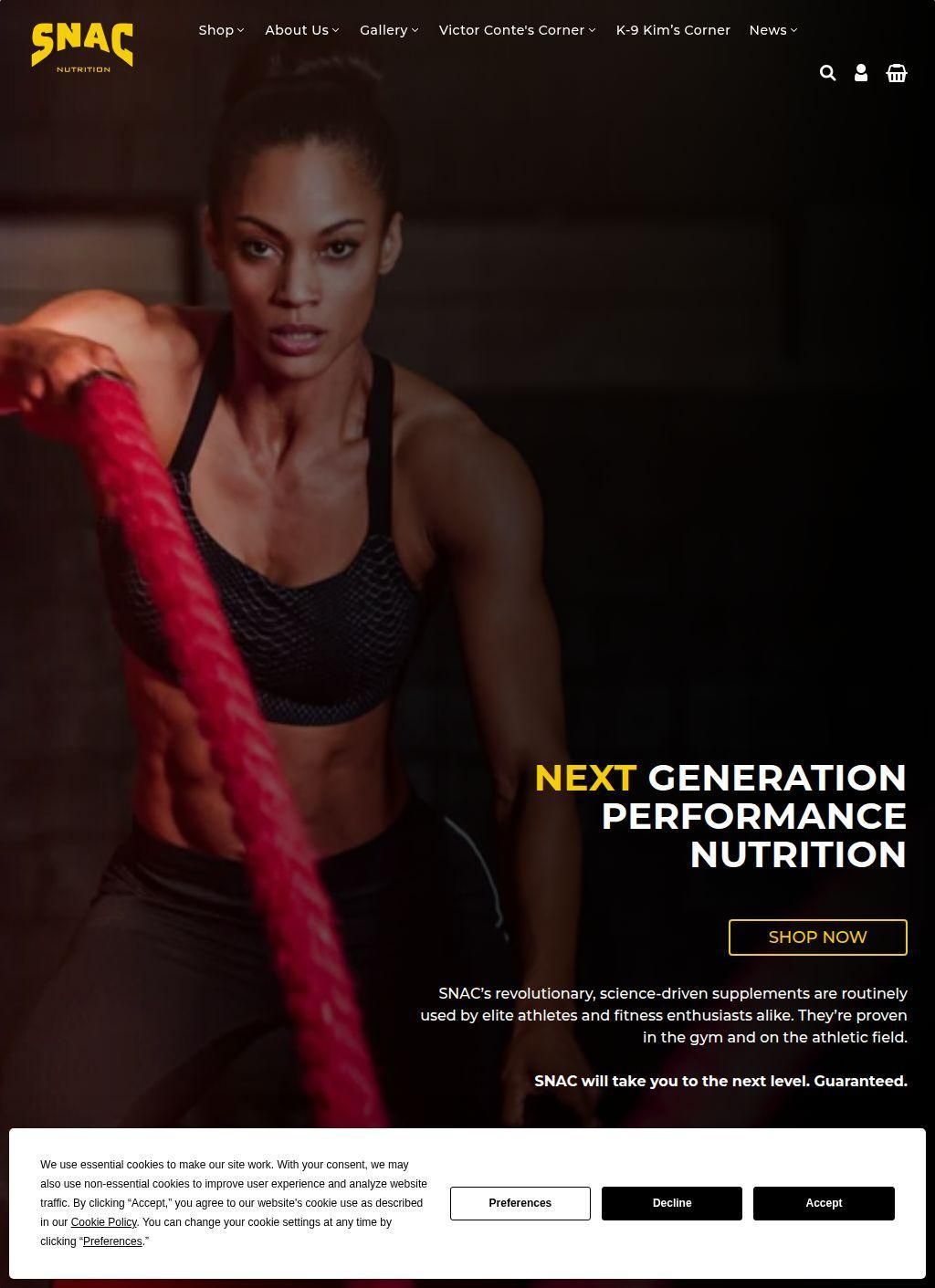
XPEDITE, the pre-workout energy drink priced at $34.95, sits at the front of what SNAC puts on the table, and it sets the tone for the rest of the catalog: this is a supplement maker that wants to talk about athletic output, not lifestyle wellness. Formally SNAC System Inc., the company works out of San Carlos, California, and was founded by Victor Conte. Anyone who follows the sports world will recognize that name, and the site does nothing to hide the connection. Conte fronts a blog called "Victor Conte's Corner" with vlogs and written articles, giving the operation a face and a voice that most supplement shops lack entirely.
Product range and catalog structure
The SNAC product range is tight and easy to read. Beyond XPEDITE, the headline items are ZMA, a zinc and magnesium formula aimed at recovery and sleep priced at $16.95, and its variant ZMA-5, which adds 5-HTP and runs $22.95. HypOxygen, at $34.95, is pitched at endurance and VO2 max support. Vitalyze, $27.95, covers mental alertness alongside physical performance. The catalog is sorted into four buckets that match how an athlete would actually shop: pre-workout, post-workout, sleep and recovery, and nutrition. Branded athletic gear and apparel are also available for buyers who want the logo on more than a tub of powder.
Who the SNAC products are built for comes through clearly. The company names elite athletes, boxers, bodybuilders, and physique competitors among its audience, with room left for general fitness enthusiasts who train hard. That focus on the upper end of the performance spectrum shapes how the site presents itself. Products are described as athlete-tested before they reach the consumer shelf, a claim plenty of brands make but one that carries more plausibility here given the founder's documented history inside competitive sport. A news and research section leans on cited scientific studies, and a gallery rounds things out with athlete content. The whole thing reads like a company that expects its buyers to ask about the active ingredients and the evidence behind them.
The catalog structure deserves a second look because it tells you something about the buyer SNAC has in mind. Sorting products by training phase (what you take before a session versus after, versus what supports sleep) assumes a shopper who already trains on a schedule and thinks about recovery as a discrete part of the program. That is a different customer from the one browsing a drugstore vitamin aisle. ZMA landing in the sleep and recovery bucket while XPEDITE anchors pre-workout makes the logic plain at a glance, and the nutrition category catches whatever does not fit the timing-based slots. A catalog organized around how the product is used, rather than by alphabetical SKU, is the kind of decision someone who understands the training cycle would make.
Checking review authenticity
On outside opinion, the picture is mixed but reasonably substantial. ReviewMeta, the tool that analyzes review authenticity, has logged 695 reviews across six SNAC products, though the snippet does not surface an aggregate star figure. Knoji carries 8 reviews with an overall score of 3.8 out of 5. On the product pages themselves, individual customer reviews are visible: ZMA-5 shows 124 of them, Vitalyze shows 82, and both XPEDITE and ZMA display their own customer feedback. A coupon and deal aggregator rates the store 4.0 out of 5, but that figure rests on only five users and should be treated as a footnote, not a verdict. Taken together, the volume of feedback is substantial and the scores land in respectable territory, a 3.8 here, a 4.0 there, without tipping into the suspiciously glowing range.
It is worth being honest about what on-site review counts can and cannot tell a shopper. Numbers like 124 reviews on a single SNAC product page are encouraging because they imply a customer base that returns and writes, but they live on the company's own server and are not independently audited the way a third-party platform would be.
The presence of ReviewMeta data is the more useful piece, since that service exists specifically to flag manipulated review patterns, and the fact that these products are catalogued there at all gives an outside observer something to dig into. Knoji's sample of 8 is modest, yet a 3.8 from a small pool still beats an empty profile. The spread of sources also works in the brand's favor: feedback shows up on a review-authenticity tool, on a small aggregator, and on the product pages, which is harder to stage than a single channel packed with praise.
The supplement market is crowded with names that exist for a season and disappear, so markers of permanence carry real value for a buyer. A founder who puts his face on a recurring blog, a research section that points outward to studies, a physical office and a phone line, and review traffic spread across more than one platform all point in the same direction. None of these on its own proves a product works, and a buyer should still match the ingredient panels against their own needs and any advice from a doctor or coach. What the collection of evidence does establish is that a functioning company stands behind the SNAC labels, reachable and accountable, which is the floor any sports nutrition purchase should clear.
Contact information and transparency
Contact information is handled the way a legitimate operation handles it. A physical address in San Carlos is published openly, a phone number is listed, an email address is provided, and SNAC links out to its accounts on several social platforms. All four channels are easy to find. A shopper who wants to verify the business before sending money has every channel available, and the combination of a real street address and a working phone line does more for trust than any badge or seal could. That openness counts for a lot with a supplement seller, because the category attracts fly-by-night operators who vanish the moment a refund is requested.
Science-forward positioning
The science-forward framing is the part that will divide opinion. SNAC clearly wants to be read as a serious, evidence-led brand, and the research citations and the founder's hands-on commentary support that posture. A skeptical buyer might still want to read the cited studies directly and judge whether they support the specific dosages in each product, because a citation in a blog post is a starting point for inquiry, not a substitute for it. The site gives a curious shopper the raw material to do that homework, which is more than the average performance-supplement page offers.
Pricing sits where it should for this kind of formulation. ZMA at $16.95 is an accessible entry point, and even the costlier items like XPEDITE and HypOxygen at $34.95 are in line with specialty sports nutrition. Buyers paying for a name and a backstory should know that is part of what they are getting, since the Victor Conte association is woven through the SNAC branding, the blog, and the gallery. Whether that association reads as a credential or a complication will depend on what a given shopper already knows about him, and the site makes no attempt to soften it.
Set against a mass-market competitor like Optimum Nutrition, SNAC asks to be judged on different terms. Optimum Nutrition wins on scale, on retail ubiquity, and on the sheer volume of independent reviews that dominance produces. SNAC is the narrower pick: a founder-driven, performance-specialized line with published research leanings, transparent contact details, and a respectable body of feedback that, while not enormous, is positive and spread across multiple platforms. The specialist angle and the willingness to show the reasoning behind each formula make SNAC a credible place to spend money for an athlete or serious trainer who values that approach. A casual buyer chasing the safest, most-reviewed option will find the bigger name an easier purchase to justify, which is a fair description of the tradeoff rather than a knock on the smaller brand.
Important pages
Business address
SNAC
1100 Industrial Road #12,
San Carlos,
CA
94070
United States
Contact details
Phone: +1-650-697-2086