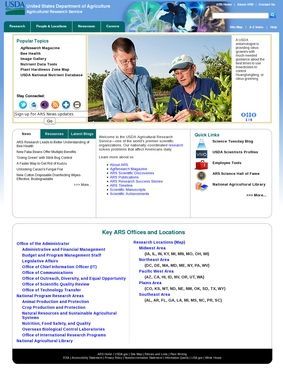
What does a federal research agency have to do with what ends up on your plate? Quite a lot, as it turns out. The Agricultural Research Service is the in-house scientific arm of the U.S. Department of Agriculture, and a sizable share of its work feeds directly into questions about diet, food safety, and nutrition. Roughly 600 active research projects sit under its umbrella, grouped into four broad national program areas: nutrition and food safety, animal production and protection, crop production and protection, and natural resources tied to sustainable farming.
Nutrition and food safety programs
For anyone interested in the nutrition side specifically, two strands of the Agricultural Research Service matter most. National Program 107 covers human nutrition and runs the studies on nutritional science and dietary health. National Program 108 deals with food safety, including the standards applied to both animal and plant products. Those two programs are where the diet and nutrition category really intersects with the agency's daily output, and the site keeps them within a click or two of the homepage instead of leaving a visitor to dig. The site lets you trace projects, scientists, and publications by topic or by state, which makes the scope easier to navigate than the raw count of 600 projects would imply.
Accessing research by topic or location
This is the part where a lot of government research sites fall down, and where the Agricultural Research Service does a bit better than expected. Alongside the formal output (peer-reviewed manuscripts, software models, and downloadable databases), there is a layer of plain-language material clearly aimed at the public. The podcast "Science in Your Shopping Cart" connects research to ordinary grocery decisions. Newsletters like "Under the Microscope" and "Down on the Farm" cover ongoing work in a lighter register, and the "5-Minute Reads" format takes individual findings and condenses them into something you can absorb over a coffee.
Public-facing resources beyond peer-reviewed studies
None of that replaces the underlying studies, but it lowers the barrier. A student writing a paper, a curious shopper, and a policymaker scanning for evidence are all served by different doors into the same body of work. That range of entry points is one of the more genuinely useful things the Agricultural Research Service does, and it is easy to overlook behind the institutional branding.
Finding labs and research centers nationwide
The searchable directory of labs and research centers deserves a mention too. The Agricultural Research Service operates facilities spread across every U.S. state, and the site treats that geography as a feature: you can drill into a specific center, see what it studies, and pull up the people and papers attached to it. For someone trying to find work relevant to a particular crop, region, or nutritional question, the Agricultural Research Service makes that far easier than wading through a flat list of publications.
It is worth being clear about what this resource is not. The Agricultural Research Service is a research agency, not a consumer nutrition guide. You will not find meal plans, calorie calculators, or the kind of direct dietary advice that a clinic or a health site offers. The value here is upstream of all that. This is where some of the evidence such guidance is eventually built on gets produced, tested, and published. Treating the agency as a source of finished answers would miss the point; treating it as a source of primary evidence and ongoing study is closer to the mark.
Beyond the published science, the site functions as a working hub for the agency's wider activities. Career listings route through USAJOBS, and there are faculty research sabbatical programs for academics who want to spend time inside an ARS lab. The agency also runs extramural agreements and collaborations, the formal channels through which outside institutions partner on research. These are practical doors rather than reading material, but they round out the picture of an organization that actively recruits, partners, and produces new work, not one that only archives what it has already done.
Who is it for? The honest answer is a wide and somewhat mixed audience. Farmers and ranchers looking for applied findings, academic researchers chasing collaborators or citations, students after primary sources, policymakers needing evidence, and ordinary members of the public who want to understand where their food research comes from. A site trying to speak to all of those groups at once risks feeling unfocused, and parts of the Agricultural Research Service site do read as denser than a casual visitor might like. The trade-off is breadth: there is a lot here, and the depth of the underlying material is genuine.
Against the category it is listed under, the fit is partial but solid. National Program 107 and the food safety work under 108 are squarely on topic, and the public-facing media pulls those threads toward a general reader. The animal, crop, and natural-resources programs are further afield from nutrition narrowly defined, though they connect to the broader food system that any serious look at diet eventually touches. So the listing is accurate without being a perfect match, and that is fine.
What you get from the Agricultural Research Service depends heavily on what you bring to it. Come looking for quick dietary tips and you will leave unsatisfied. Come looking for the research, the data, the people doing the studies, or a way into a particular nutritional question, and the depth is hard to overstate. The agency's standing as a scientific body gives the material a level of authority few secondhand summaries can match, and the publications, databases, and program structure back that up.
The verdict is a qualified recommendation. The Agricultural Research Service is a heavyweight primary source, well organized once you accept that it is built for digging rather than browsing. The accessible podcasts, newsletters, and short reads are a real bonus, and the state-by-state lab directory turns a huge research portfolio into something searchable. The main caveat is expectation management: this is the laboratory behind the science of food, and within the nutrition slice that the Agricultural Research Service covers, it is about as authoritative a starting point as exists.