Who actually does the work at an admissions advising company, and what are their credentials? Premed Catalyst answers that plainly. It is a remote mentorship and admissions advising service for pre-medical students in the United States, run by named co-founders with verifiable medical credentials. In a field full of anonymous "experts" and vague promises, naming the people is the first thing worth noting.
Who runs Premed Catalyst
Premed Catalyst runs two tracks. The Premed Mentorship Program is for students still a year or more from applying. It covers coursework planning, building clinical and research experience, personal narrative development, and support through the application cycle. Application Cycle Advising targets students inside the 12-month window before they apply. It includes unlimited essay feedback, school list strategy, interview preparation, and a "First Cycle Guarantee" that extends support into a second cycle if the first produces no acceptance.
Two advising tracks for different timelines
Unlimited essay review is a real staffing cost, not a slogan, and the second-cycle guarantee closes off the easy exit a program gets when a student does not get in. Those two terms are the part of the offer that Premed Catalyst has to actually honor. Whether the unlimited promise holds in practice depends on how many students a mentor carries at once, which the listing does not say.
Staffing model and essay review process
The staffing model at Premed Catalyst is specific enough to judge. Each enrolled student gets a dedicated mentor drawn from current MD students, a program coordinator, and access to senior advisors. All primary applications and core secondaries are reviewed by at least one former medical school admissions committee member. That last item is not filler. Committee-member review is usually sold as a premium add-on; Premed Catalyst folds it into the standard package, which lowers the effective cost compared with competitors who charge extra for the same eyes.
Founder credentials and transparency
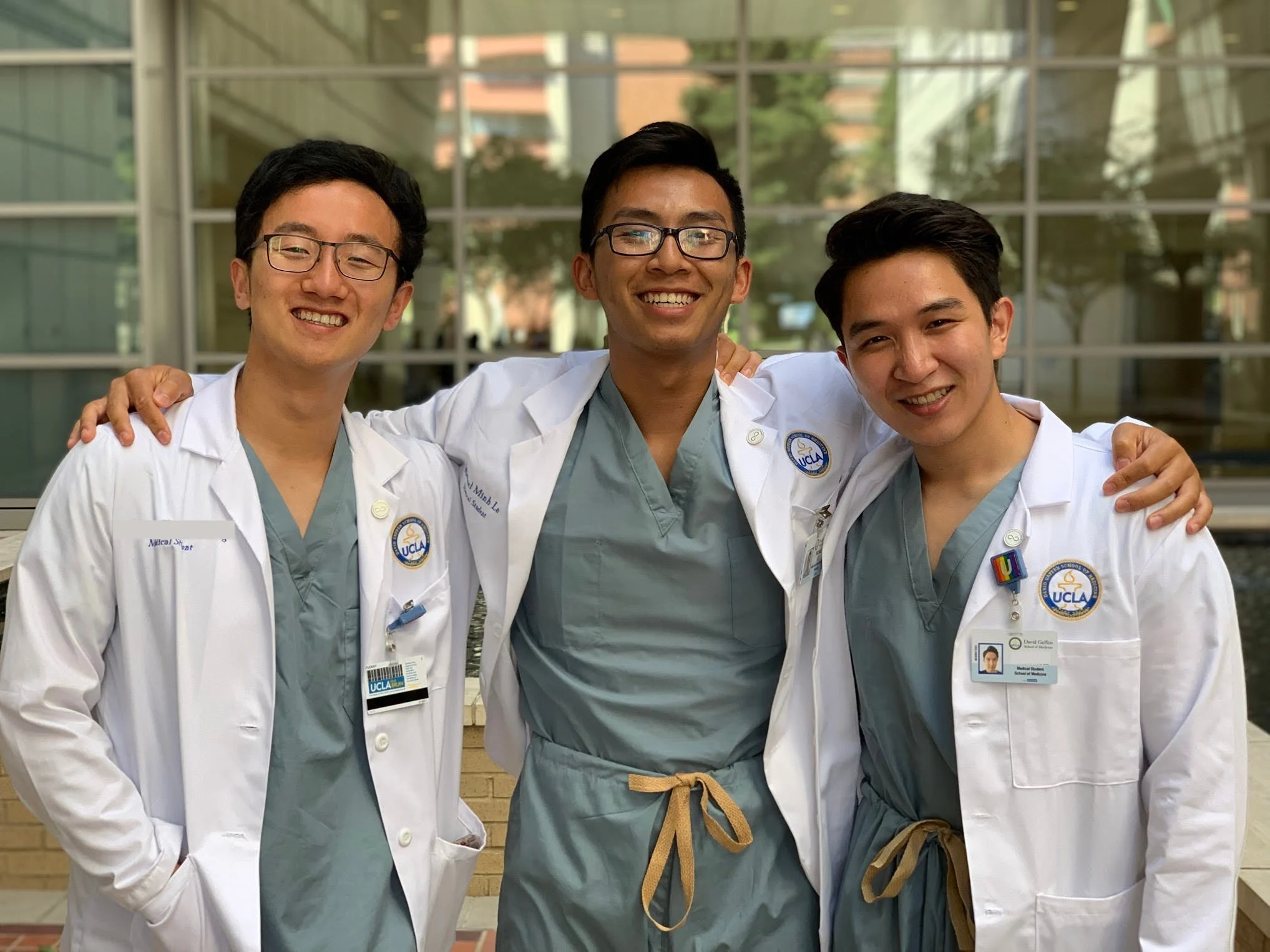
The founders are identifiable. Co-founder Michael Minh Le is an MD, a UCLA School of Medicine graduate now in residency at Mount Sinai. Zach French runs the business side as CEO. For a service that asks for trust and a non-trivial fee, two credentialed, named people on the record beats a polished about page with no faces on it.
Acceptance statistics need independent verification
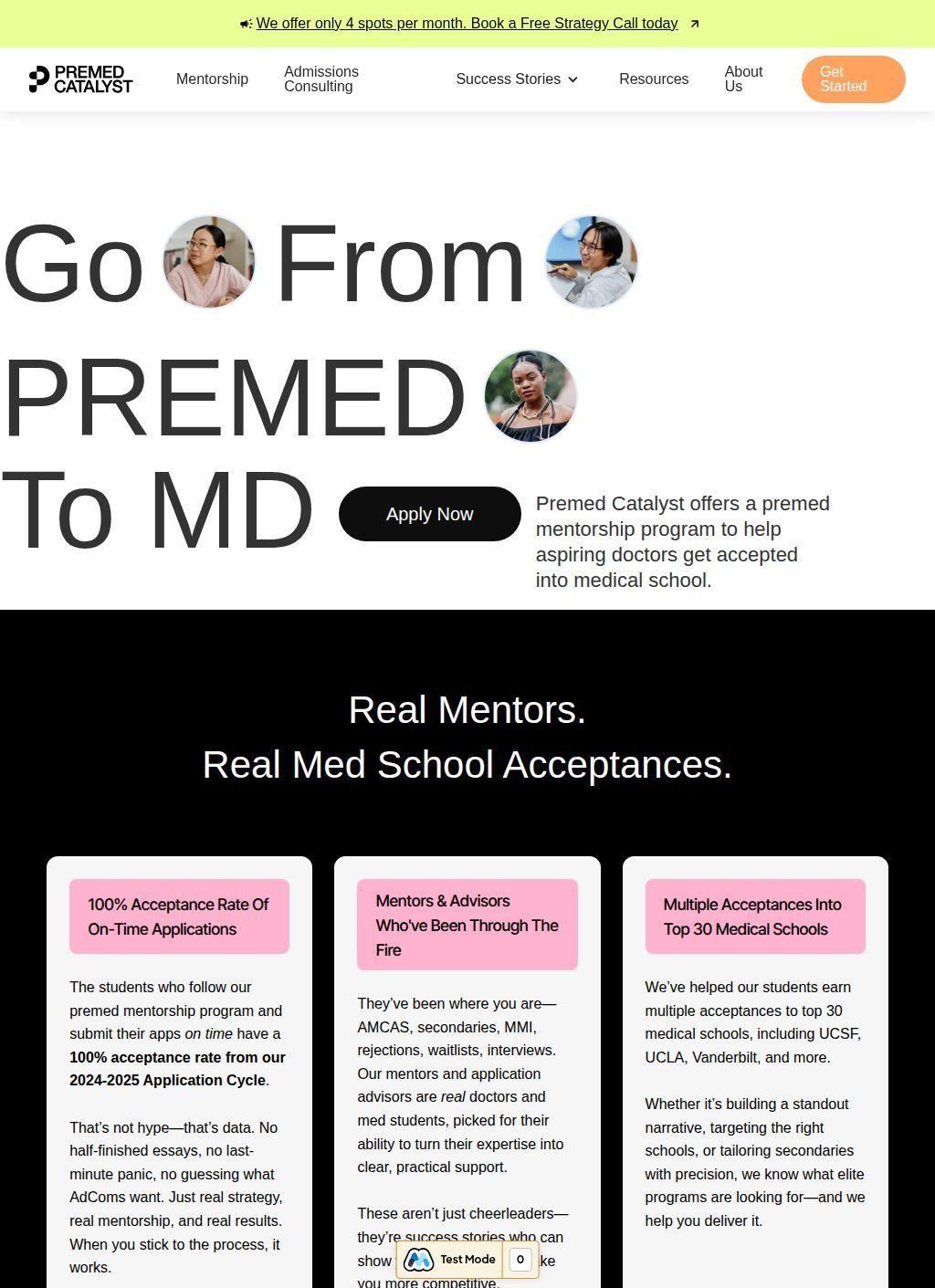
Premed Catalyst publishes several statistics for the 2024-2025 cycle: a 100% acceptance rate for on-time applicants, an average of 7.3 interviews per student, and an 83% overall acceptance rate framed as nearly double the national average. The figures are specific and internally consistent, which sets them apart from the generic "high success rate" language common here. The 100% number needs a closer look. The qualifier "on-time applicants" is doing a lot in that sentence, and a prospective student should ask how the company defines that category before reading the headline as a guarantee.
How does the company address skepticism?
Premed Catalyst does not duck the credibility question. There is a blog post titled "Is Premed Catalyst Worth It?" that takes on skepticism head on, and the testimonials page lists named student outcomes with enough detail to follow up. Named outcomes can be chased down in a way anonymous blurbs cannot. Publishing a self-questioning article and putting the founders' credentials in public both point to a company that expects to be checked.
Limited external reviews and ratings
Here is the weak spot. Outside its own pages, Premed Catalyst carries no ratings on Google, Trustpilot, Yelp, the BBB, or Facebook. Glassdoor has two reviews, both from employees and skewing negative around a dismissal; those describe the workplace, not the client experience. Scamadviser lists no user reviews and rates the site as likely legitimate. One Reddit thread on r/premed drew fourteen comments mixing real skepticism with neutral curiosity. So outside the Premed Catalyst testimonials page, client-side evidence is close to absent. That does not prove anything bad. It does mean the impressive acceptance statistics stand entirely on self-reported numbers right now, with nothing independent behind them.
Contacting Premed Catalyst
Two email addresses are public: team@ and zach@ on the company domain. Premed Catalyst offers a free strategy call through a linked Typeform. No phone number or street address appears on the site, which is normal for a remote-first operation. The Typeform call is the main way to reach the team.
The structure of the offer is sound. Credentialed founders, committee-member essay review at base price, a second-cycle guarantee, and enough public detail to hold the company to its terms. For students more than a year out, that mix and the named credentials are arguably enough to enroll on without much further proof. For someone weighing the headline 83% and 100% figures, the verdict has to stay open, because those numbers have no outside confirmation and the company has not yet had to explain in public how "on-time" is counted or how mentors get matched to students.