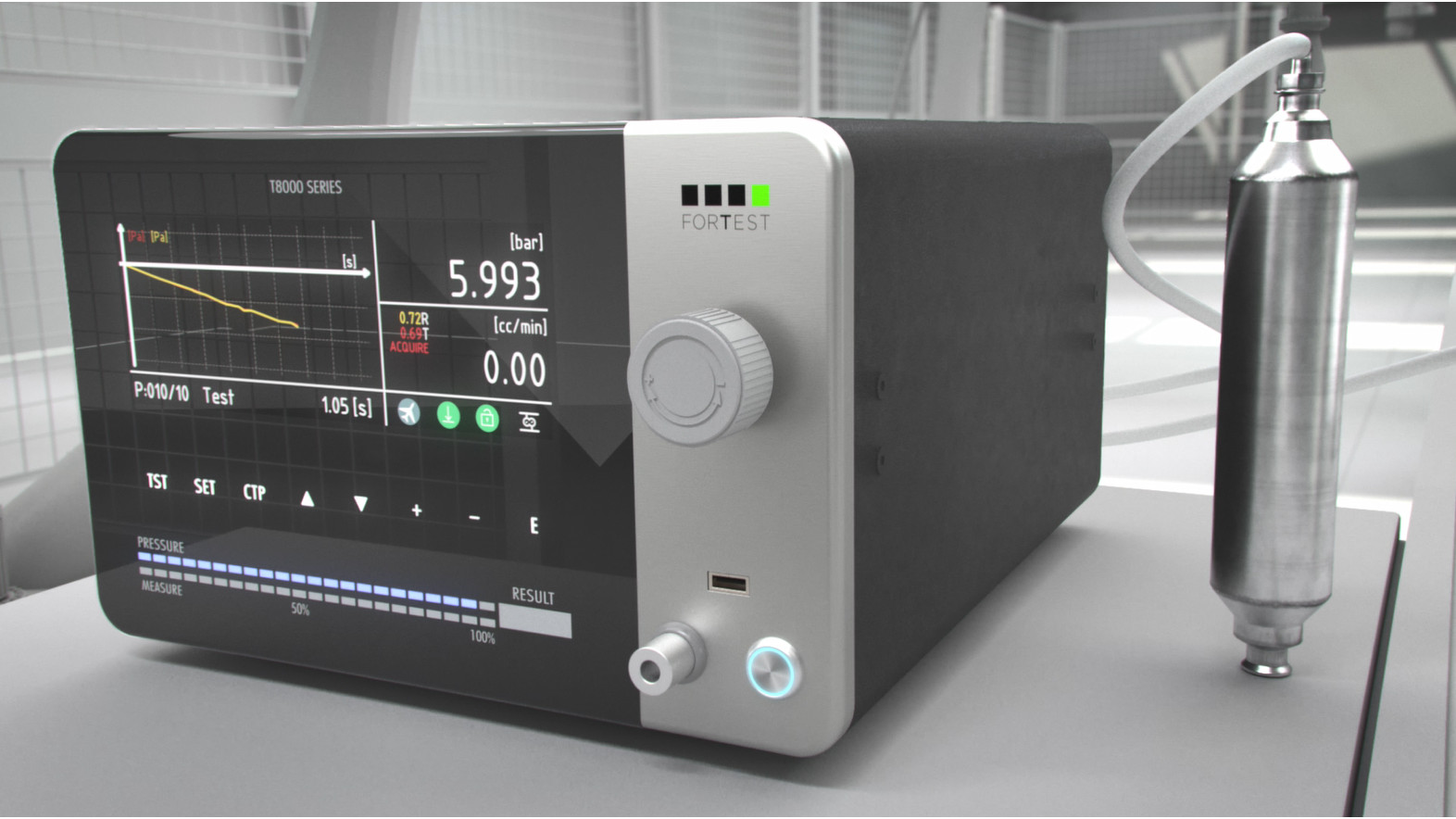
Leak Tester ForTest measures a leak nobody can see. It pressurizes a sealed component, times how fast that internal pressure falls over a defined window, and converts the drop into a number a production line can accept or reject. That absolute pressure decay method is the whole premise, and it is a more honest way to catch micro-leaks than dunking a part in water and watching for bubbles that may never rise.
Leak Tester ForTest is a Swiss operation, based in Lugano, and it builds industrial air leak testing and flow testing gear for factories rather than for hobbyists. This is capital equipment that lives on an assembly line, wired into the machinery that decides whether a housing or a valve ships or goes back for rework. The buyers are manufacturers, and the stakes are the reject rate on a line that may run thousands of parts a shift.
How pressure decay becomes a pass or fail
The physics is simple to state and hard to do precisely. Pump a known pressure into a cavity, hold it, and a perfectly sealed part keeps that pressure. A leaking one bleeds it off, and the rate of that bleed is the leak. Leak Tester ForTest quantifies that decay against a set threshold, and the difficulty is all in the precision.
Temperature drift, timing, and measurement stability can swamp a genuine micro-leak if the instrument is not built carefully, and a false reading in either direction costs money: a missed leak ships a bad part, a false alarm scraps a good one. The site puts metrological precision and measurement stability front and center, which is the correct thing for a maker of this kind of gear to be preoccupied with.
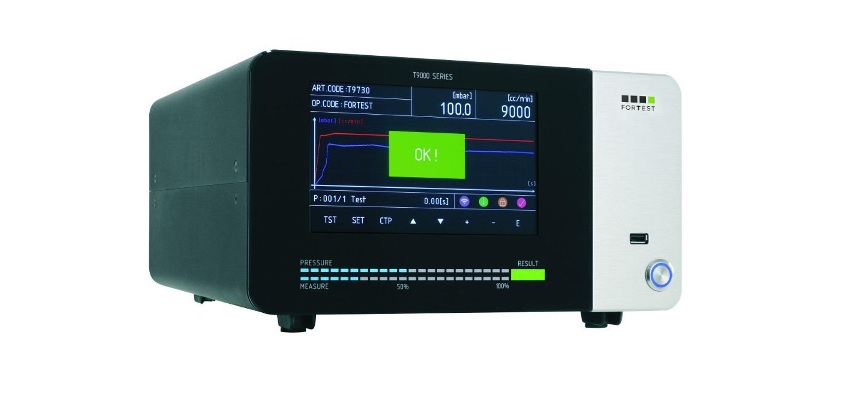
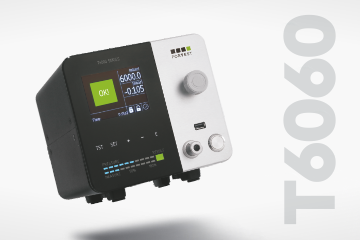
Leak Tester ForTest divides its catalog into five broad families: absolute decay leak testers, differential leak testers, flow testers, metrology equipment, and software solutions. That spread means a buyer can specify one method or another depending on how small a leak has to be caught and how fast the line runs. A single supplier covering all five is convenient for a plant that would otherwise stitch together instruments from several vendors and hope they agree with each other.
The T-series and micro-leak detection
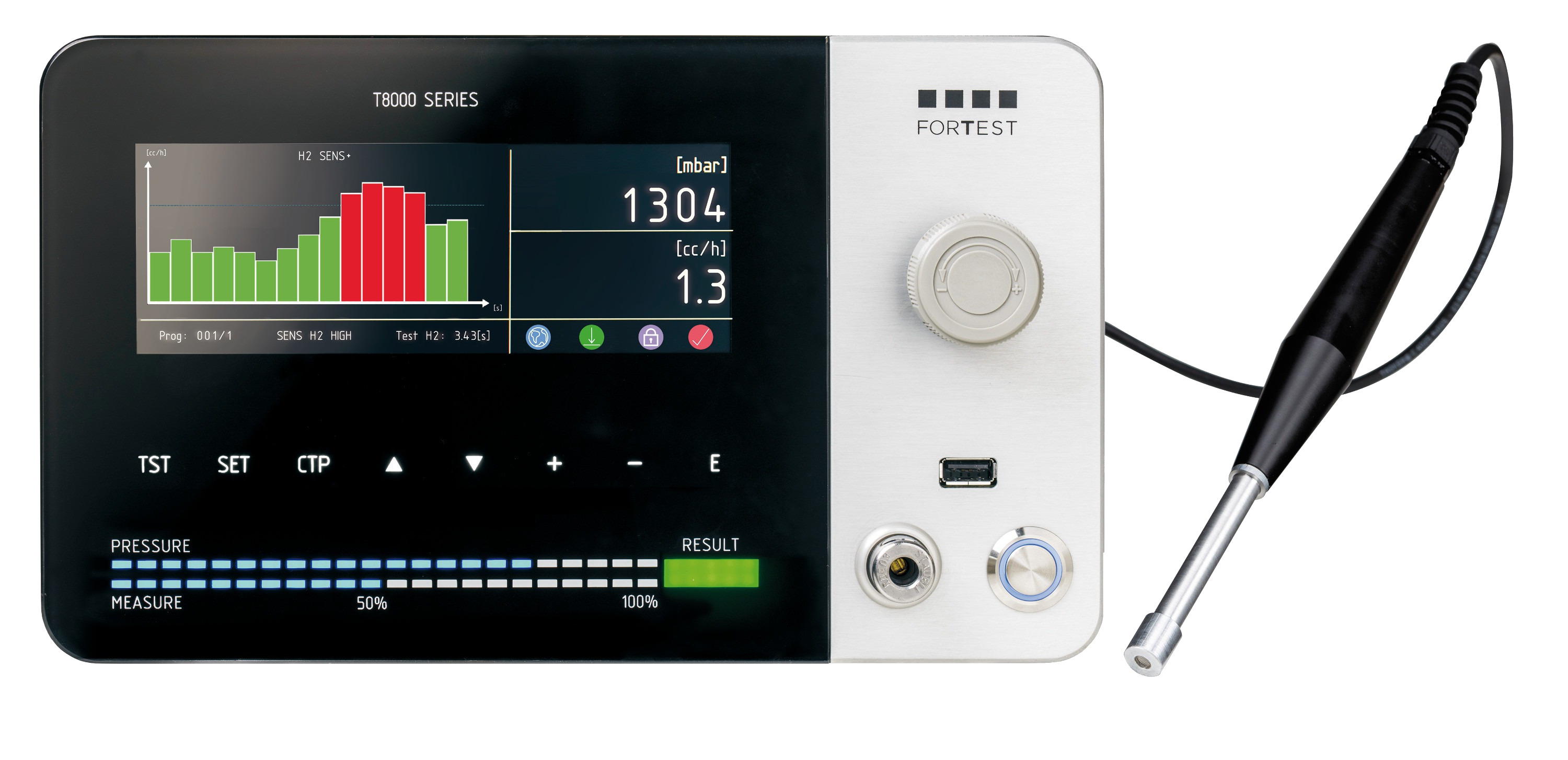
Absolute decay testers come in a K-series and a T-series. The example the site names is the T8980, a differential leak tester aimed at micro-leakage detection at test pressures up to 100 bar, which is a serious figure and points the product squarely at demanding applications. Differential testing compares the part against a sealed reference volume, which is how you pull a tiny leak signal out of the surrounding noise. When the part and the reference drift together with temperature, the difference between them stays clean, and that is where the smallest leaks become visible.
For anyone whose reject threshold is measured in fractions of a cubic centimeter per minute, this is the part of the Leak Tester ForTest range where the stakes run highest. A pressure of 100 bar also tells you these instruments are meant for components that carry real pressure in service, not for boxes that only need to keep moisture out. That is a demanding corner of the market, and it is where a supplier's precision claims get tested for real.
Flow, metrology, and the software layer
Beyond leak detection, Leak Tester ForTest also lists flow testers and standalone metrology equipment, so the same supplier can cover a verification step that is about flow rate instead of sealing. A valve or an orifice often has to pass a certain volume in a set time, and a flow tester checks that directly.
The software solutions are where the story gets more interesting for a modern plant. The systems are built for native connectivity with production lines and MES systems, with full data traceability, so every tested part carries a record back to the moment it was checked. There is periodic and certified calibration for ISO compliance too, which is the sort of thing a quality auditor asks about before anything else. For a regulated manufacturer, that traceability is often the difference between passing an audit and failing one, and it is sensible that Leak Tester ForTest treats it as a headline feature.
A test result that cannot be traced back to a specific part and a specific moment is worth very little to an auditor, so the record-keeping is doing real work here.
The industries it is built to serve
The named markets are automotive, HVAC, hydraulics, appliances, and medical device manufacturing. The parts the equipment tests are single-cavity components: enclosures, housings, hydraulic circuits, heat exchangers, EV battery modules, and medical devices. Two of those, EV battery modules and medical devices, are where leak testing has become a genuine safety gate. A battery pack that lets moisture in is a fire risk, and a medical device that leaks can fail in a patient, so it is telling that Leak Tester ForTest calls both out by name.
The site is more than a product grid. A Theory and Resources section carries leak-testing explainers and technology comparisons, an FAQ page answers the common questions, and there are video demonstrations of the products in action, plus a plain "The Company" about page. On-site installation is offered on request, which for line-integrated test equipment is a practical thing to have on the table, since a leak tester that is not commissioned correctly against the actual part is a leak tester that lies to you.
What is easy to find, and what is not
Contact holds up reasonably well. A Contacts page is linked from the Leak Tester ForTest site, and the registered address (Via Balestra 12, Lugano) sits on the site alongside a Business ID, CHE-375.528.255, which is a nice touch of transparency a manufacturer does not always bother with. Social links to Facebook, LinkedIn, X, and YouTube run along the footer. The one gap is a direct phone number or email on the pages themselves, which were not visible; a buyer would have to go through the Contacts page to open a conversation.
For a business selling six-figure line equipment, where a sales engineer will be involved anyway, that is a minor complaint.
Outside reputation is the weaker spot, and it is worth being straight about it. A search turns up little in the way of independent reviews or ratings for Leak Tester ForTest. Most results are the firm's own pages plus a directory profile on onestopndt.com, which is a listing, not a rating.
Several near-misses muddy the water: a Trustpilot page belongs to "Fortect," an unrelated software company, a Scamadviser entry is for a different domain (fortest.io), and a trustburn page reads as generic templated content that cannot be tied to this manufacturer with any confidence. So the honest position is that no credible third-party verdict was found, in either direction.
That absence is not damning for an industrial supplier, whose customers judge it through trade references and factory acceptance tests instead of star ratings. Weighed against a larger, more visible competitor such as ATEQ, Leak Tester ForTest is harder to vet from the outside, and a buyer will lean more on a live demo and a calibration certificate than on anything the open web says. On its own terms, though, the offering is specific, technically credible, and clear about the one method it has built its instruments around.


Business address
ForTest Italia Srl
Via Sibilla Aleramo 7,
Modena,
Italy
41123
Italy
Contact details
Phone: +39 059 557250