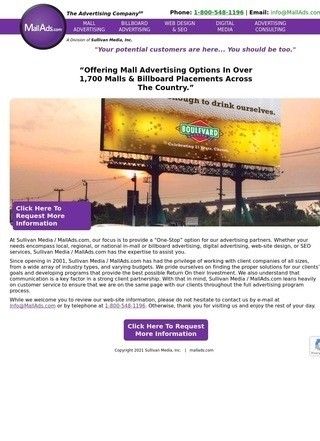
Around 1,700 shopping malls and billboard sites across the United States: that is the inventory figure Mall Ads claims to broker. It is a placement network first and a creative shop second, run by Sullivan Media, Inc., which has been in this business since 2001. The pitch from Mall Ads is straightforward: get your ad bolted to a wall, a table, or a digital board in front of foot traffic you would otherwise have to chase one mall at a time.
In-mall ad formats
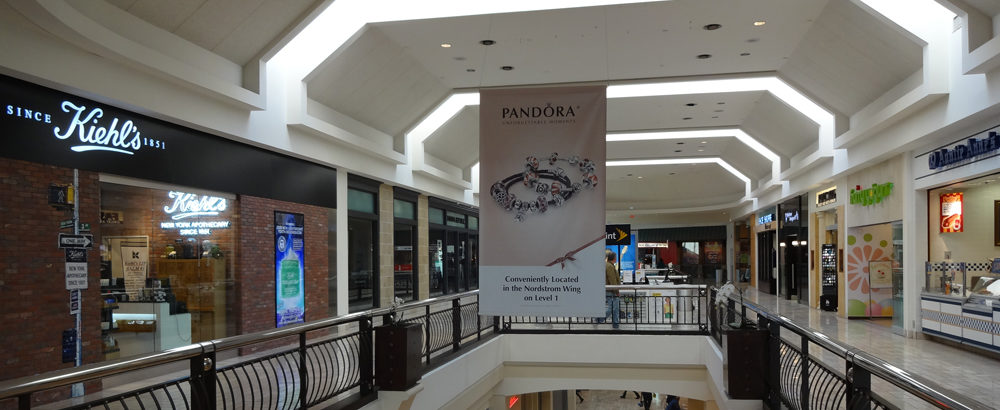
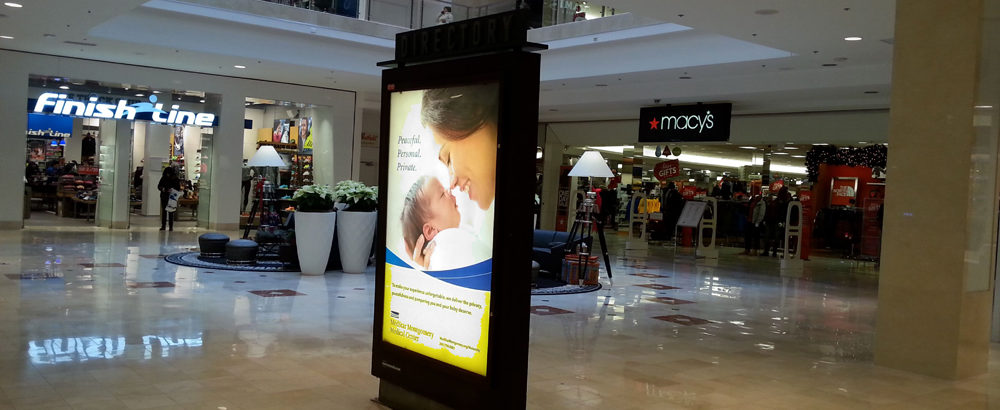
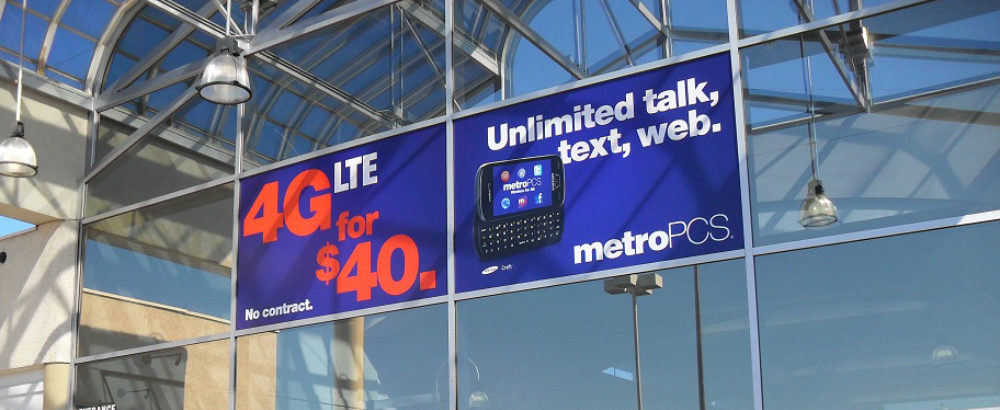
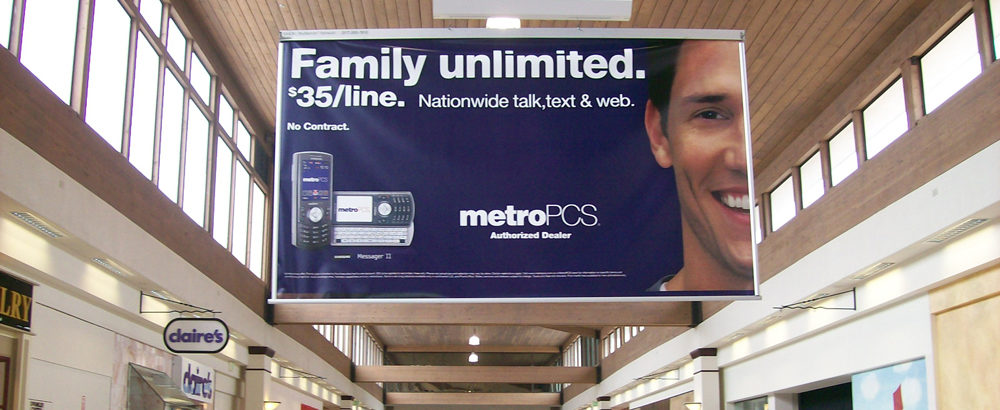
That single fact does most of the work in explaining who this is for. A local restaurant that wants table tents in the food court of one regional mall, a franchise rolling out backlit panels across a dozen metro areas, a national brand buying billboards in hundreds of markets: all three are nominally the same customer here, just at different scales. The site lays out the in-mall formats plainly enough. Backlit panels, table tents, banners, and food court placements cover the indoor side.
Billboard sizes and markets
Billboards come as static or digital, in several sizes, spread across a wide list of markets. Nothing about that menu is exotic, but it is specific, and specific is what you want from a media broker. The breadth is the selling point: Mall Ads is betting that one buyer would rather route every market through a single vendor than negotiate panel by panel with each mall's leasing office.
Pricing and consulting services
What the company actually sells, underneath the inventory, is the legwork of picking among it. Pricing shifts by mall, format, season, and campaign length, which is another way of saying there is no rate card you can scan in thirty seconds. So Mall Ads leans on a consulting angle: helping a buyer choose locations, settle on formats, set a budget, and structure the term of the buy.
Mapping the mall selection process
The site describes walking clients through mall selection, placement mapping, and the mechanics of the contract from start to finish. For a small advertiser who has never bought out-of-home space, that hand-holding is the real product Mall Ads offers, more than any single panel. The catch is that the value of advice like this is impossible to judge from a homepage, since it lives in the quality of the people on the phone, not in the copy.
Here is the snag, and it is a real one. Searching for what customers actually say after a campaign with Mall Ads turns up almost nothing. Results kept landing on malls.com and mall.com, which are unrelated, or circled back to the company's own pages. No Google review cluster, no Trustpilot profile, no third-party rating to point to. For a firm that says it has operated since 2001 and works at national scale, that absence is louder than a handful of mediocre reviews would be. It does not prove anything is wrong, but a prospective buyer has no outside signal to weigh against the company's own description of itself, and out-of-home advertising is exactly the kind of spend where you would want one.
Context for B2B media brokers
To be fair, plenty of B2B media brokers live in this quiet zone. Their clients are businesses signing contracts over the phone, not consumers leaving star ratings, so the public review trail stays sparse by nature of the audience. That context softens the concern without erasing it. A buyer who wants reassurance will have to get it the old-fashioned way: by asking Mall Ads directly for references, case examples, and proof of past placements in the specific malls they care about. The burden, in other words, sits with the buyer to do the digging that the open web does not do for them here.
Reaching mall ads directly
On reachability the picture is better. A toll-free phone line sits right on the site, and there is an email address too, so a buyer can start a conversation without hunting through menus. The absence of a visible street address on the homepage is worth noting for a company handling national ad budgets, though a phone number you can dial today still counts for a lot in this corner of the market, where a quote from Mall Ads means a real conversation about your mall, your dates, and your budget instead of an instant checkout.
The framing Mall Ads chooses for itself, customer service and return on the ad spend, is the right framing for offline media, even if those are easy words to say and hard ones to verify from the outside. ROI on a food court banner is notoriously fuzzy, and Mall Ads cannot make that math clean any more than the next broker can. What it can credibly offer is access to inventory most advertisers cannot assemble alone, plus a person to talk through the trade-offs. Across local, regional, and national budgets, that combination has genuine value, particularly for buyers who already know mall or billboard placement is where they want to be and just need someone to execute it.
Weighing the mall ads offer
So the honest read on Mall Ads is split. The offering is concrete and the scale is documented: a large, varied placement network with a consulting layer that suits first-time out-of-home buyers, backed by easy contact. The weakness is verification. With no independent reviews surfacing anywhere, credibility rests entirely on the company's own account and whatever references it will share when asked. If you are shopping mall or billboard space and want one point of contact to cover many markets, Mall Ads is worth a direct conversation, but go in ready to ask for proof of past placements and judge the answers before you commit a budget.