Who does a New Yorker call after a crash on the Grand Central or a fall on an icy stoop in Queens? For that specific slice of trouble, The Orlow Firm gives a clear answer. This is a personal injury practice built around injured New Yorkers, run on a contingent-fee basis, meaning nobody pays upfront and the office only collects if it recovers money. Free consultations are offered, and the geographic center of gravity is Queens, though the reach covers all five boroughs.
The range of cases is wide without drifting into everything-under-the-sun territory. Motor vehicle work sits at the front: car, truck, motorcycle, bicycle, bus, and pedestrian collisions. That is the bread and butter of most injury shops in the city, and The Orlow Firm treats it as core work, not an afterthought.
The cases this practice takes on
Beyond the road, the work moves into workplace injury, which is no small niche in a city where construction never stops. Construction accidents and workers' compensation both appear, two different legal tracks that often tangle together when a worker gets hurt on a job site. Premises liability rounds out that side of things: slip-and-fall claims, and, notably, lead poisoning cases, which are a real and ugly problem in older New York housing stock and not something every injury office bothers to list. Naming it specifically points to some genuine familiarity with those claims.
Then there is the heavier end of the docket. Catastrophic injury work covers brain trauma, spinal cord damage, and burns. Wrongful death sits alongside it. These are the cases where the stakes are highest and the medical and financial fallout stretches for years, so seeing them named plainly on the site is a fair signal of what The Orlow Firm is willing to litigate.
The list keeps going into areas that are harder and more sensitive: police misconduct, sexual abuse, and nursing home abuse. Each of those demands a different comfort level from a lawyer, and grouping them under one roof tells you The Orlow Firm is not shy about difficult opponents, whether that is a municipality, an institution, or a care facility. A person hurt in one of those situations often struggles to find anyone willing to take the case at all, so the breadth here has practical value.
Police misconduct in particular pits an ordinary claimant against a city with deep pockets and its own lawyers, and nursing home abuse means going up against a facility that will not concede easily.
Naming both as regular work is a claim the practice is prepared to back up in front of a judge.
None of this reads as padding. Each category is a distinct area of law with its own rules, deadlines, and defendants, and covering that spread takes a real bench. The through-line is injury caused by someone else's fault, and The Orlow Firm keeps its list anchored to that idea instead of wandering off into unrelated practice areas.
How the firm shows its track record
A "Success Stories" section carries case results, the kind of thing a prospective client wants to see before picking up the phone. Results pages are selective by nature, so read them as highlights and not a full ledger. Still, having them there beats a page of adjectives with nothing behind it, and it gives The Orlow Firm something concrete to point to.
Attorney bios are published too, including partner Brian Seth Orlow. Naming the people who will handle the file, with backgrounds attached, does a lot of quiet work for trust. You are hiring individuals, and knowing who they are before you walk in changes the tone of that first meeting. It is a detail plenty of larger operations skip, so its presence at The Orlow Firm counts for something. A named partner on the page also implies accountability: a person whose reputation is tied to the outcome sits behind the marketing.
What the fee structure really means
The contingent-fee arrangement deserves its own moment, because it shapes the whole relationship. No money changes hands unless The Orlow Firm wins or settles the case. For someone already buried under medical bills and lost wages, that removes the barrier that stops a lot of legitimate claims from ever being filed. It also lines up the office's incentive with the client's: they get paid when you do.
Free consultations sit on top of that. A first conversation costs nothing, so testing the waters carries no risk beyond an hour of your time. Combined, these two policies are standard for reputable plaintiff-side injury firms, and their absence would be the thing worth worrying about. Their presence at The Orlow Firm is exactly what you would hope to find, and it lowers the stakes of simply reaching out.
Reputation, offices, and one loose thread
Reaching the office is straightforward. A phone number is posted, a way to send a message online exists, and there are four physical addresses to choose from: the main office in Kew Gardens Hills, plus locations in Manhattan on Lexington Avenue, in Brooklyn on Court Street, and in the Bronx on Sheridan Avenue. Four real addresses across four boroughs is more than a nominal presence, and it means an injured client in most of the city has somewhere reasonably close to sit down with a lawyer from The Orlow Firm.
Outside opinion is solid. Trustindex records 44 reviews at 4.8 stars, and Birdeye shows the same 44 reviews landing at 4.9. Trustanalytica also reports 4.9. The Orlow Firm cites a 4.9 out of 5 across its Google reviews on its own site, and while a self-citation always warrants a raised eyebrow, here it lines up closely with the independent aggregators instead of contradicting them.
One wrinkle is worth flagging honestly.
The Better Business Bureau lists the practice, though not accredited, under the name "Orlow, Orlow and Orlow, P.C." in Flushing. That is a different-looking name from the public brand, which can throw off someone trying to verify who they are dealing with. It is a common enough situation for an office that has operated under a formal partnership name for years, and the Flushing location is a short hop from the Kew Gardens Hills base, so the pieces fit.
It is simply something a careful person should reconcile early rather than assume. The Orlow Firm also turns up on reviewshark, one more independent footprint in the picture.
What the ratings do not tell you is depth. Forty-four reviews is a respectable body of feedback for a local injury practice, enough to be more than a handful of friends, though not so vast that a few outliers get swallowed. The consistency across three separate platforms, all clustered near 4.8 and 4.9, is the more persuasive part. When independent sources agree this closely, the underlying number is harder to dismiss, and for The Orlow Firm they line up almost exactly.
So this reads as a working, established personal injury practice with genuine breadth: a fee model that favors the client, real offices, named attorneys, and a review record that stays consistent across three separate platforms. The one caveat, the mismatched corporate name on the BBB entry, is minor and explainable, not a red flag. Taken together, the published evidence supports a competent, functioning firm at The Orlow Firm, not a storefront with a slick homepage.
What it does not settle is fit. The Orlow Firm's day-to-day lanes are specific: road collisions, construction and workplace injury, premises and lead cases, and the harder categories like police misconduct or nursing home abuse. A case that falls outside those lanes would need a different kind of specialist regardless of how the reputation numbers look.

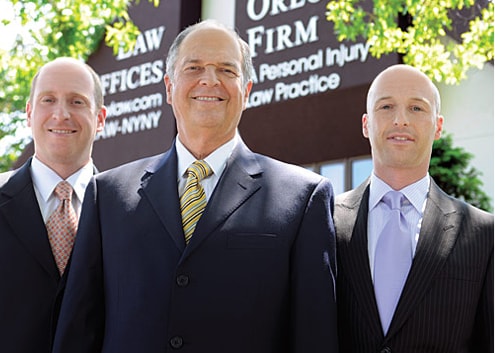
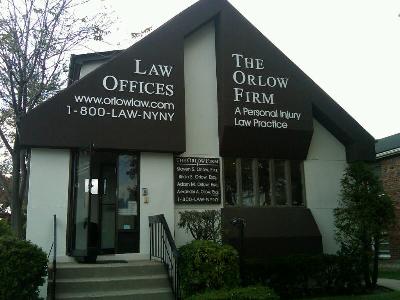
Business address
The Orlow Firm
71-18 Main St,
Queens,
New York
11367
United States
Contact details
Phone: 646-647-3398