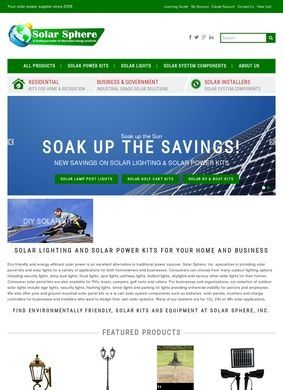
Solar Sphere sells nothing, and for a name filed under energy that is the surprise. It is a one-person DIY resource, run by a self-described hands-on solar power enthusiast, built to teach people how to size, install, and maintain their own solar setups instead of booking an installer or shifting a pallet of panels. The whole thing is organised around what a reader actually wants to power. It serves a mixed crowd of DIY enthusiasts, homeowners, RV owners, and farmers, all of them there for information rather than a sales pitch.
How the guides are laid out
Content is split by application, which is a smarter cut than by product for someone who arrives with a job in mind and no part number. Solar Sphere groups its guides by where the panels end up, and the sizing and planning calculators sit next to the written material for anyone who wants to check the math before spending. It is a layout that respects how people really shop for this: use case first, hardware second.
Underneath the categories, Solar Sphere runs the same two threads: educational tutorials on installation and maintenance, and product reviews. The maintenance angle is the quietly valuable one, because most solar guidance stops at the sale and says nothing about the years afterward, when panels foul, batteries fade, and a controller needs checking. Covering upkeep as well as setup is the mark of someone who has genuinely lived with a system, not someone who wired one up for a photo and moved on.
At home and off the grid
The At Home area is the broadest, covering pool heating, garden lighting, attic ventilation, and full rooftop systems, so a small weekend project and a serious install share the same shelf.
The Camping and RV material is a different animal, handling mobile power for people running solar off a vehicle, where weight, space, and a swinging battery load all change the calculation. Keeping those two worlds separate is the right call, since advice that suits a fixed roof can quietly mislead someone wiring up a camper.
The farming and lights corners
Farming is the corner that sets Solar Sphere apart. Guides on grain bin aeration and solar irrigation aim at uses most consumer solar sites never go near, and that is a genuine niche served. Farmers rarely get written for as a solar audience, and pulling that content together in one place is worth more to them than another rooftop explainer.
The Lights section is more everyday, running through solar lighting products and, more usefully, how to troubleshoot them when they stop charging, which is the question owners search once the novelty wears off.
Systems, generators, and the Solar Lab
Solar Sphere's technical spine lives in two sections: Systems, covering batteries, charge controllers, inverters, and wiring, and Generators, covering portable power stations and backup power. This is the part where a bad guide can cost real money or start a fire, so the stakes are higher than the friendly tone lets on.
The most interesting promise is the Solar Lab, where products are said to be reviewed through hands-on testing. If that testing is real and consistent, it is the single thing that would lift Solar Sphere above the pile of rewritten spec sheets that passes for solar advice online. It is also the hardest claim to verify from the outside, since a reader has no way to confirm what was tested or how.
Who stands behind it
A one-person, enthusiast-run site cuts both ways. The upside is a consistent voice and, plausibly, real experience behind the writing, the kind of practical detail a content farm cannot fake. The downside is blunt: there are no listed credentials, no company, no team, and solar work involves live wiring and roof height, where a confident but wrong instruction has consequences.
The safe way to use Solar Sphere is as an informed starting point, with anything load-bearing checked against a licensed electrician before a tool comes out. An enthusiast writing from experience can be more useful than a faceless brand, right up to the point where a job crosses into permits, grid connection, or high-voltage wiring, and there the absence of a credentialed name stops being a charm and starts being a limit.
Contact is limited. A contact page with a form is there, along with links to Facebook, Twitter, and Instagram, but no phone number and no physical address show on the homepage, less than a bare business directory entry would carry. For a free resource that takes no payment, that is defensible, and the form covers ordinary questions.
It does mean there is no direct line to a named person if a guide steers a project wrong, and that gap counts for more here than on a site where the worst outcome is a bad purchase. The social feeds are the only other window into whether anyone is still tending the place.
What the search turns up
Checking Solar Sphere against outside opinion is where it gets murky. Most searches surface a different company entirely, a Seattle installer called Sphere Solar Energy, which carries a trail of contractor ratings across the usual home-services platforms. None of that belongs to this site, and folding those scores in would be an easy, dishonest mistake, so they are set aside completely.
Narrow the search to the actual domain and the picture turns stranger. A MapQuest entry ties Solar Sphere to an address in Denver, shows 16 reviews with no star rating attached, and marks the location closed. A green-directory listing describes it as a seller of solar kits, panels, and wind generators, with no rating and no certifications shown, which sits oddly against a site that presents itself as selling nothing at all.
The company-data aggregators hold profiles with no scores whatsoever. So the site publishes on, its own business listing reads closed, and an older directory trace calls it a retailer, three versions of Solar Sphere that refuse to line up, with no verified rating anywhere to tell a visitor which one is real.
Business address
Solar Sphere Solar Panel Kits
PO Box 774000-358,
Steamboat Springsc,
CO
80477
United States
Contact details
Phone: 877-774-3730
Fax: 970-692-8313