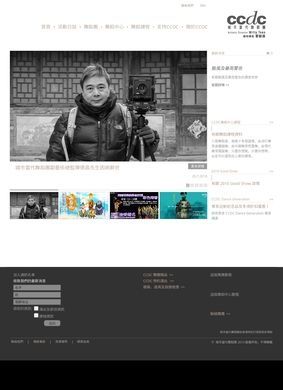
Four decades of work give a dance company plenty to put on its website, and City Contemporary Dance Company lays out a full programme: season productions, an international touring history, two festivals it runs each year, a wide spread of teaching, and a research arm. This is the first full-time professional contemporary dance company in Hong Kong, funded by the Hong Kong SAR Government, and the site reads like the home base of an organisation that has had a long time to work out what it does and who it does it for.
Season productions and touring record
Start with the performances, since that is the core. City Contemporary Dance Company presents seasons of new contemporary work, and the touring record behind those seasons is substantial: 66 tours reaching more than 30 cities, with stops in New York, London, Paris, Berlin, Sydney, Tokyo and Seoul. That is the sort of itinerary that tells you the company is taken seriously outside its own city, and it gives any business directory listing a weight that a younger group simply cannot claim. A reader trying to gauge whether this is a local troupe or an outward-facing institution gets a quick answer from the geography alone.
Two annual festivals anchor the calendar
Two annual events anchor the calendar. The City Contemporary Dance Festival is one, and the other is Jumping Frames, billed as the Hong Kong International Dance Film Festival. The second is the more unusual of the pair. Dance on film is a niche that few companies bother to cultivate, and running a recurring festival around it shows that City Contemporary Dance Company sees the form as worth defending and developing, not as a side curiosity. Together the two festivals turn the company from a producer of shows into a hub that pulls in work and audiences from elsewhere.
The festival angle is worth sitting with for a moment, because it changes how you read the rest of the operation. A company that only produced its own seasons would be measured purely on the quality of what it makes. By hosting festivals, City Contemporary Dance Company also takes on the job of curating other people's work and presenting it to local audiences, a different skill and a different kind of contribution. It puts the organisation in the position of shaping the conversation around contemporary dance in the city, not simply adding one more voice to it. For a company founded as the first of its kind in Hong Kong, that curatorial role feels like a natural extension of the original mission.
Dance classes across every age group
The teaching side is broad enough that it almost reads as a separate operation bolted onto the performance wing. There are dance courses for adults, for children, and for seniors, the last running under the name Moving Silver Seasons. Class packages are flexible and student discounts are available, so the door stays open to people who are not already committed dancers. The senior strand is the detail worth dwelling on. Plenty of arts organisations talk about access in the abstract; building a named, ongoing programme for older participants is a more concrete commitment, and it widens the age range City Contemporary Dance Company serves well beyond the usual studio crowd.
Training pipeline for young dancers
For younger students, the education and outreach work goes deeper than drop-in classes. City Contemporary Dance Company runs school workshops, trains teachers, helps develop curriculum, and operates CCDC Junior, a talent-development track for primary and secondary students. That last piece points at a pipeline: a company that trains teachers and nurtures young dancers is investing in the next generation of both performers and audiences, and it explains how City Contemporary Dance Company sustains itself across forty years without the audience aging out from under it. The annual reach figure, around 100,000 people, makes more sense once you see how many ways the company puts itself in front of people.
Research and archival projects
Then there is the research arm, which is where City Contemporary Dance Company starts to resemble an institution as much as a performing group. The site describes contemporary dance studies and oral history projects, the kind of documentary work that records how the art form has developed and preserves the memories of people who shaped it. Few dance companies take on this responsibility, and its presence here reinforces the sense that City Contemporary Dance Company treats contemporary dance as a field to be studied and archived, something to keep on record well after each run closes.
Practical operations behind the scenes
The practical footing is covered too. City Contemporary Dance Company operates the CCDC Dance Centre in Tai Po, and the facilities there are available for rental, a sensible use of space that doubles as a revenue stream and a service to the wider dance community. A merchandise shop, sponsorship arrangements and membership programmes round out the offering. None of these are headline attractions, but they fill in the picture of an organisation that runs as a working business as well as an artistic one, with several ways for supporters to stay involved beyond buying a ticket.
A permanent home in Tai Po
The Tai Po centre is also a useful tell about how the company thinks. Keeping a permanent home with studios that can be hired out means the organisation is rooted in a physical place, more than a season schedule that appears and disappears. Independent choreographers and smaller groups who need rehearsal space gain somewhere to work, and the company gains a steadier presence in the local dance ecosystem. It is the sort of arrangement that quietly supports a whole scene, and it fits the pattern set by the teaching and research strands: City Contemporary Dance Company spends a lot of its energy on work that benefits other people's dance as much as its own.
If there is a limit to what the site conveys, it is that the sheer breadth can blur the edges of any single strength. A parent looking only at children's classes, or a programmer abroad researching touring availability, has to wade through a lot of adjacent activity to find the relevant thread. That is the natural cost of an organisation that genuinely does this much, and it is a mild complaint rather than a real failing.
Taken together, City Contemporary Dance Company comes across as exactly what its long record implies: a serious, well-established contemporary dance organisation with reach extending from a single Tai Po studio to stages on three continents. The performance seasons give it artistic substance, the two festivals give it a curatorial role, the teaching and outreach give it social reach, and the research projects give it a memory. A search finds no independent review aggregator presence, which is common for performing arts organisations of this type and says nothing unflattering given the institutional backing and forty years of documented activity.
How well any individual strand performs, a single class, a specific workshop, a collaboration with a visiting choreographer, is something a prospective student or partner will judge in person. The published record gives City Contemporary Dance Company a stronger and longer claim to attention than almost any comparable organisation in the territory, and that record is plain from the site alone.