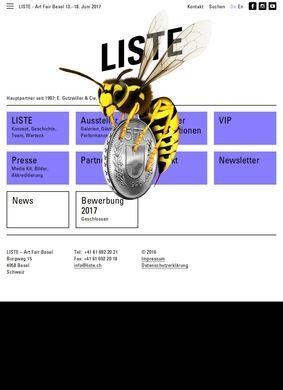
Forty-one first-time exhibitors shared the floor with sixty-four returning galleries at the most recent Liste 18, a contemporary art fair in Basel that runs more than 100 galleries and over 60 program participants across a single week. That churn of new blood against familiar names is the clearest thing about how the fair works, and it tells a visitor what to expect before they read another word.
This is the young gallery's fair in Basel. The whole model tilts toward dealers showing emerging artists, which is why the count of first-time exhibitors matters as much as the headline gallery total. Liste 18 is where a collector goes to find work that has not yet been priced into the blue-chip market, and where a smaller gallery gets a serious stage during the busiest art week in the city.
What the Basel fair puts on
The core of Liste 18 is the annual fair itself, a physical event with a defined footprint and a set run of days. Around it sits a program of accompanying events and exhibitions, so the offering is broader than rows of booths, and the count of program participants alongside the galleries reflects that. The next edition is set for a fixed week each year, which gives galleries and visitors a target to plan around well in advance. A defined week also concentrates the audience, so exhibitors get dense foot traffic instead of a thin trickle spread across a long run.
For the people on the supply side, the site works as a practical tool. Galleries can apply to participate, press and media can arrange coverage through a dedicated channel, and VIP visitors get their own services and access tier. A History section walks through the changes in the fair's management over the years, a candid touch for an organisation that could easily have left that off and let the record blur. Given how much an art fair's pull depends on who is steering the selection, being upfront about its own leadership history says something in the fair's favor.
First-time and returning galleries
The split between newcomers and repeat exhibitors is the number worth dwelling on. Forty-one debut galleries in a single edition is a real commitment to fresh programming, and sixty-four returning ones show the fair holds onto participants once they are in. That balance is the practical promise of Liste 18: a visitor is guaranteed to see names they do not recognise, backed by enough continuity that the event is not reinventing itself from scratch each year.
For a gallery deciding where to spend a limited exhibition budget, that record of both renewal and retention is the case the fair is quietly making, and for a collector it means the discovery on offer at Liste 18 has passed through a selection process instead of a free-for-all. That curation is the quiet promise underneath the headline gallery count, and it is what separates a serious fair from a rented hall full of booths.
Friends, press, and getting in touch
Contact is handled properly. Liste 18 lists a Basel street address, a direct phone number, and three separate email addresses split by purpose, one for general enquiries, one for VIP, and one for press, plus a newsletter signup. Splitting the inboxes is a small sign of an organisation that expects real correspondence and wants it routed to the right desk. There is also a "Friends" membership program for people who want a closer relationship with the fair than a one-off ticket buys, and a newsletter for anyone tracking announcements through the year.
Reaching the right person here takes no detective work, which is more than can be said for plenty of cultural events that hide behind a single web form.
Standing and the missing outside voice
On reputation, the honest answer is that independent verification is hard to come by. A search for outside reviews of Liste 18 turns up almost nothing that actually pertains to the fair, since the name collides with unrelated services and directories that happen to share a similar spelling. The fair's own history page describes it as one of the world's leading art fairs, but that line is self-reported and should be read as exactly that.
That absence is worth putting in context. A trade fair for galleries is not the sort of thing that collects consumer star ratings the way a hotel or a restaurant does, and its real reputation lives in the art press and in which galleries choose to come back. The retention figure does more to vouch for the fair than any review score would. Still, a first-time visitor relying purely on this site is taking the organisation's own word for its standing, and that is a fair caveat to keep in mind.
Anyone weighing a trip should treat the coverage in the art press and word of mouth from participating galleries as the real gauge, since the site can only speak for itself.
The verdict comes down to what you want from a Basel art week. Set against the obvious alternative, Art Basel, the flagship fair running in the same city at the same time, Liste 18 is the smaller, younger, more experimental room, with lower-profile galleries and emerging artists in place of established masters.
A collector chasing marquee names and blue-chip inventory should point straight at Art Basel; anyone who would rather discover a gallery before everyone else does, and who values a well-organised event that is upfront about its own history and easy to contact, will find the balance tips toward Liste 18.