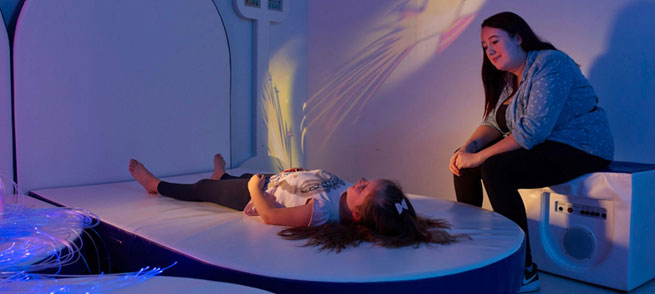
A SpaceKraft sensory room starts on site. A field representative drives out, measures the space, draws a 3D plan of the proposed room, and hands over a fully costed quote. Only then does the buyer decide. The equipment in that room comes off SpaceKraft's own line: bubble tubes, fibre optic systems, UV and LED lighting rigs, projectors, vibro-acoustic seats, waterbeds. The same team designs, supplies, and installs the finished room in the schools, care facilities, and SEN settings that commission it. That manufacturing-plus-installation loop is the line between SpaceKraft and the many suppliers who assemble branded boxes from various wholesalers and ship an instruction sheet with them.
Design and installation process
SpaceKraft is based in Shipley, West Yorkshire, has worked this trade for over 30 years, and reports more than 500 completed sensory room installations. Those numbers have not been independently audited, so a buyer should read them as self-reported. They are at least specific, and they fit a firm running its own production. A pure reseller does not usually claim a manufacturing history. SpaceKraft does, and the depth of the catalogue backs the claim. A thirty-year run in a niche trade is also long enough to have outlived several waves of competitors who bought stock in and rebadged it.
Product range beyond lighting
The catalogue runs well past the headline light displays that dominate product photography in this sector. Tactile panels, switches, and specialised seating cover the proprioceptive side. Swings, scooters, balance gear, and weighted resources fill the section occupational therapists specify first when planning a room. Scooter boards and weighted blankets shelved next to mood lighting in one catalogue tell you who has been shaping the product decisions over three decades. Communication aids, chewies, fidgets, and early years materials pull the range down to single items a family or a mainstream classroom can buy without commissioning a full build.
So SpaceKraft ends up selling to a worried parent and a school procurement officer in the same catalogue season. Holding both is hard. A supplier built only for large institutional projects rarely keeps chewies in stock. A supplier built for small retail orders rarely runs a field team that can design and fit a complete room. SpaceKraft does both. The early years and communication materials point to a company thinking about children at the start of a therapeutic journey and about children already placed in a funded SEN setting with a full room budget behind them. Few suppliers in this space carry the whole span, and SpaceKraft keeping it stocked is the clearest sign in the listing that clinical practice shaped the catalogue rather than a sales department.
The pre-sale process is built to lower the stakes on a large capital decision. Field representatives cover the UK, do a free site visit, draw the 3D plan, and produce the costed quote before any money moves. A school business manager seeking governors' approval, or a care home justifying capital spend in a funding application, can put SpaceKraft's drawn 3D room plan in front of a meeting and circulate it. A verbal estimate depends on someone relaying it correctly later. The drawing does not. That step costs the buyer nothing and produces a usable document on its own.
SpaceKraft offers free delivery on non-bulky items. VAT relief is available for chronically sick or disabled buyers, a genuine saving on equipment that already runs to a high ticket price. A free printed catalogue is there for anyone who prefers paper or wants to pass options around a staff room without handing over a screen. A blog covering sensory education topics sits on the SpaceKraft site for buyers who want context before they talk to sales. None of these perks is exceptional in the wider market on its own. Together they show a supplier that understands the procurement environment its institutional customers work in: slow approvals, paper trails, fixed budget windows, and committees that need to see a plan before they release funds.
Contact and support channels
A phone number, an email address, and stated business hours of Monday to Friday, 9 a.m. to 4:30 p.m. appear on every page of the SpaceKraft site. A service-call link sits next to the main contact route. For a company asking people to commission installations running into thousands of pounds, that access is the floor, and SpaceKraft clears it without fuss. No registration wall. No live-chat widget standing in for a real conversation. No form that buries the number. The service link covers ongoing support once a room is fitted, so the contact route handles problems after the sale as well as enquiries before it.
Outside reviews are the one place the listing comes up short. Nothing surfaced on Google, Trustpilot, Yelp, or comparable platforms tied to spacekraft.co.uk. The site runs its own testimonials page, and a Facebook presence exists for the Shipley business, but no public star ratings or verified review counts appeared on either. Most of SpaceKraft's revenue runs through quoted business-to-business projects with schools and care providers, and those buyers almost never post a consumer-style review once a tendered contract closes. That is normal for SpaceKraft's end of the market. That explains the silence. It does not fill it. A buyer who arrives cold, with no peer recommendation from another school or care setting, has little external evidence to check the 30-year history and the 500-plus figure against.
That absence does not sink the listing, because much of what a buyer needs is published and inspectable. There is a named Shipley location, a manufacturing claim consistent with the depth of the catalogue, contact details on every page, and a field network that will produce a 3D room drawing for free. A SENCo, occupational therapist, or SEN lead pricing a sensory room build should book the free site visit and, in that conversation, ask SpaceKraft for contact details at two or three comparable installations.
Verifying the company through referrals
A firm with 500 completed rooms and a 30-year record can supply referrals from schools or care homes in a similar setting. Phone two of them, ask how the install went and how the after-sales service held since, and the missing public reviews stop mattering. If the referrals do not come, treat that as the answer. The Shipley number is on the front page of the SpaceKraft site; that call is the next move.
Business address
SpaceKraft
Shipley,
BD18 3HH
United Kingdom