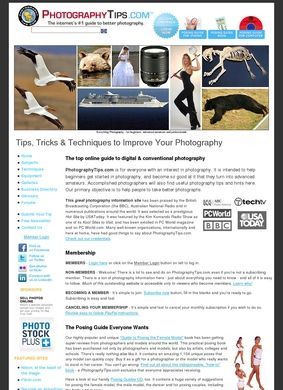
Can a person learn to take better photos with the phone already in their pocket, without enrolling in a full camera course? That is the question PhotographyTips.com is built to answer. It is an education site that sells short digital courses aimed squarely at iPhone photography, and it wraps them in a large library of free blog content for anyone not ready to pay for anything yet.
The scale claim is right out front. The site says more than 27,000 people have signed up as PhotographyTips members, which, true or not, points to an audience of hobbyists rather than working professionals, even if the brand's own Facebook description reaches for beginners and professionals alike. The gap between how the site talks about itself and what it sells is worth keeping in mind while browsing. For a niche this specific, an audience of that size is plausible, and it suggests the courses have found steady, if modest, demand.
The offering splits cleanly in two. On one side sit the paid courses. On the other, a free blog deep enough to keep a curious beginner busy for a good while. That division is the sensible part of how PhotographyTips is put together: the free material earns a reader's trust, and the courses ask for money only once someone already values the teaching. It is a funnel, but an honest one, since the free side has real substance instead of being a locked preview.
The paid courses and the free blog
What a visitor gets for their money is narrow and specific, and that focus works in its favour. PhotographyTips does not try to teach every camera and every genre. It picks the iPhone and goes deep, which for its stated audience is the right call. A person who bought a decent phone and wants better results from it, without learning aperture priority on a dedicated body, is exactly who these courses are for.
The pricing model behind them lowers the stakes. Every course comes with lifetime access and a full money-back guarantee inside a ninety-day window, so a buyer who finds the material too basic or too advanced can walk away without losing the fee. For an unknown course seller with no third-party ratings, that guarantee does a lot of the reassuring the reviews cannot.
Lifetime access is the quieter half of the deal. A learner can buy a course, set it aside, and return to the pet or food lessons months later when the need finally comes up, without paying a second time.
The iPhone course lineup
Four courses anchor the paid side, all built around the same device. There is a beginner's guide to shooting better iPhone photos, a course on pet photography billed as a sixty-minute session, one devoted to making food look appetising on camera, and a beginner's guide to editing iPhone shots. The choices are practical and well judged. Pets and food are precisely what most phone owners point their cameras at and most often botch, so a short course on each addresses a real and common frustration.
The narrowness cuts both ways, though. Someone shooting a mirrorless camera, or anyone already past the fundamentals, will find little here aimed at them. PhotographyTips has decided who it serves, and a shopper outside that group should recognise it before paying. The site frames its reach as beginners through to experienced hobbyists, and the free blog does stretch that far, yet the paid courses sit firmly at the beginner end.
That is the honest read of where the effort has gone. The editing course is the one with the widest reach, since the habits it teaches carry over to photos taken on any device, iPhone or otherwise. Taken together, the four courses map the everyday uses of a phone camera, and PhotographyTips prices them as separate purchases, so a buyer picks only the one that fits the problem in front of them.
The free blog and its categories
The free side is more generous than the short course list suggests. PhotographyTips sorts its blog into Concepts, How-Tos, Terms, Film Photography, and a Discussion section, covering composition, lighting, and the underlying principles of making a picture. The Terms category reads like a glossary a beginner can lean on when a tutorial elsewhere assumes knowledge they do not have. The Film Photography section is a genuine surprise on a site otherwise fixed on phones, and it hints at a broader interest than the iPhone-heavy marketing lets on.
I went into those categories expecting thin filler and came out finding the How-Tos more concrete than the course marketing wrapped around them. That is a good sign and an odd one at once: the free content occasionally outshines the sales pitch. A reader who never buys a course could still leave PhotographyTips having learned something usable about light and framing, which is more than a lot of free photography blogs manage.
The Concepts pages take on the ideas behind a good photograph, the kind of grounding that outlasts any single camera body, and the Discussion section gestures at a community element, a place for readers to talk instead of only read. Neither is dressed up, and both fit the plain, teacherly tone that runs through PhotographyTips. For a self-taught beginner, having terms, concepts, and how-tos in one place matters more than any one article does.
The blog also does the quiet work of proving the teaching is real before a purchase. Someone can read the How-Tos, judge the writing, and decide whether the paid material is likely to be worth it, all without a credit card. That is a low-pressure way to sell, and it suits a subject where people learn at very different speeds.
Independent feedback is where things go quiet, and it is worth stating plainly. A search for reviews of PhotographyTips turns up general photography-review destinations and the site's own pages, but no third-party rating on Google, Trustpilot, Yelp, or anywhere comparable that speaks to this business specifically. The Facebook page carries 2,377 likes and shows no star rating or review count. There is a following, then, but no accumulated verdict from buyers that a prospective customer could weigh before handing over money.
That absence is the single biggest caveat, and the money-back guarantee is clearly meant to answer it. A ninety-day refund window is the site's substitute for a wall of testimonials, and for a cautious first-time buyer it is a fair trade, so long as the refund is honoured as advertised. Nothing in the available search results speaks to how that guarantee plays out in practice, which leaves it as a promise rather than a proven policy.
Contact is basic but present. The contact page offers a form for questions and for submitting photos, and an admin email address is published on the site. A Shop section sits alongside the courses as well, though the courses are plainly the main thing on sale. No phone number or postal address appears anywhere on the site, and the contact form and that single admin email are the only ways in.