Pearl Academy, a fashion and design college, runs an MBA concentration in AI for Business and keeps a room called the AI Studio for it. For an institution most people file under garments and runways, that is the detail that resets expectations first.
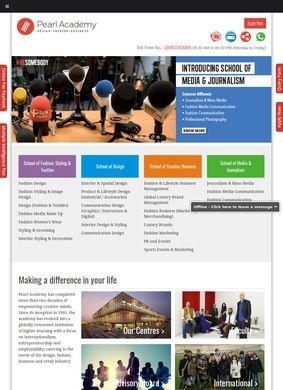
The program list is wide. Fashion is the anchor, with tracks in Fashion Design, Fashion Communication, Fashion Styling, and Textiles, but Pearl Academy stretches well past the sewing room into business, interiors, communication design, product design, and even film and gaming.
Programs that reach past the runway
Degrees run at three levels: undergraduate, postgraduate, and shorter certificate courses. That range lets Pearl Academy take a teenager into a full design degree and a mid-career professional into a focused certificate without either feeling out of place.
Within fashion alone the Pearl Academy split is worth noticing. Fashion Design is the making of clothes; Fashion Communication points toward the media and imagery around them; Styling is the craft of assembling a look; and Textiles works a level below all three, at the cloth itself. A student can pick the part of the industry that suits them instead of being funneled into one generic fashion degree.
That spread across disciplines is what pulls Pearl Academy past a single-industry label, and nowhere is that clearer than on the business side.
The AI Studio and the business track
On the business side there are BBA and MBA options, and the specializations tell you where the school thinks the creative industries are heading: Luxury Brand Management, Advertising, and that AI for Business track. Pairing an MBA with an AI Studio at a design college is an unusual bet, and I read it as a shrewd one, since fashion and retail now turn on data and forecasting as much as on taste.
The Luxury Brand Management angle in particular suits a place already teaching styling and textiles. A student can learn to make the product and to sell it at the top of the market, which is a rarer pairing than it sounds, because most design schools teach the craft and leave the commerce to someone else.
Interiors, product, and the film certificates
Beyond fashion and business, Pearl Academy teaches Interior Design and Architectural Design under an interiors umbrella, plus Communication Design and Product Design as full disciplines in their own right. The Film and Gaming offerings sit at certificate level, a lighter commitment for someone testing the water in those fields before choosing a longer path.
Communication Design and Product Design deserve a note, because they push the college past surface looks into how things are used: interfaces, packaging, objects a person picks up and operates. That is a different muscle from cutting a garment, and having both under one Pearl Academy roof lets a student cross between them.
Put together, the catalogue reaches across most of the creative economy a design-minded student might aim at, and it treats the business of design as seriously as the craft.
The mix of degree lengths says a good deal about who Pearl Academy is built for. A school-leaver can commit to a multi-year undergraduate program; someone already working in a creative field can take a certificate to add one skill without quitting a job; and the postgraduate options sit in between, for a graduate sharpening toward a specific corner of the industry. Across all of them the stated aim holds steady, which is careers in fashion, design, business, and the wider creative economy.
The studios and labs behind the coursework
Facilities are where a design school proves it means the coursework, and Pearl Academy lists a real stack of them: design labs, photography studios, maker spaces, and virtual production facilities. There are tech labs kitted with VR and AR equipment, and a "Glam space" built for staging fashion shows rather than borrowing an auditorium for the night.
The virtual production and VR/AR gear is what ties the film and gaming certificates to something concrete. A photography studio and maker space matter to fashion and product students at Pearl Academy; virtual production is the sort of equipment a film or game course lives or dies on, and its presence suggests those certificates mean more than a line on a prospectus.
Three named units go further than the ordinary workshop. The Life Design Studio and the AI Studio give two of the school's pet ideas their own dedicated rooms. The Runway Studio does double duty: it supports the shows and it houses a startup incubator, which means a graduating Pearl Academy student with a label idea has somewhere on site to build it.
There are international credit-transfer partnerships with universities in the UK and the USA, so part of a degree can be taken abroad and counted back home. Scholarships exist for students who need the help, and hostel accommodation is on offer for those coming in from other parts of the country. Career placement is part of the pitch as well; Pearl Academy reports a 99 percent placement figure by its own count, a number best read as the institution's own claim rather than an outside audit.
Seen together, the placement service, the overseas credit transfers, and the on-site incubator sketch a fairly complete pipeline out the far end of the coursework. A student can finish and move some credit abroad, chase a placement, or start a company, and there is a route mapped for each. Whether the 99 percent number holds up outside the school's own count is a separate question, but the machinery behind the claim is at least real.
The incubator sitting inside the Runway Studio is the piece that lingers. At Pearl Academy the same room that stages a graduation show is set up to help fund the first collection that walks out of it.