Start with the Nanny Credential Exam, since it is the piece of the International Nanny Association that shows what the whole place is really for. It is a formal test a caregiver can sit to prove baseline competence, and it sits next to a shorter Nanny Basic Skills Assessment for people earlier in the trade. An industry that most families treat as informal, hiring on gut feeling and a reference or two, gets a set of actual credentials here, and that is the plainest thing the International Nanny Association does.
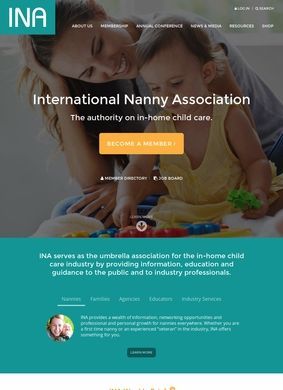
The organization describes itself as a global umbrella body for in-home childcare, set up to raise the quality of the work and to hand out "information, education and guidance to the public and to industry professionals." That last phrase matters, because it names two audiences that do not always want the same thing, and the site leans harder toward one of them than the other.
Credentials and the reference shelf
The professional spine of the International Nanny Association is its testing and its written guidance. Beyond the two assessments, the site keeps a resource library of articles, FAQs and specialized guides, plus a set of recommended practices meant to standardize how nannies and the families who employ them handle common situations. For a field with almost no licensing, that reference shelf does quiet, useful work.
The credential exam and skills assessment
The two exams are the clearest value on offer. A working nanny can sit the Basic Skills Assessment early and move up to the full Nanny Credential Exam later, building something a prospective employer can actually check. The International Nanny Association treats these as markers of a career rather than one-off hoops, which fits an organization trying to make in-home childcare read as a profession.
The resource library and recommended practices
Around the exams sits the written material, and this is where the International Nanny Association is most obviously useful to an outsider. The articles and guides cover the practical ground families rarely think through until they are mid-crisis: pay, hours, expectations, and the awkward boundary between employee and near-family member. The specialized guides go a step past the generic FAQs, aiming at particular situations rather than broad reassurance, and that is what lifts the library above a typical association help page.
I went looking for something concrete a first-time employer could use and found the recommended-practices framing more grounded than expected, the sort of guidance that pre-empts an argument before it starts.
Events, jobs and the network
The second half of the International Nanny Association is about connection, and this is plainly where the energy goes. Conferences, summits, webinars and professional support groups fill the calendar, and they are aimed at people who already work in the field and want to get better at it or simply meet peers who understand the job.
Conference, summit and webinars
The live events give the International Nanny Association its pulse. A yearly conference and summit anchor the schedule, webinars fill the gaps between them, and the professional development on offer, workshops and the like, is the sort of thing a serious nanny would struggle to assemble alone. For a caregiver who often works in isolation, one household at a time, a room full of colleagues has real worth.
The job board and speed-recruiting
On the practical hiring side, the International Nanny Association runs a job board and speed-recruiting initiatives that try to match nannies with families and agencies more directly. A member directory sits alongside these, so an agency or a parent can look up who belongs. This is where the promise to serve families as well as caregivers comes closest to a concrete tool, though the machinery still works best for someone already inside the membership.
The speed-recruiting idea is the more interesting one: instead of the slow back-and-forth of individual interviews, it compresses the first round of matching into a single structured session, which is a sensible answer to a hiring problem that usually drags on for weeks.
Honors and who it really serves
The International Nanny Association also runs an honors program, and the tone of it says a lot about the culture. There is a Nanny of the Year award, service pins, and ambassador recognition, the kind of ceremony a profession builds when it wants its people to feel seen. These awards face inward, toward the members, more than outward toward the families paying the bills, which fits the pattern of the site as a whole.
Membership itself carries the usual bundle: networking, discounts, workshops and professional-development access, plus professional support groups for people who want peers to lean on, with a stated emphasis on diversity and inclusion running through the whole thing.
The list of who it serves is broad, taking in individual nannies, newborn care specialists, families and parents, nanny agencies, childcare educators, industry service providers and media outlets. That is a lot of constituencies for one association to hold, and the International Nanny Association handles the spread by pitching most of its energy at the people who do the work and the businesses that place them. A newborn care specialist looking to formalize a niche, or an agency wanting a standard to hold its hires to, will find the site speaks their language first.
Here is the honest read. The International Nanny Association is built first and most fully for the professionals, the nannies, the specialists, the agencies, and it serves them well, with credentials, events and a job market they would not have otherwise. A parent hiring a single caregiver gets real value too, mainly from the exams and the guides, but noticeably less than a card-carrying member does, and much of the best material sits behind belonging.
The emphasis lands squarely on the working professionals: nannies, specialists and agencies get the fuller build, membership and all, while a one-time hiring parent gets a narrower slice of it, with the site nudging that parent toward eventual membership throughout.